





Published Thursday, November 26, 2026 by Fairfield Furbabies
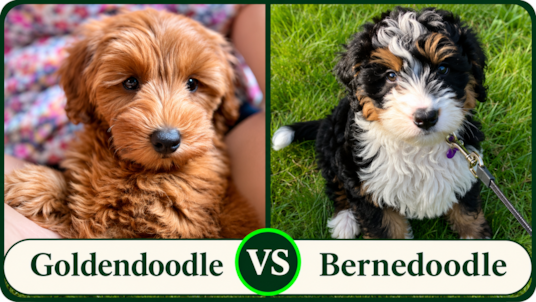
The Mini Goldendoodle vs Mini Bernedoodle comparison brings together two of the most lovable Doodle breeds, and choosing between them is surprisingly difficult. They have beautiful coats, affectionate personalities, and an enthusiasm for family life that makes them wonderful companions. Both are intelligent, playful, and capable of forming close relationships with their people. Yet spend a little time getting to know their personalities, and some rather interesting differences begin to appear.
The Mini Goldendoodle has an open, cheerful personality and a particular enthusiasm for activities that involve people. Whether there's a new visitor at the door, a favorite toy in someone's hand, or an opportunity to explore somewhere new, this dog has a wonderful way of making ordinary events feel exciting. The Mini Bernedoodle brings its own kind of appeal, with a warm, affectionate nature and a slightly more measured approach to everyday life. It can be wonderfully playful, occasionally a little stubborn, and deeply interested in the people it knows best. Both enjoy attention, but they don't always express that affection in quite the same way.
There are physical differences to consider as well. Mini Bernedoodles tend to have a more substantial build, although their adult size ranges overlap with those of Mini Goldendoodles. Their beautiful coats also have distinct qualities, from the Mini Bernedoodle's striking tricolor patterns to the warm golden, red, and apricot shades that make Mini Goldendoodles so recognizable. Grooming requirements are considerable for both, and neither is guaranteed to inherit one particular coat texture.
The real decision comes down to the personality and daily routine you would enjoy most. Some people love a dog that approaches the world with easy enthusiasm and welcomes opportunities for new experiences. Others appreciate a companion that takes a little more time to get comfortable, develops strong relationships with familiar people, and enjoys a comfortable balance between activity and relaxation. Understanding these differences will help you decide whether the Mini Goldendoodle or Mini Bernedoodle is the better fit for your home.
Table of Contents
Mini Goldendoodle vs Mini Bernedoodle Comparison Table
The Mini Goldendoodle and Mini Bernedoodle share Poodle ancestry, which helps explain several similarities in their appearance, intelligence, and coat characteristics. Their other parent breeds contribute different qualities, particularly in physical structure, social tendencies, and daily activity preferences. Both crosses have considerable individual variation, so adult sizes and coat textures should be understood as approximate rather than guaranteed. The following table provides a useful introduction to their characteristics before we explore what those differences mean for future owners.
| Characteristics | Mini Goldendoodle | Mini Bernedoodle |
| Parent Breeds | Golden Retriever × Miniature Poodle | Bernese Mountain Dog × Miniature Poodle |
| Other Names | Miniature Goldendoodle, Mini Groodle, Mini Goldenpoo, Mini Goldiepoo | Miniature Bernedoodle, Mini Bernese Poodle, Mini Bernadoodle |
| Adult Weight | F1: Approximately 25–45 pounds; F1B: Approximately 20–35 pounds | F1: Approximately 30–50 pounds; F1B: Approximately 20–30 pounds |
| Adult Height | Approximately 13–22 inches | Approximately 13–22 inches |
| Coat Type | Soft, straight, wavy, or curly; frequently loose and fluffy | Soft, straight, wavy, or curly; frequently full and dense |
| Hypoallergenic Qualities | Low-shedding potential, particularly in curlier coats; not allergen-free | Low-shedding potential, particularly in curlier coats; not allergen-free |
| Grooming Needs | Brush several times weekly or daily for longer coats; professional grooming approximately every 6–8 weeks | Brush several times weekly or daily for longer coats; professional grooming approximately every 6–8 weeks |
| Exercise Needs | Approximately 45–60 minutes daily | Approximately 30–60 minutes daily |
| Training | Intelligent, cooperative, enthusiastic, responsive to positive reinforcement | Intelligent, responsive, affectionate, sometimes independent; benefits from patient guidance |
| Colors | Cream, gold, apricot, red, caramel, chocolate, black, white, and mixed patterns | Black, white, rust, brown, cream, sable, apricot, and multicolored patterns |
| Temperament | Friendly, affectionate, cheerful, sociable, playful, enthusiastic | Affectionate, gentle, playful, devoted, sociable, sometimes reserved |
| Best Fit | Families and individuals who enjoy an outgoing companion and regular interactive activities | Families and individuals who appreciate an affectionate, substantial companion with a somewhat more moderate daily rhythm |
Mini Goldendoodle vs Mini Bernedoodle Overview
Although these two breeds belong to the same modern family of Doodle crosses, they developed from different ideas about the ideal companion dog. The Mini Goldendoodle attracted people who admired the Golden Retriever's sociable personality but preferred smaller proportions. The Mini Bernedoodle appealed to people who appreciated the Bernese Mountain Dog's distinctive appearance and affectionate character in a more manageable size. Their popularity has grown considerably, and each has developed an enthusiastic following for reasons that go well beyond its beautiful coat.
Mini Goldendoodle History and Popularity
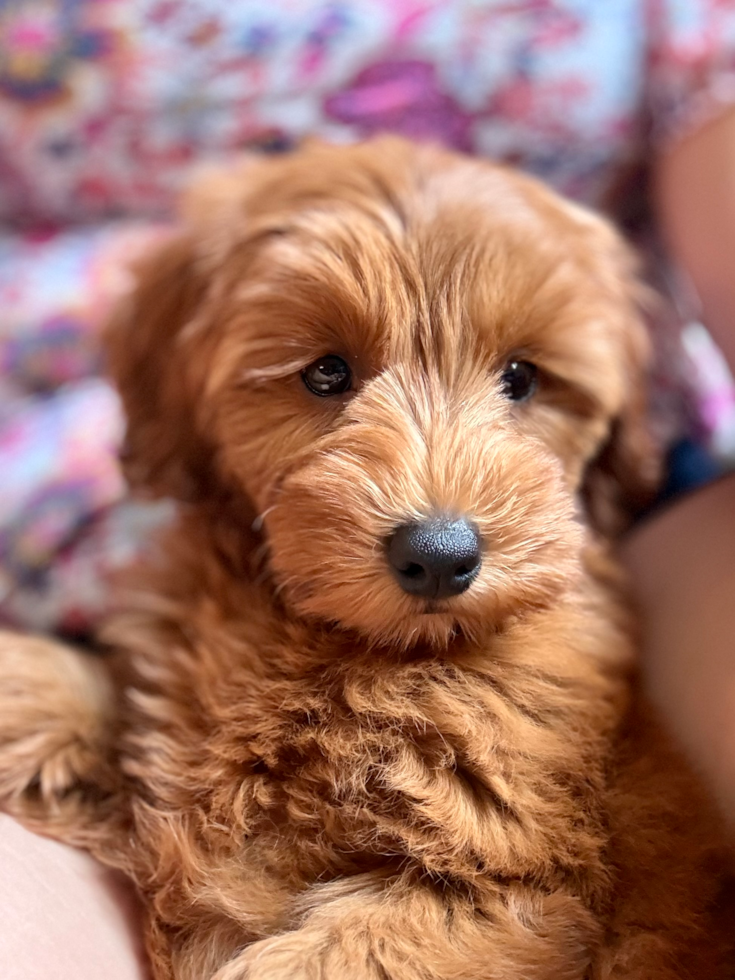
The Mini Goldendoodle developed as interest in Goldendoodle crosses expanded during the late twentieth century and early 2000s. The larger Goldendoodle had already attracted attention through the combination of the Golden Retriever and Poodle, two intelligent breeds with strong histories of cooperation with people. As more families discovered the cross, interest grew in smaller versions that could offer similar companion qualities without the dimensions of a standard-sized dog. The Mini Goldendoodle emerged through the use of smaller Poodle lines and gradually established its own identity. Its development reflected a growing preference for affectionate, intelligent dogs that could participate comfortably in everyday family life.
One of the interesting aspects of the Mini Goldendoodle's history is the variety that developed within the cross. First-generation Mini Goldendoodles come from a Golden Retriever and Miniature Poodle, while F1B dogs are generally produced by crossing a Goldendoodle with a Poodle. Different generations and breeding lines contribute to the range of sizes, body proportions, and coat textures seen today. A Mini Goldendoodle might have the compact proportions of a relatively small companion or the more substantial frame of a medium-sized dog. The breed's name describes its position within the Goldendoodle family rather than a strict adult size category.
The Mini Goldendoodle's popularity has grown alongside its reputation for sociability and enthusiasm for human interaction. Its friendly personality appeals to families who enjoy including their dogs in walks, games, outings, and everyday activities. Its intelligence also attracts first-time owners who appreciate a dog that responds readily to patient instruction. Beautiful coats in shades of cream, gold, apricot, and red contribute to its familiar appearance, although the breed offers considerably more color variety. The Mini Goldendoodle has earned its place among popular Doodle crosses because people appreciate the kind of companionship it brings into their homes.
Mini Bernedoodle History and Popularity
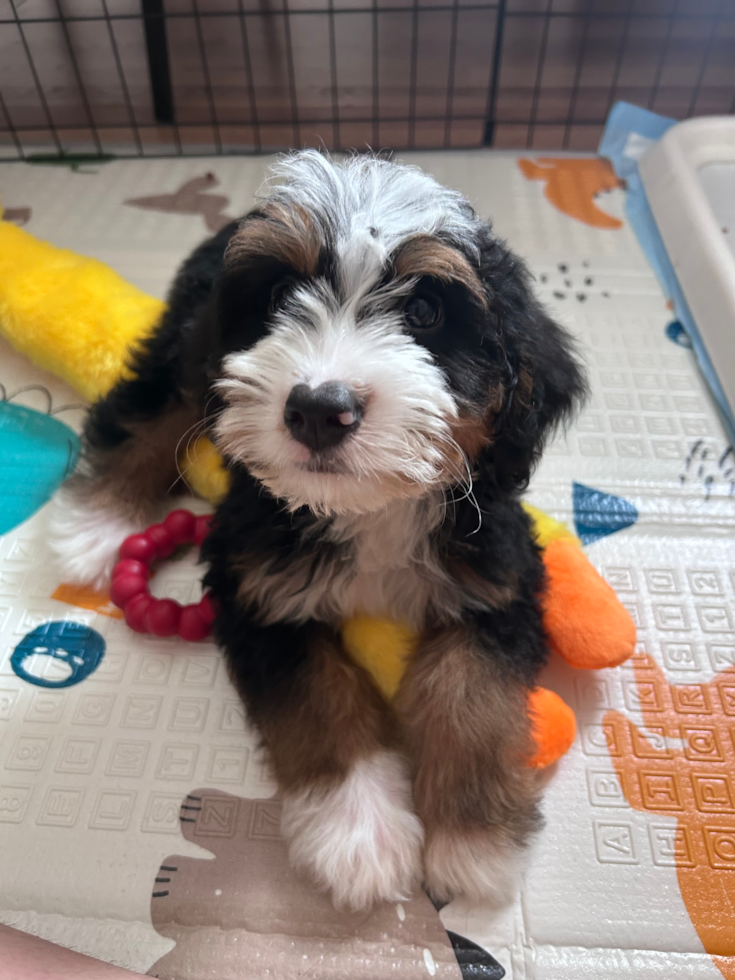
The Mini Bernedoodle belongs to the more recent Bernedoodle family, which gained attention in North America during the early 2000s. The original Bernedoodle brought together the Bernese Mountain Dog and Poodle, creating a distinctive cross with a substantial build, attractive coat, and affectionate personality. Interest in smaller versions followed as people looked for dogs with similar characteristics but more manageable adult proportions. Miniature Poodle lines helped establish the Mini Bernedoodle, although the resulting dogs continued to show considerable variation in size. That variety is still part of the breed's identity today.
The Mini Bernedoodle's development also introduced differences between generations that are worth understanding. An F1 Mini Bernedoodle comes from a Bernese Mountain Dog and Miniature Poodle, while an F1B is generally produced through a Bernedoodle-to-Poodle cross. These generations can differ in adult size and coat characteristics, although no label guarantees a particular outcome. Some Mini Bernedoodles have a broad, substantial frame, while others are smaller and lighter beneath their fluffy coats. This variety helped the breed appeal to people who appreciated the Bernese-inspired appearance but wanted more options in adult size.
Much of the Mini Bernedoodle's popularity comes from its distinctive personality and appearance. Its affectionate nature appeals to people who enjoy close companionship, while its playful side brings plenty of entertainment into family life. The familiar black, white, and rust tricolor coat also gives the breed an instantly recognizable look, although many other color combinations occur. Mini Bernedoodles have attracted families, couples, and individuals who appreciate a dog with a substantial presence and a warm relationship with familiar people. Their popularity reflects the appeal of that particular combination rather than appearance alone.
Mini Goldendoodle vs Mini Bernedoodle Appearance
The Mini Goldendoodle and Mini Bernedoodle share the soft coats and expressive faces that make Doodle breeds so attractive, but their natural proportions can create noticeably different appearances. A fluffy haircut can make them look remarkably alike, especially when both have rounded faces and soft curls. Their body structure, markings, and facial features offer a clearer distinction. Adult size is worth particular attention because a Mini Bernedoodle can have considerably more physical substance than a Mini Goldendoodle, even when their heights are similar.
Mini Goldendoodle Appearance
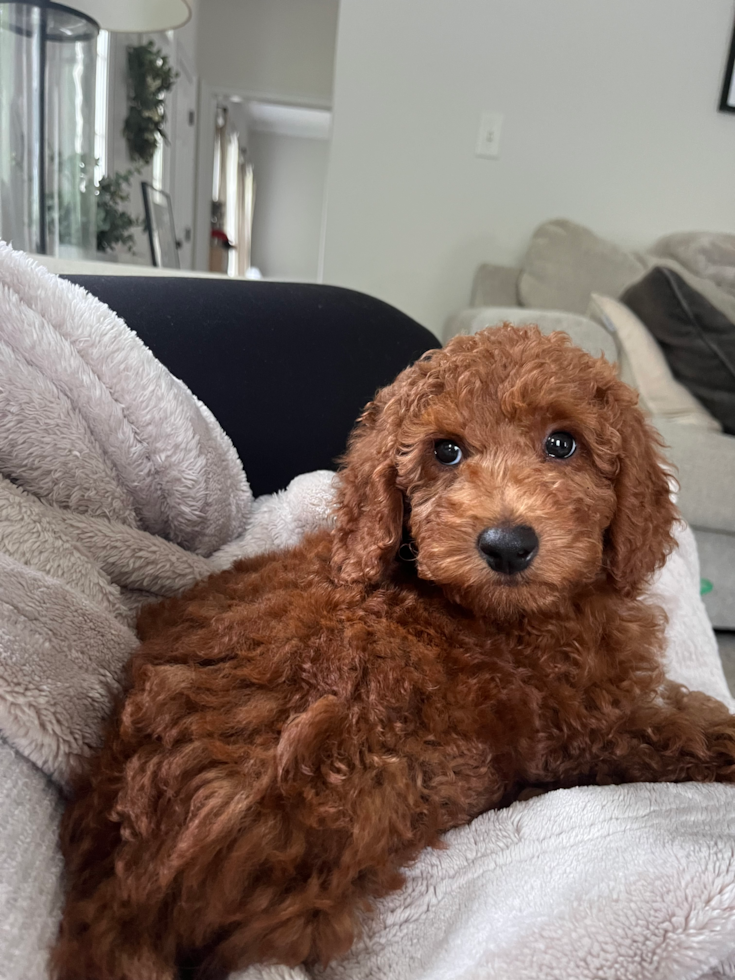
The Mini Goldendoodle has a balanced, attractive build that combines a comfortable sense of sturdiness with relatively light, athletic proportions. F1 Mini Goldendoodles sit at approximately 25 to 45 pounds and F1B dogs at around 20 to 35 pounds, with heights commonly between 13 and 22 inches. Some have longer legs and a leaner outline, while others display a compact body with a more developed chest. Their natural proportions are easier to appreciate when the coat is kept at a shorter length. A full, fluffy haircut can make a relatively slender Mini Goldendoodle look much larger than it actually is.
The Mini Goldendoodle's coat is one of its loveliest features, particularly in the warm colors that have helped make the breed so recognizable. Cream, golden, apricot, caramel, and red are familiar shades, although black, chocolate, white, and mixed patterns also occur. Some dogs have soft, loose waves that fall naturally around the body, while others develop tighter curls that create considerable volume. A straighter coat gives some Mini Goldendoodles a shaggy appearance that looks especially endearing around the face and legs. These differences can be substantial, and the texture of a puppy's coat does not always predict its mature appearance.
Mini Goldendoodles generally have expressive brown eyes, a well-defined muzzle, and ears that hang beside the cheeks. Their faces can look relatively broad or gently tapered, depending on the individual dog's proportions and coat style. A rounded trim creates the familiar teddy-bear appearance, while shorter facial hair reveals the natural shape of the muzzle and head. Their tails commonly have a soft covering of hair that complements the coat across the body. The overall appearance is friendly and attractive without relying on one particular color or haircut.
Grooming requires regular attention because the Mini Goldendoodle's coat can develop tangles beneath an apparently neat surface. A loose, wavy coat may be easier to comb than dense curls, but both need consistent care. Hair beneath the ears, behind the front legs, and around areas where a harness rests deserves particular attention. Brushing three or four times weekly works for many individuals, while longer or curlier coats may need daily care. Professional grooming approximately every six to eight weeks helps maintain a manageable length and keeps the dog looking its best.
Mini Bernedoodle Appearance
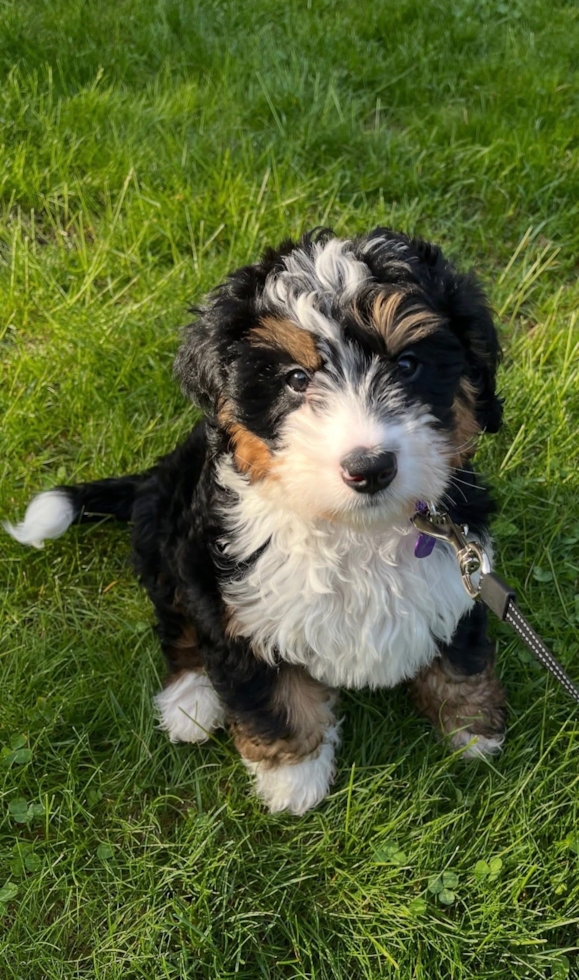
The Mini Bernedoodle has a substantial, well-proportioned body that gives it an appealingly sturdy appearance. Adult sizes vary considerably, with F1 Mini Bernedoodles having approximately 30 to 50 pounds and F1B dogs at around 20 to 30 pounds. Their heights commonly range from 13 to 22 inches, so two dogs of similar height can have noticeably different body weights. Some Mini Bernedoodles have broad chests and powerful-looking legs, while others display a more compact frame. Beneath the beautiful coat is frequently a dog with a stronger physical presence than its fluffy appearance first suggests.
The Mini Bernedoodle is especially recognizable for its striking tricolor markings, although its appearance is far from limited to one pattern. The classic combination features black, white, and rust, with contrasting markings that can frame the face and emphasize the eyes. White patches across the muzzle and chest create a particularly attractive contrast, while warm rust-colored accents add richness around the eyebrows and legs. Other Mini Bernedoodles have brown, cream, sable, apricot, or simpler black-and-white coats. The exact distribution of color varies considerably, giving individual dogs their own distinctive appearance.
A Mini Bernedoodle's facial features can look wonderfully expressive beneath its full coat. Dark eyes, hanging ears, and a relatively substantial muzzle contribute to the breed's recognizable appearance. Longer facial hair can give the head a broad, rounded shape, while shorter grooming styles reveal more of its natural proportions. Some Mini Bernedoodles have a particularly plush appearance around the chest and legs, which adds to their substantial silhouette. Their tails are generally covered with soft hair and complete the breed's balanced outline.
The coat can be straight, wavy, or curly, with differences in density that influence grooming requirements. A larger Mini Bernedoodle with a full, curly coat has considerable hair to maintain, particularly around the chest, legs, and underside. Tangles can develop close to the skin even when the outer coat looks smooth, which makes thorough brushing important. Several sessions each week are necessary for many dogs, while longer or denser coats may require daily attention. Professional grooming approximately every six to eight weeks helps keep the coat manageable and prevents its beautiful appearance from creating an overwhelming maintenance routine.
Mini Goldendoodle vs Mini Bernedoodle Appearance Comparison
The most noticeable difference between these breeds is their overall physical structure. Mini Bernedoodles tend to have a broader, more substantial frame, while Mini Goldendoodles frequently display a somewhat lighter outline. However, their adult size ranges overlap considerably, especially when comparing F1B dogs from each cross. A larger Mini Goldendoodle can easily outweigh a smaller Mini Bernedoodle, so the breed name alone cannot predict which individual will be bigger. Adult measurements and physical proportions offer more useful guidance than assuming every Bernedoodle will be heavier.
Their coats also create distinctive visual impressions. Mini Goldendoodles are particularly familiar in warm shades of gold, apricot, caramel, and red, while Mini Bernedoodles are strongly associated with dramatic tricolor markings. Both offer considerably more variety than those recognizable appearances suggest, and their coat textures can be remarkably similar. A cream Mini Bernedoodle and cream Mini Goldendoodle with matching haircuts may be difficult to distinguish by appearance alone. The differences in their build and documented parentage offer more reliable clues than color or curls.
For future owners, the size difference deserves practical consideration. A substantial Mini Bernedoodle may require more effort to lift into a vehicle, carry when necessary, or manage during enthusiastic greetings. A smaller Mini Goldendoodle can be easier to handle, although larger individuals still have enough strength to make leash manners important. Grooming is another consideration because a bigger dog with a dense coat naturally has more hair to maintain. Neither breed is inherently low-maintenance, so the most comfortable choice is one whose adult size and coat care fit your routine.
Mini Goldendoodle vs Mini Bernedoodle Temperament
The Mini Goldendoodle and Mini Bernedoodle share an affectionate, intelligent nature that makes them appealing to people who enjoy close relationships with their dogs. Their personalities also have distinctive qualities, particularly in the way they approach unfamiliar situations, seek attention, and participate in family activities. Mini Goldendoodles have a reputation for their cheerful sociability, while Mini Bernedoodles frequently show a slightly more measured approach to new experiences. Neither description applies to every individual, but the differences offer a useful starting point for understanding life with each breed.
Mini Goldendoodle Temperament
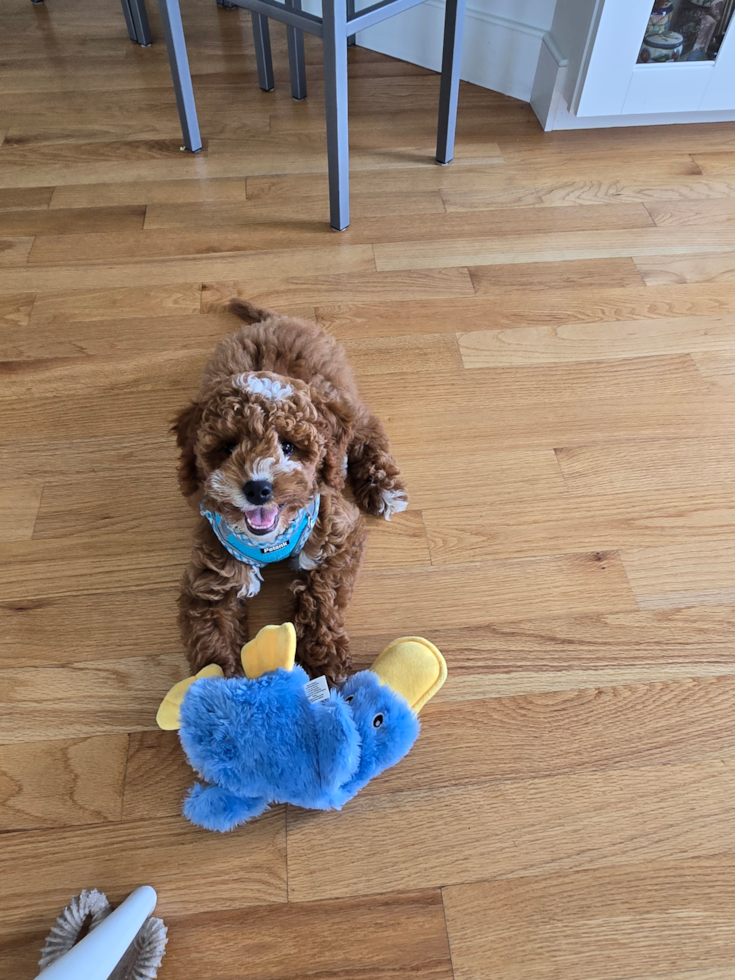
The Mini Goldendoodle has a cheerful personality that makes its enthusiasm for people one of its most recognizable qualities. Many greet familiar faces with excitement and show genuine interest in activities that involve family members or visitors. A Mini Goldendoodle might happily investigate a new toy, approach a friendly guest, or join a game without needing much encouragement. This open, sociable nature is particularly appealing in households where people enjoy including their dogs in everyday activities. The breed's affection can be wonderfully expressive, especially when it has an opportunity to share attention with someone.
One of the Mini Goldendoodle's most enjoyable qualities is its cooperative approach to interaction. These dogs can take great pleasure in activities that involve responding to familiar commands, retrieving toys, or participating in simple training games. Their interest in praise and rewards helps make lessons enjoyable, particularly when owners use clear instructions and plenty of encouragement. Many respond readily to basic household training and develop a good understanding of familiar routines. This makes the Mini Goldendoodle appealing to first-time owners who want an intelligent companion and are prepared to provide consistent guidance.
Playfulness is an important part of the Mini Goldendoodle temperament, and some individuals have a particularly enthusiastic interest in games. Fetch can be especially entertaining for dogs that inherit an interest in retrieving, although others prefer gentle games or opportunities to explore their surroundings. Their excitement can be noticeable during puppyhood, particularly when visitors arrive or family members encourage energetic play. A Mini Goldendoodle with a substantial adult build needs polite manners just as much as a larger dog. Teaching calm greetings and appropriate play helps preserve its cheerful personality without allowing excitement to create unnecessary chaos.
The Mini Goldendoodle's exercise requirements are moderate, with approximately 45 to 60 minutes of daily activity providing a useful starting point for many adults. Walks, games, outdoor exploration, and short training sessions can create a satisfying routine without requiring an exceptionally athletic household. Some individuals enjoy longer hikes or active adventures, while others appreciate a comfortable neighborhood walk and playtime at home. Their intelligence means they also enjoy activities that ask them to think, such as simple scent games or familiar tricks. A varied routine helps provide the attention and interaction that make everyday life enjoyable for this sociable dog.
Mini Goldendoodles can adapt to a wide range of household environments, particularly when their daily needs are met. Many enjoy family gatherings, regular visitors, and opportunities to meet friendly people or dogs. Others are more reserved, especially during unfamiliar experiences, which is why early socialization deserves attention. Their affectionate personalities also mean they appreciate close companionship and should learn comfortable periods of independent relaxation from puppyhood. With appropriate training and a predictable routine, the Mini Goldendoodle can offer a lovely balance between enthusiasm and comfortable family companionship.
Mini Bernedoodle Temperament
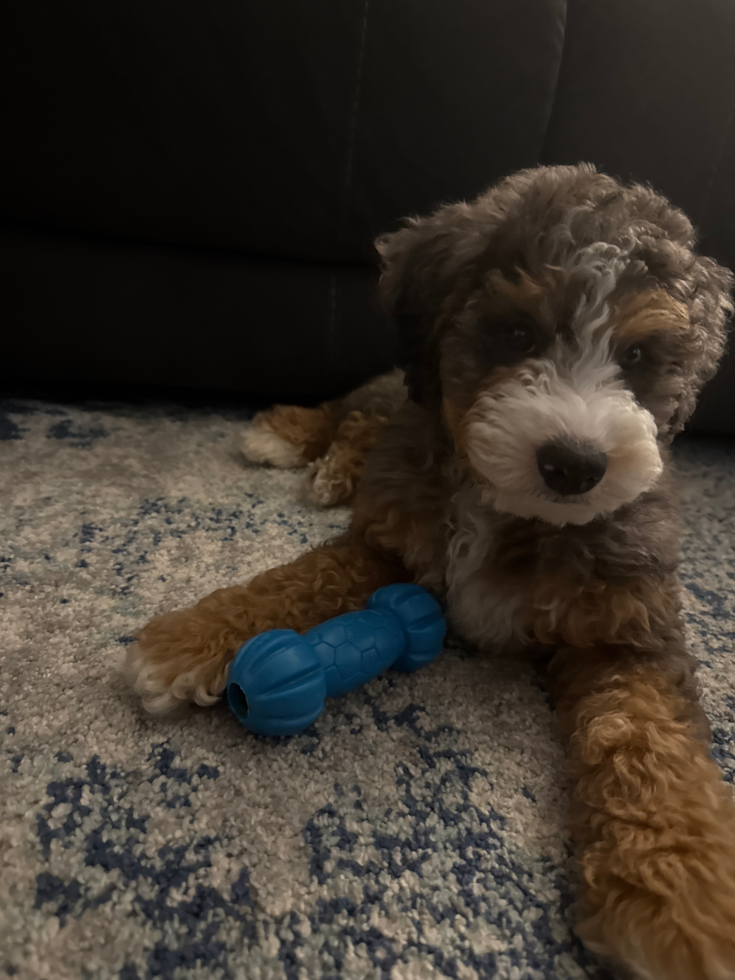
The Mini Bernedoodle has an affectionate personality that can make its relationship with familiar people especially rewarding. Many enjoy spending time near their families and show a genuine interest in the routines that shape each day. A Mini Bernedoodle might settle comfortably beside someone during a quiet afternoon, then show considerable excitement when a favorite person suggests a walk or game. Its affection can be wonderfully expressive, although some individuals prefer gentle attention to constant activity. This combination of playfulness and companionship is one of the qualities that attracts people to the breed.
Mini Bernedoodles can have a slightly more thoughtful approach to unfamiliar situations than some highly outgoing companion dogs. An individual might pause briefly to observe a visitor or investigate a new environment before deciding how to respond. This behavior should not automatically be interpreted as shyness, since some dogs simply prefer a little time to understand what is happening around them. Others greet everyone enthusiastically and show little hesitation in unfamiliar surroundings. Positive experiences and patient introductions help Mini Bernedoodles develop confidence while allowing their individual personalities to express themselves naturally.
Training a Mini Bernedoodle can be a lovely experience because these dogs are intelligent and responsive to patient instruction. Many appreciate praise, rewards, and calm guidance, particularly when lessons involve familiar people and clear expectations. Some have an independent streak that makes them less enthusiastic about repeating a task once they understand what is required. A Mini Bernedoodle might know a command perfectly well and still prefer to investigate something interesting nearby. Consistent rules and enjoyable lessons help establish cooperation without turning training into a contest of wills.
The Mini Bernedoodle has a playful side that deserves just as much attention as its affectionate reputation. Puppies can be energetic, curious, and wonderfully mischievous, particularly during exciting games or when family members encourage enthusiastic interaction. Their substantial build makes early manners important because jumping and pulling can be difficult to manage as the dog grows. Many adults enjoy approximately 30 to 60 minutes of daily exercise, with walks, games, and opportunities to explore providing a comfortable routine. Some are enthusiastic outdoor companions, while others prefer shorter outings and a somewhat more relaxed daily pace.
Family life can suit the Mini Bernedoodle beautifully, especially when affection is balanced with consistent expectations. Many enjoy relationships with children and other pets, although respectful introductions and supervision remain important. Their larger size deserves attention around young children, particularly during enthusiastic play. They can also develop strong attachments to familiar people and appreciate a predictable routine that includes companionship and comfortable rest periods. Teaching independence alongside affection helps create a dog that enjoys family life without expecting constant attention.
Mini Goldendoodle vs Mini Bernedoodle Temperament Comparison
The Mini Goldendoodle and Mini Bernedoodle have affectionate personalities, but their social approaches can differ. A Mini Goldendoodle may show enthusiasm toward unfamiliar people or activities relatively quickly, particularly when the experience offers an opportunity for play or attention. A Mini Bernedoodle may approach the same situation with a little more observation before participating. These tendencies are not guarantees, and individual dogs can challenge expectations in either direction. Still, the distinction is useful for someone who prefers a naturally outgoing companion or appreciates a dog with a slightly more measured approach to new experiences.
Training offers another meaningful comparison. Mini Goldendoodles have a reputation for their cooperative nature and enthusiasm for rewards, which can make ordinary household lessons enjoyable. Mini Bernedoodles are equally capable of learning but may display more independence, particularly when a task is repetitive or something more interesting captures their attention. Both benefit from positive reinforcement, clear expectations, and regular practice. The Mini Goldendoodle may have a slight advantage for someone who appreciates an enthusiastic learning partner, while the Mini Bernedoodle can reward an owner who enjoys patient, consistent guidance.
Their exercise needs overlap considerably, although Mini Goldendoodles may appreciate a slightly more active routine. A Mini Goldendoodle can enjoy longer games, retrieving activities, and frequent opportunities to interact with family members. A Mini Bernedoodle may prefer a comfortable balance between walks, playtime, and relaxed companionship, although energetic individuals can enjoy substantial outdoor activity. Neither should be considered a dog that needs little attention or exercise. The important difference is the daily rhythm each owner wants to share with their companion.
Family dynamics also influence which breed may feel like a more natural fit. A Mini Goldendoodle's open sociability can be appealing in a household with frequent visitors, social outings, and several people who enjoy interacting with the dog. A Mini Bernedoodle's affectionate, somewhat more measured character may particularly appeal to people who appreciate familiar routines and close companionship. Both can be wonderful with children when they receive appropriate training and supervision. Their substantial adult sizes also make polite manners important, especially around younger family members. Neither should be chosen solely because it has a reputation for being gentle or friendly.
For first-time owners, the Mini Goldendoodle may offer a slightly more straightforward training experience because of its enthusiastic response to human interaction. However, a Mini Bernedoodle can also be an excellent choice for someone who appreciates a somewhat more moderate activity schedule and is prepared to teach consistent household manners. Both require regular grooming, appropriate exercise, and attention during puppyhood and adolescence. Individual temperament is particularly important because neither cross produces identical personalities. The better choice is the dog whose social style, physical needs, and everyday habits fit comfortably into the owner's life.
Mini Goldendoodle vs Mini Bernedoodle Conclusion
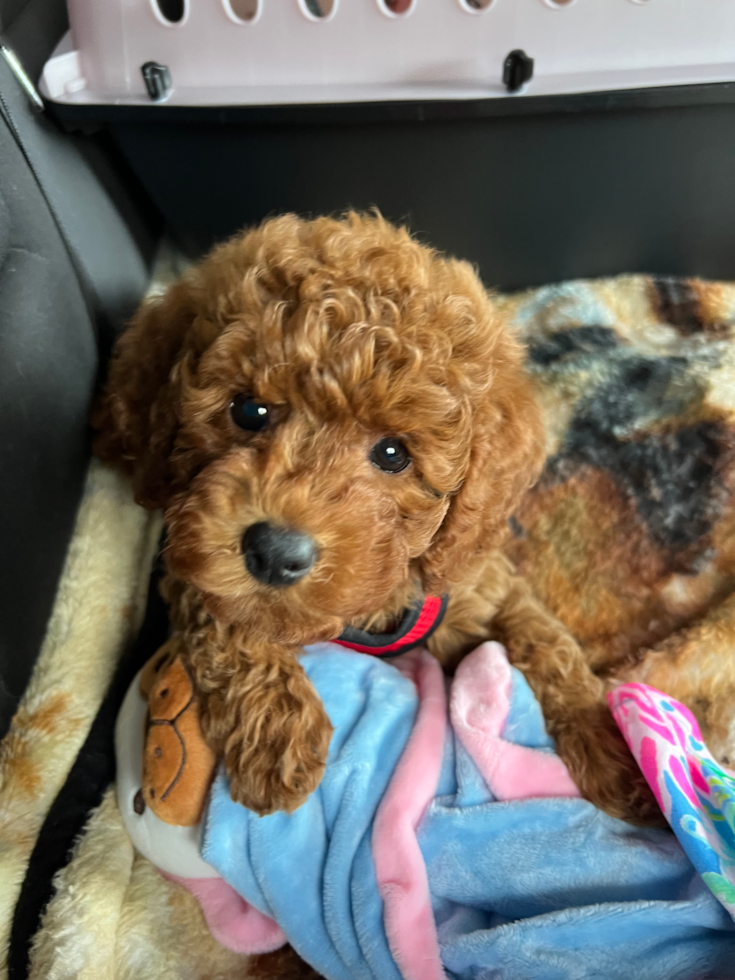
The Mini Goldendoodle may be the better match for people who enjoy an outgoing, cheerful companion that takes an enthusiastic interest in family activities. Its cooperative personality can make training enjoyable, particularly for owners who appreciate a dog that responds warmly to praise and rewards. Mini Goldendoodles can bring plenty of energy and affection into a home without requiring the demanding routine of a highly active working breed. Their size and grooming requirements still deserve consideration, but their sociability makes them especially appealing to people who enjoy including their dogs in everyday experiences.

The Mini Bernedoodle offers a different kind of appeal, particularly for people who appreciate a substantial, affectionate companion with a somewhat more measured approach to daily life. Its playful personality can bring wonderful moments of entertainment, while its interest in familiar people and routines makes quiet companionship equally enjoyable. Mini Bernedoodles can enjoy active outings and learn impressive skills, although some benefit from additional patience during training. Their adult size varies considerably, so physical proportions should be considered alongside temperament. For households that enjoy a comfortable balance between activity and relaxation, the Mini Bernedoodle has a great deal to offer.
The most useful question is what your ordinary days look like. If you enjoy social activities, regular games, and a companion that approaches new experiences with enthusiasm, the Mini Goldendoodle may feel particularly rewarding. If you prefer a dog with a substantial presence, an affectionate personality, and a slightly more relaxed daily rhythm, the Mini Bernedoodle may suit you better. Their similarities make both attractive, but the differences in social style, training, and physical build deserve attention. Choosing the companion whose natural tendencies complement your lifestyle gives you the best foundation for a happy relationship.
Frequently Asked Questions
Mini Goldendoodle vs Mini Bernedoodle: Which is better for families with young children? Both breeds can be wonderful family companions, but their physical size and individual personalities deserve consideration. Mini Goldendoodles are known for their cheerful, sociable nature, which can make them enthusiastic participants in family games. Mini Bernedoodles may offer a slightly more measured approach to interaction, although their substantial build can lead to accidental bumps during excited play. Neither breed should be expected to tolerate rough handling or constant interruptions. The better choice depends on the children's ages, household activity, and the individual dog's temperament.
Which is easier to train, a Mini Goldendoodle or Mini Bernedoodle? The Mini Goldendoodle may have a slight advantage for owners who want an especially cooperative training partner. Many respond readily to praise, rewards, and familiar commands, which can make basic household lessons enjoyable. Mini Bernedoodles are intelligent as well, but some show a more independent approach and appreciate additional patience during training. Both benefit from positive reinforcement and consistent expectations. A first-time owner who enjoys teaching new skills may find the Mini Goldendoodle particularly appealing, although either breed can learn excellent manners.
Is a Mini Goldendoodle or Mini Bernedoodle better for apartment living? Either breed can live comfortably in an apartment when its exercise and companionship needs are met. Mini Goldendoodles may appreciate a slightly more active daily schedule, while Mini Bernedoodles can have a somewhat more moderate pace. However, Mini Bernedoodles may also have a larger, more substantial build, especially in first-generation lines. Both need training around hallway noises, visitors, and quiet indoor behavior. The better apartment companion is the individual dog whose adult size, activity needs, and ability to settle fit the owner's routine.
Which breed is better for seniors, Mini Goldendoodle or Mini Bernedoodle? A smaller Mini Goldendoodle may be more convenient for seniors who prefer a lighter dog and enjoy regular walks. Its sociable personality can make everyday interaction particularly rewarding, although some individuals have considerable enthusiasm for activity. Mini Bernedoodles may appeal to older adults who appreciate a more moderate routine, but their adult size can make handling more demanding. Both require regular grooming and consistent training, particularly during puppyhood. The better match depends on the person's activity level, comfort with a substantial dog, and the individual puppy's temperament.
Mini Goldendoodle vs Mini Bernedoodle: Which needs more exercise? Mini Goldendoodles generally have slightly higher exercise recommendations, with approximately 45 to 60 minutes of daily activity suiting many adults. Mini Bernedoodles commonly do well with around 30 to 60 minutes, although energetic individuals can enjoy more. These ranges overlap, so the difference is not dramatic. Both appreciate walks, games, and opportunities to interact with their families. The Mini Goldendoodle may suit someone who enjoys a consistently active routine, while the Mini Bernedoodle may appeal to someone who prefers a little more flexibility.
Which is better for a household with frequent visitors, Mini Goldendoodle or Mini Bernedoodle? The Mini Goldendoodle may have an advantage in homes where visitors come and go regularly because of its typically open, sociable personality. Many enjoy greeting unfamiliar people and participating in social activities, although polite manners still need to be taught. Mini Bernedoodles can also be friendly with guests, but some prefer to observe briefly before approaching. Neither response is inherently better, and individual confidence matters considerably. Someone who enjoys an enthusiastic social companion may prefer the Mini Goldendoodle, while the Mini Bernedoodle may appeal to those who appreciate a somewhat more measured greeting.
Is a Mini Goldendoodle or Mini Bernedoodle easier to groom? Neither breed has a clear advantage because grooming requirements depend heavily on coat texture, length, and density. Mini Goldendoodles can have loose waves or dense curls, while Mini Bernedoodles show similar variation. A larger Mini Bernedoodle with thick hair may require longer brushing sessions simply because there is more coat to maintain. Both benefit from brushing several times weekly and professional grooming approximately every six to eight weeks. The easiest coat to maintain is generally one with a practical haircut and a texture that suits the owner's grooming routine.
Which breed barks more, a Mini Goldendoodle or Mini Bernedoodle? Neither breed is universally more vocal, although individual dogs can develop different barking habits. Mini Goldendoodles may bark during exciting greetings or when unfamiliar activity captures their attention. Mini Bernedoodles can also alert their families to visitors or unusual sounds, particularly when they are uncertain about a situation. Early training helps both learn when to respond calmly rather than bark repeatedly. If quiet behavior is important, the individual dog's temperament and the household's consistency with training matter more than assuming one breed is naturally silent.
Which is better with other pets, Mini Goldendoodle or Mini Bernedoodle? Both breeds can develop excellent relationships with other dogs and cats when introductions are thoughtful and respectful. Mini Goldendoodles may show an enthusiastic social approach, particularly with friendly dogs that enjoy interaction. Mini Bernedoodles can be equally affectionate with other pets, although some prefer a little time to feel comfortable with a new animal. Size and play style deserve attention, especially when introducing a substantial dog to a much smaller companion. The better fit depends on the personalities of the animals involved rather than a guarantee associated with either breed.
Mini Goldendoodle vs Mini Bernedoodle: Which is better for first-time owners? The Mini Goldendoodle may be slightly easier for first-time owners who appreciate an outgoing, cooperative dog that responds enthusiastically to training. Its sociable nature and willingness to participate can make everyday lessons especially enjoyable. The Mini Bernedoodle can also suit beginners who prefer moderate activity and are comfortable with a more substantial companion. Some individuals require additional patience during training, particularly when they show an independent streak. The best choice depends on whether the owner prefers a lively social companion or a dog with a somewhat more measured daily rhythm.