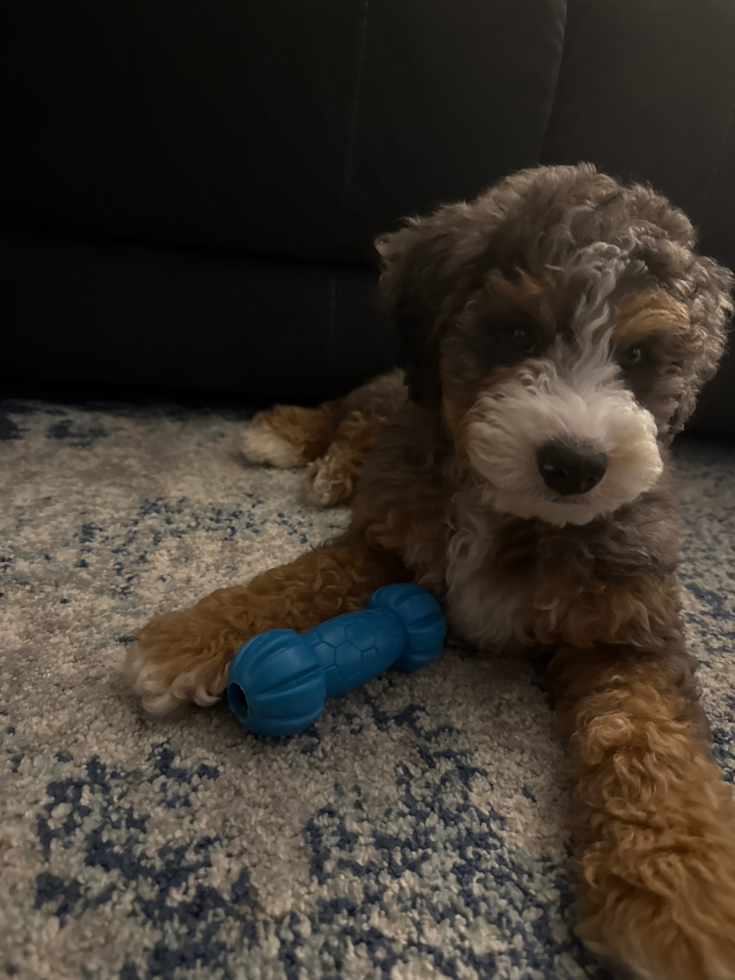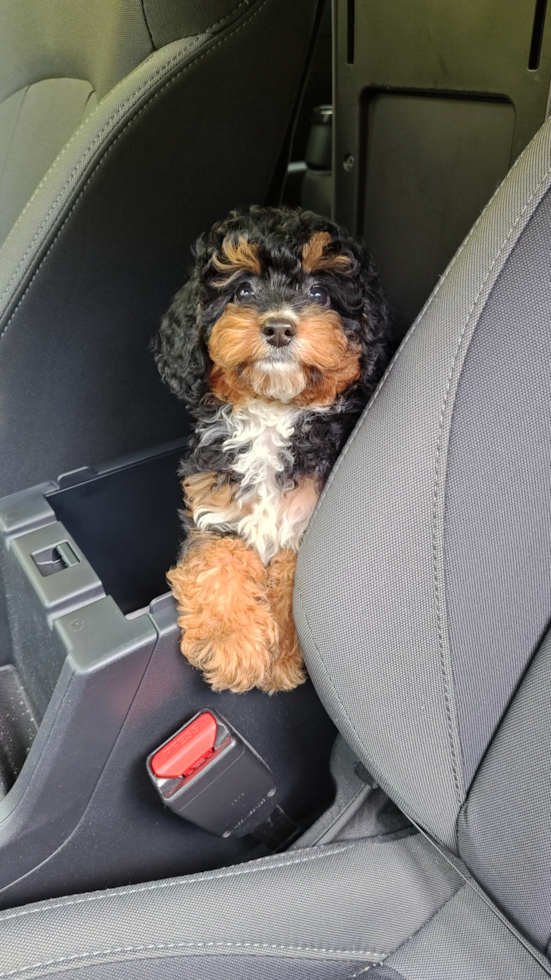





Mini Bernedoodle Breed Information

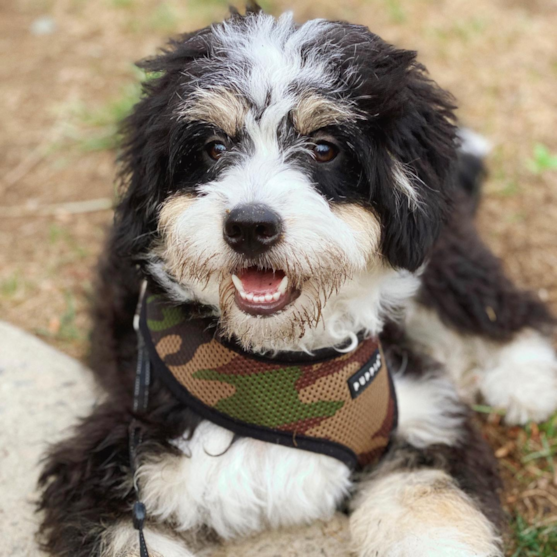
The Mini Bernedoodle is a sweet-natured, intelligent dog with a soft, wavy coat and a calm, loyal personality. Bred from a Miniature Poodle and a Bernese Mountain Dog, this hybrid carries a gentle mix of playfulness and patience that makes it especially well-suited for family life. They’re affectionate without being clingy and playful without being over the top.
With their expressive eyes and teddy bear-like appearance, Mini Bernedoodles make an instant impression. But it’s their steady temperament and easygoing nature that tend to leave the longest-lasting mark. They’re happiest when included in daily routines—whether that’s relaxing on the couch or heading out for a walk through the neighborhood.
Despite their smaller size, Mini Bernedoodles are sturdy and well-balanced. They’re adaptable dogs that do well in different settings, as long as they have company and a little space to stretch their legs. With their soft coat, loyal personality, and gentle energy, they’ve become a popular choice for anyone looking for a devoted companion with a little extra fluff.
BREED TYPE / MIX
Doodle Hybrid / Poodle crossed with a Bernese Mountain Dog
ENERGY
Moderate
SHEDDING
Minimum
TRAINING
Responsive
TEMPERAMENT
Playful, Friendly, Intelligent, Affectionate, Gentle
ADULT WEIGHT
F1: 30-50 lbsF1B: 20-30 lbs
ADULT HEIGHT
13-22 in
LIFE SPAN
12-15 yrs
Characteristics
- Affectionate – Mini Bernedoodles love being close to their people and tend to seek out connection, whether they’re resting at your feet or leaning in for a gentle nudge.
- Gentle and patient – With the calm influence of the Bernese Mountain Dog, these dogs are steady in nature and often do well in homes with children or other pets.
- Smart and attentive – The Poodle side brings intelligence and a strong ability to learn, making them easy to train and eager to please.
- Moderate energy – They enjoy walks, playtime, and outdoor activities, but they’re just as content curling up beside you after a full day.
- Emotionally aware – These dogs are sensitive to tone and mood. They often pick up on changes in the household and adjust their behavior to fit the moment.
- Sociable – Most Mini Bernedoodles are friendly with strangers and quick to warm up once they’ve had a chance to observe and feel safe.
- Low-to-moderate shedding – Thanks to their Poodle lineage, many have coats that shed very little, which can be helpful in allergy-sensitive homes.
- Adaptable – Whether they live in a quiet apartment or a busy home with kids, Mini Bernedoodles tend to settle in easily as long as they’re given enough attention and structure.
- Even-tempered – Their overall disposition is calm, balanced, and emotionally steady, making them a reliable presence in everyday life.
Appearance
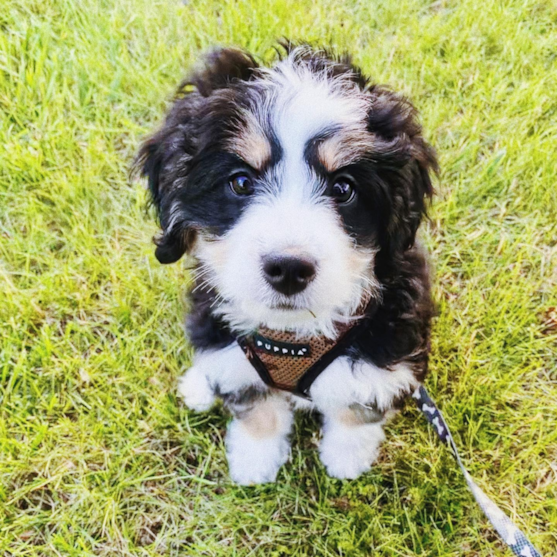
The Mini Bernedoodle has a soft, fluffy look that gives them a gentle, approachable presence. Their size can vary a little depending on which parent they take after more, but most fall into the 18 to 22 inch range at the shoulder and weigh between 20 and 45 pounds. They’re small enough to manage easily, but sturdy enough to keep up with active routines.
Their coat is one of their most distinctive features. Most Mini Bernedoodles have a wavy or slightly curly coat that feels soft and light to the touch. It tends to shed less than the average dog, though it still requires regular care to keep it clean and tangle-free. Some have tighter curls, especially if they take after the Poodle, while others have a more relaxed wave that mirrors the Bernese Mountain Dog side.
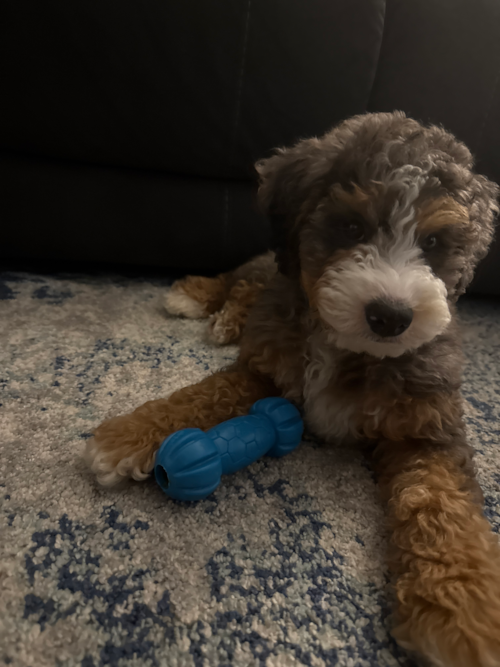
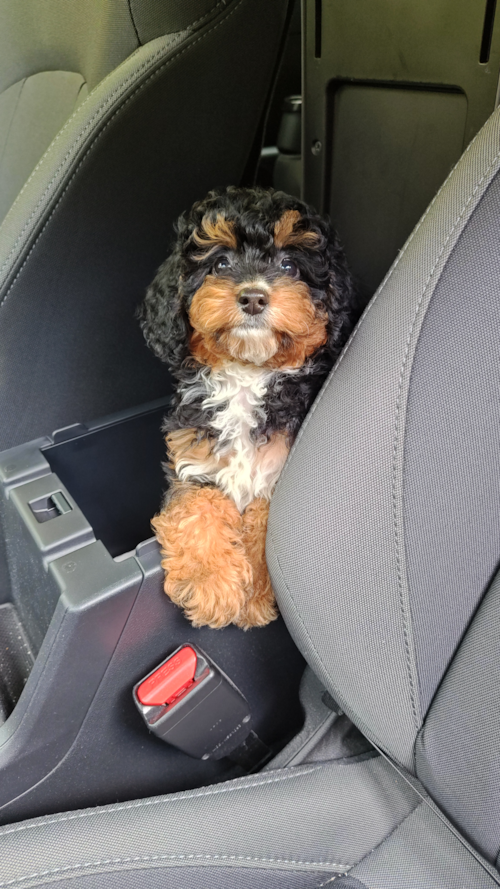
Color patterns vary, but many Mini Bernedoodles carry the classic tricolor markings of the Bernese—black, white, and rust tones arranged across the face, chest, and legs. Others may come in bicolor or solid shades, including black, brown, cream, or gray. Each one looks a little different, and no two coats are exactly the same.
Their eyes are dark, warm, and expressive, set in a face that often looks thoughtful or curious. Ears are medium-length, gently folded, and sit close to the head, giving them a soft, well-framed profile. Their tail is usually carried low with a natural curve, and their body is well-balanced with a straight back and easy, flowing movement.
Photos
Temperament
Mini Bernedoodles have a calm, steady temperament that makes them especially easy to live with. They’re gentle, affectionate, and emotionally aware—often tuning in to the energy around them and adjusting their behavior accordingly. They enjoy being part of the family and do best when they’re included in everyday routines.
These dogs are known for being patient and friendly. They tend to move at a thoughtful pace and rarely rush into new situations. That makes them a good fit for homes with children, older adults, or other pets, especially when they’re introduced with care. They’re social by nature but not overly excitable, and once they feel secure, they’re happy to greet new people with a wag and a quiet curiosity.
The Miniature Bernedoodle personality leans toward calm and easygoing, but they also enjoy playtime. A bit of outdoor fun or a relaxed walk helps keep their mind and body balanced. While they’re not as intense as some working breeds, they do have a curious side and appreciate gentle stimulation—whether that’s a game, a new scent, or a change of scenery.
They form close bonds with their people and tend to follow them from room to room. These dogs don’t like being left out of the loop, and they may show signs of restlessness or boredom if left alone too often. That emotional sensitivity also makes them highly responsive during training. They do best with praise, patience, and a calm approach that builds trust over time.
For those looking for a family-friendly dog that’s loving, adaptable, and not too demanding, the Mini Bernedoodle offers a well-rounded temperament. They settle in easily, build strong bonds, and bring a quiet steadiness that makes them a reliable and comforting presence in the home.
Care
Grooming
The Mini Bernedoodle has a soft, wavy coat that’s pleasant to touch but does need regular care to stay healthy and tangle-free. Depending on which parent they take after more, their coat may lean curlier like the Poodle or slightly straighter like the Bernese Mountain Dog. Most fall somewhere in the middle, with a light, fluffy texture that holds its shape between trims.
They’re considered a low-shedding Poodle mix, but that doesn’t mean they’re low-maintenance. Their coats can mat if left unattended, especially in spots like behind the ears, under the legs, and around the tail. A good brushing at least three to four times per week helps prevent knots and keeps their coat looking clean and full.
Bathing every four to six weeks is usually enough, unless they’ve gotten into something messy. A mild dog shampoo works best—something that keeps the coat soft and the skin moisturized without stripping away natural oils.
Many Mini Bernedoodles benefit from a professional grooming session every six to eight weeks. These visits usually include a trim, nail clip, ear cleaning, and a check on any problem areas where mats might be forming. For those with tighter curls, a shorter trim may be easier to manage in between grooming appointments.
It’s also important to include basic care like brushing their teeth regularly, wiping their ears, and trimming nails as part of their grooming routine. Their ears are floppy and can trap moisture, so a quick check during brushing sessions helps prevent infections.
Grooming a Mini Bernedoodle isn’t difficult, but it does take consistency. With a routine in place and the right tools on hand, it becomes something they grow comfortable with over time. Keeping them clean, brushed, and trimmed helps them look their best—and feel their best, too.
Exercise Needs
The Mini Bernedoodle has a balanced energy level that fits easily into most home routines. They enjoy movement and benefit from daily activity, but they’re not overly demanding. A mix of light exercise and companionship tends to keep them satisfied, both mentally and physically.
Most Mini Bernedoodles do well with 30 to 60 minutes of activity per day. This can include walks through the neighborhood, a bit of play in the yard, or time spent exploring a local park. They don’t need intense workouts, but they do appreciate variety. A change in scenery or a new game can go a long way in keeping things interesting.
Because they’re part Poodle, they have a sharp mind and enjoy a bit of a challenge. Puzzle toys, obedience practice, and interactive games like hide-and-seek help keep their attention and provide valuable mental stimulation. Even a few minutes a day of focused interaction can help prevent boredom and boost confidence.
They’re well-suited to homes with gentle structure. A predictable walk in the morning, some downtime during the day, and a little play in the evening often matches their pace perfectly. While they’re capable of keeping up on a hike or joining in a game of fetch, they’re just as happy strolling at your side or tagging along for errands.
For families or individuals with a steady rhythm, the Mini Bernedoodle’s exercise needs are easy to manage. They thrive on connection more than cardio, and they stay happiest when their day includes time with the people they trust most.
Health
The Mini Bernedoodle is generally a healthy, well-rounded dog when bred responsibly and raised with care. As a mix of two breeds—the Miniature Poodle and the Bernese Mountain Dog—this hybrid often benefits from what’s called hybrid vigor, which can help reduce the risk of some inherited conditions.
Still, it’s important to understand the health considerations that can come with this combination.
Digestive sensitivities and skin issues can occur, especially in dogs with curlier coats or more sensitive stomachs. These problems are usually manageable with a high-quality diet, regular grooming, and a routine vet care schedule. If your dog does show signs of itching, ear irritation, or stomach upset, a dietary adjustment or allergy panel can help pinpoint the cause.
Mini Bernedoodles may also be prone to dental issues, particularly smaller individuals with tighter jaw spacing. Brushing their teeth a few times per week and offering dental chews or professional cleanings when needed can help keep their mouth healthy.
Regular checkups, preventive care, and staying ahead of minor concerns are the best ways to support long-term Poodle Bernese mix wellness. Watching their weight, managing joint health, and maintaining steady activity levels help reduce stress on their frame and keep them feeling their best over time.
Most Mini Bernedoodles enjoy a long, active life with few complications—especially when their care is consistent. With attention to their needs and a close eye on changes in behavior or appearance, these dogs stay vibrant, affectionate, and strong well into their senior years.
Lifespan
The Mini Bernedoodle has a lifespan of around 12 to 16 years, with many living comfortably into their early teens when cared for properly. That long life expectancy is one of the benefits of their mixed-breed background. The Miniature Poodle contributes longevity and durability, while the Bernese Mountain Dog adds warmth, steadiness, and a grounded temperament.
In general, Miniature Bernedoodle longevity is strongest when their health needs are supported with a steady routine. A good diet, regular exercise, mental stimulation, and consistent vet care help reduce the risk of early health issues. Even small daily habits—like brushing teeth, trimming nails, and checking ears—add up to better long-term wellness.
As they age, Mini Bernedoodles often remain emotionally close and aware. They tend to stay alert and affectionate, even as their activity level starts to soften. Most continue to enjoy walks, games, and family time well into their senior years—though at a gentler pace.
Knowing how long Mini Bernedoodles live also means preparing for those later stages. Slower mornings, softer bedding, and occasional health checkups are usually enough to keep them comfortable and included. Many become even more bonded to their people as they grow older, offering the kind of quiet companionship that fits easily into a calm, familiar rhythm.
With the right foundation, the Mini Bernedoodle doesn’t just live a long life—they live a connected one. From puppyhood through their senior years, they stay close, present, and deeply loyal—day in and day out.
Training
The Mini Bernedoodle is an eager, thoughtful learner that responds well to gentle guidance and clear expectations. With the intelligence of the Miniature Poodle and the loyal, steady nature of the Bernese Mountain Dog, they have all the traits of an easy-to-train dog—especially when sessions are consistent, low-pressure, and rooted in trust.
These dogs are naturally tuned in to their people. They pick up on tone, rhythm, and body language quickly, which helps make early training feel intuitive. Most puppies are ready to start learning basic commands within the first few weeks of coming home, and they tend to retain lessons well over time.
Positive reinforcement works best with this breed. They respond more to encouragement than correction, and they thrive in a calm environment where they’re given time to think things through. Food rewards, verbal praise, and play are all helpful tools when guiding their behavior.
Mini Bernedoodle training should focus not just on commands but also on confidence. Because these dogs are emotionally sensitive, it helps to include socialization early and often. Calm introductions to new people, places, and situations help shape a dog that’s balanced and self-assured, rather than overly cautious or dependent.
They enjoy learning and often look forward to training as a form of quality time. Short, simple sessions with clear goals work best, especially for younger dogs with shorter attention spans. Once the basics are in place, they’re also excellent candidates for more advanced work like agility, therapy training, or trick-based games.
With their cooperative spirit and love of routine, Miniature Bernedoodle behavior tends to settle quickly when the training is fair and consistent. They don’t push limits often, but they do need steady guidance—especially during puppyhood and adolescence, when curiosity can get ahead of impulse control.
History
The Mini Bernedoodle is a relatively new hybrid, first intentionally bred in the early 2000s to combine the intelligence and low-shedding coat of the Miniature Poodle with the calm, affectionate nature of the Bernese Mountain Dog. The breed was developed to offer families a loyal companion with a friendlier grooming profile and longer lifespan than the traditional Bernese.
Unlike many older dog breeds with long, traceable histories, the Mini Bernedoodle history is part of the more recent “designer dog” movement. It began in North America, where breeders were focused on combining two distinct breeds to create dogs that offered both companionship and manageability—both in size and care.
The Mini version was achieved by crossing a Bernese Mountain Dog with a Miniature Poodle, rather than the standard-sized Poodle used in regular Bernedoodles. This shift resulted in a smaller dog better suited for urban living, smaller homes, and families looking for a more portable version of a traditionally large breed.
Over time, different Mini Bernedoodle generations have emerged, depending on the parentage used:
- F1 (First Generation) – A direct cross between a Miniature Poodle and a Bernese Mountain Dog. These dogs often have more coat variety and a balance of traits from both sides.
- F1B (Backcross) – A cross between an F1 Bernedoodle and a Miniature Poodle. These dogs tend to have curlier, lower-shedding coats and are often chosen for homes with allergies.
- F2 (Second Generation) – A cross between two F1 Bernedoodles. These dogs are less common and may show a wider range of coat types and temperaments depending on the genetic mix.
The goal across all generations has been to create a healthy, well-rounded dog with the Poodle’s intelligence and hypoallergenic tendencies, combined with the Bernese Mountain Dog’s loyalty and steady presence.
Today, the Mini Bernedoodle continues to grow in popularity, especially among families and individuals looking for a companion that’s loving, manageable in size, and well-suited to everyday life.
Though they’re not recognized by major kennel clubs, they are widely accepted by hybrid and designer dog registries, and their reputation as a thoughtful, family-friendly breed is well established.