





Published Tuesday, November 24, 2026 by Fairfield Furbabies
The Maltipoo vs Malshi comparison is an interesting one because these two little dogs have more in common than their adorable faces might suggest. Both are affectionate companion breeds with Maltese ancestry, soft coats, expressive eyes, and a talent for making themselves part of the family. They enjoy attention, appreciate comfortable places to nap, and have enough personality to make everyday life entertaining. Yet the experience of living with a Maltipoo can feel quite different from life with a Malshi, especially once their individual habits and preferences start to develop.
A Maltipoo may approach the day with a little more curiosity and enthusiasm for whatever its family has planned. A Malshi may have a more deliberate way of participating, with a personality that can be playful, affectionate, and surprisingly self-assured. Neither description tells the whole story, of course, because individual dogs have their own temperaments. Still, understanding these tendencies can help you picture what each breed might bring to your home.
There are practical differences to consider, too. Their coats can look similar as puppies but develop very different textures, their adult sizes overlap without being identical, and their personalities may call for slightly different approaches to training. This guide takes a close look at the Maltipoo and Malshi as individual breeds, from their appearance and history to the small details of daily life. By the end, you should have a clearer idea of which one feels like a natural fit for you.
Table of Contents
Maltipoo vs Malshi Comparison Table
Before we explore their personalities in detail, it helps to see the main differences side by side. The Maltipoo is a Maltese and Poodle mix, while the Malshi combines the Maltese and Shih Tzu. Both fall into the small companion dog category, although their coats, proportions, and preferred activities can differ. The figures below describe typical adult characteristics rather than guarantees for every individual puppy.
| Characteristics | Maltipoo | Malshi |
| Parent Breeds | Maltese × Toy or Miniature Poodle | Maltese × Shih Tzu |
| Other Names | Malt-A-Poo, Maltipoodle, Moodle | Mal-Shi, Malti-Tzu, Malt-Tzu, Maltese Shih Tzu mix |
| Adult Weight | Approximately 5–20 pounds, with many smaller Maltipoos around 5–10 pounds | Approximately 6–14 pounds, although some are larger |
| Adult Height | Approximately 8–14 inches | Approximately 9–12 inches |
| Coat Type | Soft, straight to wavy or curly; fleece-like or fluffy | Soft, silky to plush; straight or gently wavy |
| Hypoallergenic Qualities | Low-shedding reputation; no dog is completely hypoallergenic | Low-shedding reputation; no dog is completely hypoallergenic |
| Grooming Needs | Brush several times weekly or daily for curlier coats; professional trims approximately every 4–8 weeks | Brush several times weekly, with close attention to longer facial hair; professional trims approximately every 4–8 weeks |
| Exercise Needs | Approximately 30–45 minutes daily | Approximately 30–45 minutes daily |
| Training | Responsive, curious, and receptive to short, reward-based lessons | Intelligent and responsive, with occasional independent preferences |
| Colors | White, cream, apricot, red, tan, black, gray, chocolate | White, cream, gold, tan, brown, black, and mixed-color patterns |
| Temperament | Affectionate, lively, sensitive, sociable, curious | Affectionate, cheerful, confident, playful, devoted |
| Best Fit | People who enjoy an involved little companion and regular interactive play | People who appreciate an affectionate companion with a playful yet self-assured personality |
Maltipoo vs Malshi Overview
The Maltipoo and Malshi belong to the world of intentionally developed companion crosses, where the goal has been to create small dogs with appealing personalities and manageable household needs. Their histories are relatively recent compared with those of established purebred dogs. Neither cross has one universally documented founder or an exact creation date that everyone agrees upon. What matters most to today's owners is how each breed developed its own following and identity.
Maltipoo History and Popularity
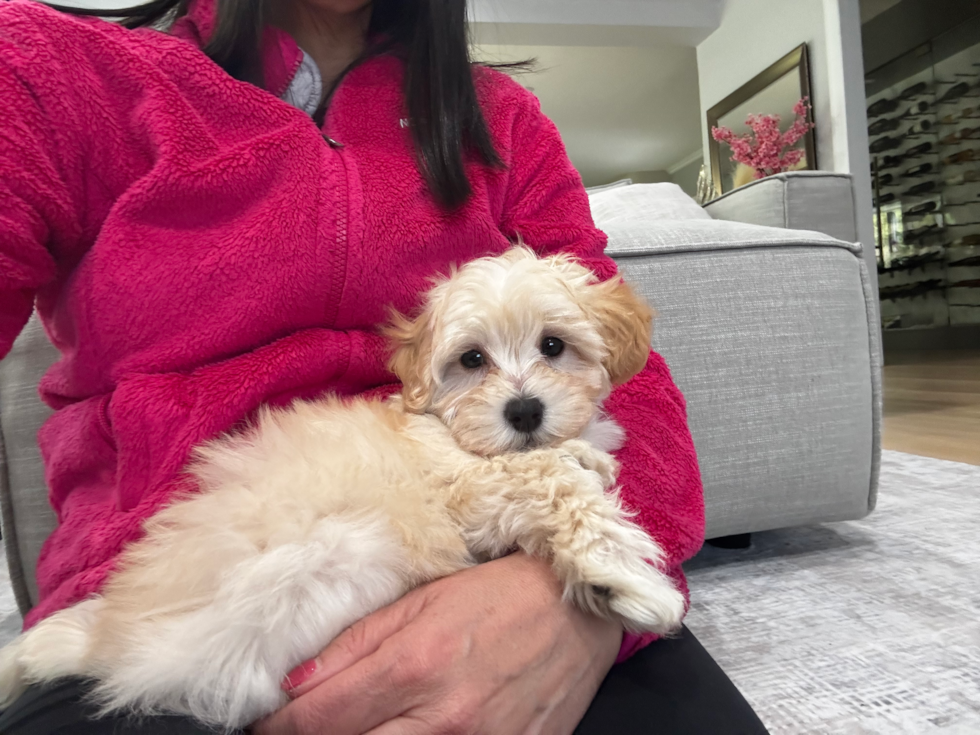
The Maltipoo gained attention during the growth of small Poodle mixes in the late twentieth century and early 2000s. Families were drawn to the possibility of a compact dog with a soft, low-shedding coat and a sociable personality. As more people discovered the cross, the Maltipoo developed a following that reached well beyond those who were specifically interested in Poodle mixes. Its reputation as a friendly, affectionate house companion gave it lasting appeal among apartment residents, couples, families, and first-time dog owners.
Part of the Maltipoo's popularity comes from the variety within the breed. Some have loose, tousled waves and a delicate little face, while others have tighter curls and a fuller, rounded outline. Their personalities can show similar variety, although affection and a strong interest in people are common themes. This range has helped the Maltipoo attract owners with different preferences, from those who enjoy a relaxed afternoon at home to people who want a small dog eager to participate in their activities.
The breed's modern identity centers on companionship. Maltipoos have found their place in homes where close contact with people is part of the daily routine, and their size makes them practical for many living arrangements. They are also popular with people who like to teach their dogs tricks and household manners through short, positive lessons. Their cheerful expressions and soft coats may attract attention first, but their ability to form meaningful relationships with their families is what gives the breed its staying power.
Malshi History and Popularity

The Malshi, also written Mal-Shi, became better known as interest in small companion crosses expanded in places such as Australia and the United States. Its appeal was straightforward: a little dog with the affectionate nature of the Maltese and the recognizable charm of the Shih Tzu. Over time, the Malshi established an identity of its own, particularly among people who appreciated a compact companion with a soft coat and a confident personality. The cross is now familiar to many families who search for small dogs suited to close indoor companionship.
The Malshi also belongs to the group of dogs associated with the nickname Teddy Bear. That term describes a particular soft, rounded appearance rather than one single cross. It commonly includes both the Malshi and the Shichon, which is a Bichon Frise and Shih Tzu mix. For a Malshi, the nickname makes sense when a rounded haircut frames the eyes, nose, and cheeks, although not every dog has the exact same teddy-bear look.
One reason the Malshi continues to appeal to dog lovers is its balance of affection and individuality. This little dog enjoys human company but can also have strong opinions about what deserves its attention. A favorite resting spot, a particular toy, or the person it prefers to sit beside may matter quite a lot to an individual Malshi. Those small preferences are part of the breed's appeal, especially for owners who enjoy a companion with a distinct personality rather than a dog who responds to every invitation in precisely the same way.
Maltipoo vs Malshi Appearance
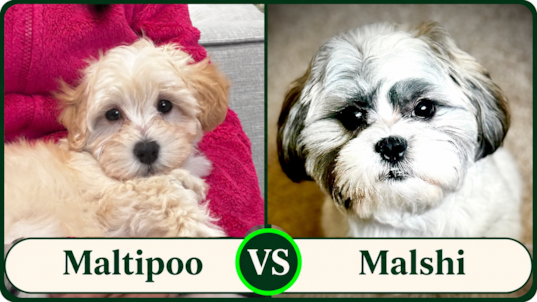
At first glance, Maltipoo and Malshi puppies can be difficult to tell apart. Both can have dark, round eyes, floppy ears, small black noses, and coats that give them a soft, cuddly appearance. Their faces can look remarkably similar in photographs, especially when both have short puppy-style haircuts. As they mature, differences in body shape, muzzle length, and coat texture can make their individual looks easier to recognize.
Maltipoo Appearance
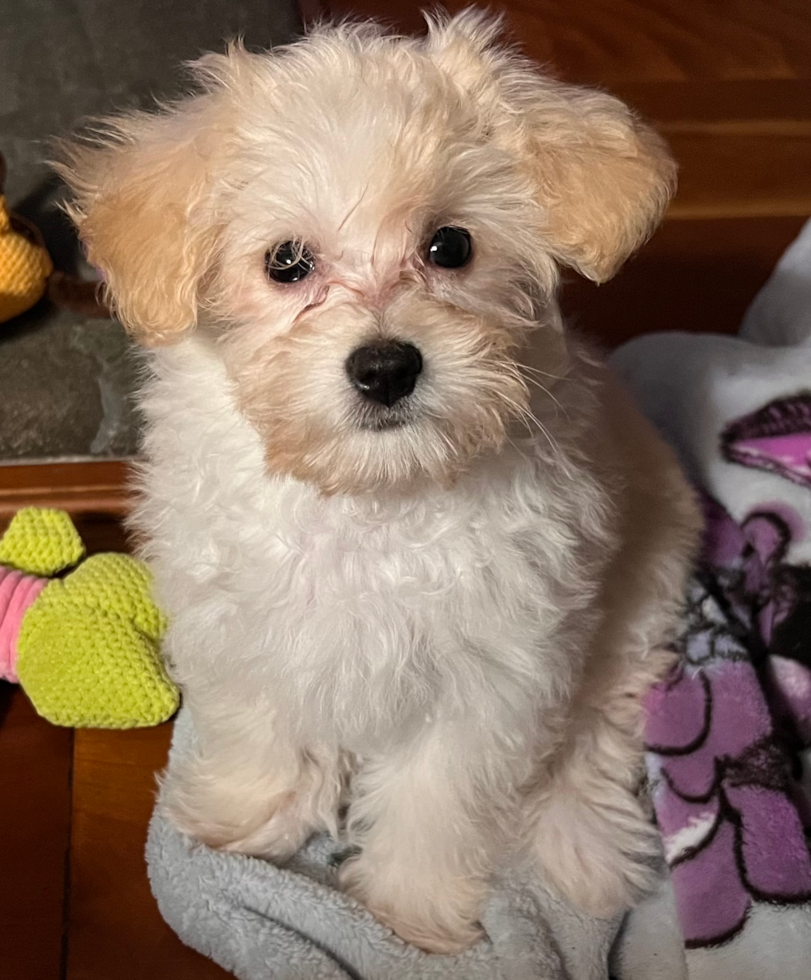
The Maltipoo has a light, compact appearance, although its proportions vary with the size of the Poodle used in the cross. A smaller Maltipoo may weigh around 5 to 10 pounds, while some dogs from larger size lines can reach 15 to 20 pounds. Height varies as well, with adult Maltipoos commonly standing around 8 to 14 inches at the shoulder. Many have a slightly longer-legged silhouette than people expect from such a fluffy little dog. Beneath the coat, the body can look quite fine and athletic, even when the dog appears round and plush after a haircut.
The Maltipoo coat is probably its most recognizable feature, but there is no single texture that describes every dog. Some have loose waves that fall into soft strands, while others develop a dense coat with defined curls. A few have a straighter texture that looks more like long, fluffy hair than the typical curly Poodle mix. White and cream are familiar colors, but apricot, red, tan, black, gray, and chocolate also appear. A puppy's coat may lighten or change in texture with age, so an early photograph does not always show exactly how the adult dog will look.
Around the face, Maltipoos have dark, expressive eyes and ears that hang beside the cheeks. Their muzzle is generally defined rather than flat, although its length varies. The tail may curve upward and carry a soft plume of hair, particularly when the dog is alert or excited. Grooming plays a major role in their appearance because curls and waves can conceal tangles close to the skin. Regular brushing, careful combing around the ears and legs, and scheduled professional trims help preserve that soft, comfortable coat.
Malshi Appearance
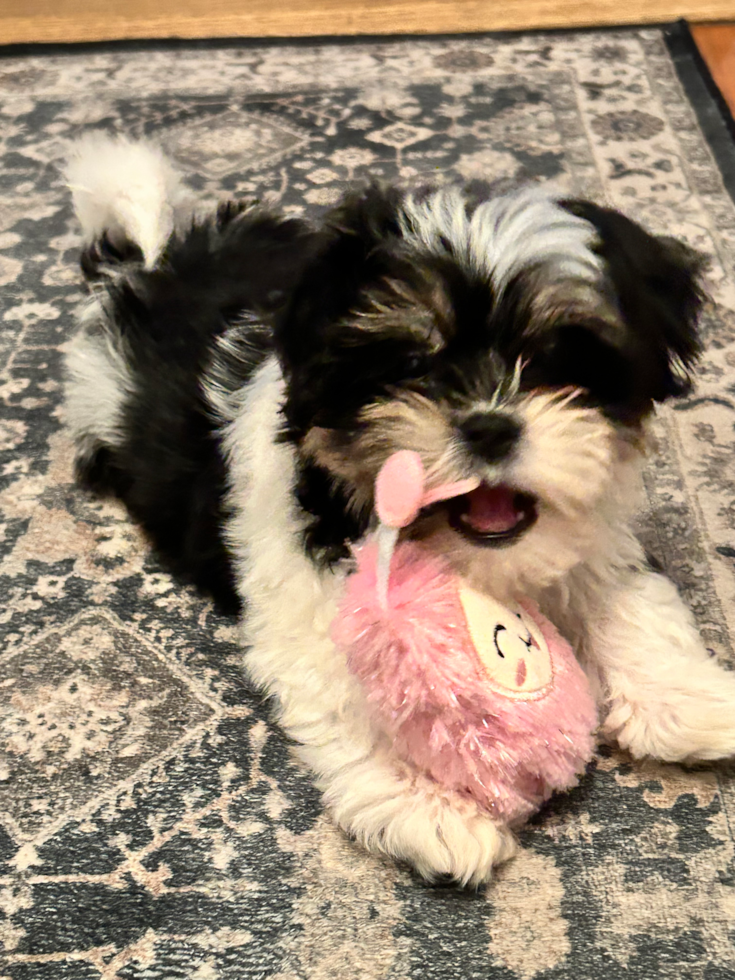
The Malshi has a compact body that can appear a little broader and more substantial than its weight suggests. Many adults fall between 6 and 14 pounds and stand approximately 9 to 12 inches tall. Their legs are relatively short compared with some Maltipoos, although there is enough variation that height alone will not identify the breed. A Malshi may have a rounded chest, a sturdy little frame, and a confident way of carrying itself. That solid appearance is part of what gives some Malshis their distinctive teddy-bear outline.
The facial features are particularly interesting because the Malshi can inherit different muzzle proportions. Some have a shorter, broader muzzle with a round face, while others show a little more length and definition. Their eyes are commonly dark and prominent, and the ears hang close to the sides of the head beneath a generous covering of hair. The expression can change dramatically with grooming, especially when the hair around the eyes and cheeks is trimmed into a neat, rounded shape. A shorter facial trim also makes it easier to keep the area around the eyes and mouth tidy.
Malshi coats tend to feel soft and silky, although some develop a fuller, plush texture with a gentle wave. White, cream, gold, tan, brown, and black can appear alone or in different combinations. A Malshi with dark patches around the ears or face can look quite different from one with a mostly white coat, even when their body shapes are similar. Longer hair needs consistent attention because fine strands can gather into knots behind the ears, under the collar, and around the legs. A tidy puppy cut offers a practical option for owners who prefer a neat look without the upkeep of a longer coat.
Maltipoo vs Malshi Appearance Comparison
The clearest visual difference tends to be the coat's natural behavior. A curly Maltipoo can look like a miniature plush toy, with hair that stands away from the body and gives the dog a rounded outline. A Malshi with longer, silkier hair may have a softer, flowing appearance, especially around the ears and chest. After both receive short, rounded haircuts, however, that distinction becomes much less obvious. This explains why photographs alone are not always enough to tell the two apart.
Their adult sizes also overlap considerably, so the name of the breed does not tell you exactly how much space the dog will take up. Some Maltipoos are noticeably smaller than Malshis, while others are taller or heavier. The more useful difference for many owners is the way the coat feels and behaves between grooming appointments. Loose curls may trap tangles that are difficult to see, while long, fine hair can form knots wherever it rubs against another surface. Both need regular care, and neither should be treated as a maintenance-free dog simply because it sheds less than many other breeds.
There is another detail worth remembering when comparing their looks: grooming style can change a dog's appearance more than people expect. A Maltipoo with a short body trim and rounded head may look very different from the same dog in a longer, wavy coat. The Malshi can shift from a silky, flowing look to a compact teddy-bear style just as dramatically. For that reason, it makes sense to appreciate the dog's natural proportions and coat texture instead of choosing solely from a particular haircut. The haircut can change next month, but the dog's build and natural hair pattern will still be there.
Maltipoo vs Malshi Temperament
Personality is where the Maltipoo vs Malshi comparison becomes especially useful. Both dogs enjoy affection and form close relationships with their families, but they can express that affection in different ways. A Maltipoo may show interest through lively participation, while a Malshi may combine enthusiasm with a more selective approach to certain activities. These are tendencies rather than fixed rules, and the individual dog's early experiences, temperament, and daily routine matter enormously.
Maltipoo Temperament

The Maltipoo has a warm, curious personality that makes everyday activities feel like shared events. Many enjoy following the movement of the household and investigating anything new that appears within reach. A fresh toy, a different walking route, or a visitor at the door can attract immediate interest. This curiosity gives owners plenty of opportunities to introduce simple games and useful household skills. A Maltipoo who learns that good manners earn attention and rewards can develop into an attentive and enjoyable little companion.
There is also a sensitive side to the Maltipoo that deserves consideration. These dogs can respond strongly to the tone of a person's voice and may lose confidence when lessons feel harsh or unpredictable. Short sessions with clear expectations tend to suit them better than lengthy drills. Basic skills such as coming when called, settling on a mat, and waiting politely at a doorway are valuable because they turn the Maltipoo's eagerness into habits that work well at home. Their intelligence is enjoyable, but it still needs patient direction.
Maltipoos are affectionate dogs, and many want frequent contact with the people they know. That might mean choosing a seat near the family during the evening, checking on someone in another room, or arriving with a toy when the household becomes lively. They can also have an alert side and may bark at unfamiliar sounds, especially before they understand which noises are part of normal life. Early practice with visitors, household routines, and calm greetings can help. The goal is a dog who feels comfortable in everyday situations without expecting constant excitement.
Daily exercise is manageable for most Maltipoos, with approximately 30 to 45 minutes of walks and play as a reasonable starting point. Some prefer several brief outings, while others enjoy a longer stroll and a favorite game at home. A small dog's exercise needs should not be judged by size alone because an enthusiastic Maltipoo may still want plenty to do. Families with children can appreciate the breed's cheerful personality, provided everyone understands gentle handling and respects the dog's space. The best interactions involve both affection and clear boundaries, especially during the energetic puppy stage.
Malshi Temperament

The Malshi has a cheerful personality with a little character of its own. One may trot over as soon as someone calls, while another takes a moment to decide whether the invitation sounds worthwhile. This does not mean the breed lacks intelligence or affection. It reflects the independent streak that some Malshis display alongside their strong desire for companionship. Owners who appreciate a dog with preferences and a bit of comic timing may find that quality especially endearing.
A Malshi can also be surprisingly observant about the routines of its home. These dogs learn where meals happen, which chair offers the best view of the room, and what certain household sounds mean. They may recognize the difference between someone preparing for a walk and someone simply searching for their keys. That awareness is useful in training because familiar routines provide a clear structure for lessons. A Malshi who understands what happens next can respond confidently, particularly when rewards and expectations are consistent.
Affection is central to the Malshi temperament, but it does not always look like constant movement or an endless stream of requests for attention. Some are happy to sit close enough for an occasional scratch while the family watches television. Others enjoy climbing into a lap as soon as one becomes available. Many have a playful side that appears in short, enthusiastic bursts, especially with familiar people and favorite toys. Their social confidence can grow through calm introductions to visitors, new places, and ordinary household experiences.
Training a Malshi calls for patience and a sense of humor. Repeating the same exercise without a clear reward may not hold the attention of a dog who has other ideas about the afternoon. A few cheerful repetitions followed by a short break can be much more productive. The breed can learn excellent household manners, from polite greetings to a reliable recall in suitable surroundings, but consistency is important. An adult Malshi with good habits is a pleasure to live with because its affectionate nature has room to shine without small frustrations taking over the routine.
Maltipoo vs Malshi Temperament Comparison
The Maltipoo may have a slight advantage for an owner who enjoys teaching tricks, introducing different games, and inviting a dog into frequent little activities. Its curiosity and responsiveness can make training feel like a conversation, especially when the dog understands that participation leads to something enjoyable. The Malshi can be equally capable of learning, although some need a little more persuasion before they commit to a task. Neither approach is a problem when the owner understands the dog's motivation. It is simply helpful to know that two intelligent small dogs can have different attitudes toward the same lesson.
Their exercise requirements are closer than many comparisons suggest. Around 30 to 45 minutes of activity can suit either breed, with adjustments for age, individual energy, and daily routine. The Maltipoo may request another game after a walk, while a Malshi may prefer a quiet break before its next burst of play. Yet there are very active Malshis and remarkably laid-back Maltipoos, so those patterns should guide expectations rather than dictate them. What matters most is providing regular activity and noticing when the dog seems ready for more or needs time to rest.
Both breeds can live comfortably in apartments, provided their owners establish good habits around noise, visitors, and time alone. A Maltipoo may bark because it wants to investigate something, while a Malshi may announce a sound that has interrupted its comfortable routine. The reason matters more than the breed label because the right response depends on what the dog has learned. Rewarding calm behavior, teaching a quiet cue, and giving the dog a predictable daily schedule can make a real difference. Neither breed should be expected to stay silent simply because it is small.
With children and other pets, the best fit depends on the personalities involved. Maltipoos may enjoy lively interaction, although their smaller size calls for care around rough play. Malshis can be sociable family dogs, too, but some prefer familiar, respectful interactions over constant attention from everyone in the room. Both benefit from supervised introductions, positive experiences, and places where they can take a break. For a household with young children, teaching the children how to interact gently is just as important as teaching the puppy good manners.
One subtle difference may matter more than the usual descriptions of playful versus calm. A Maltipoo can suit someone who finds joy in a dog that eagerly participates in the small events of the day. A Malshi can appeal to someone who enjoys companionship with a little independent personality mixed in. Both will have active moments and quiet ones, and either dog can surprise its owner. The best match is the one whose likely temperament feels comfortable with the way your household already lives.
Maltipoo vs Malshi Conclusion
The choice between a Maltipoo and a Malshi comes down to the type of relationship you would most enjoy with a small companion.
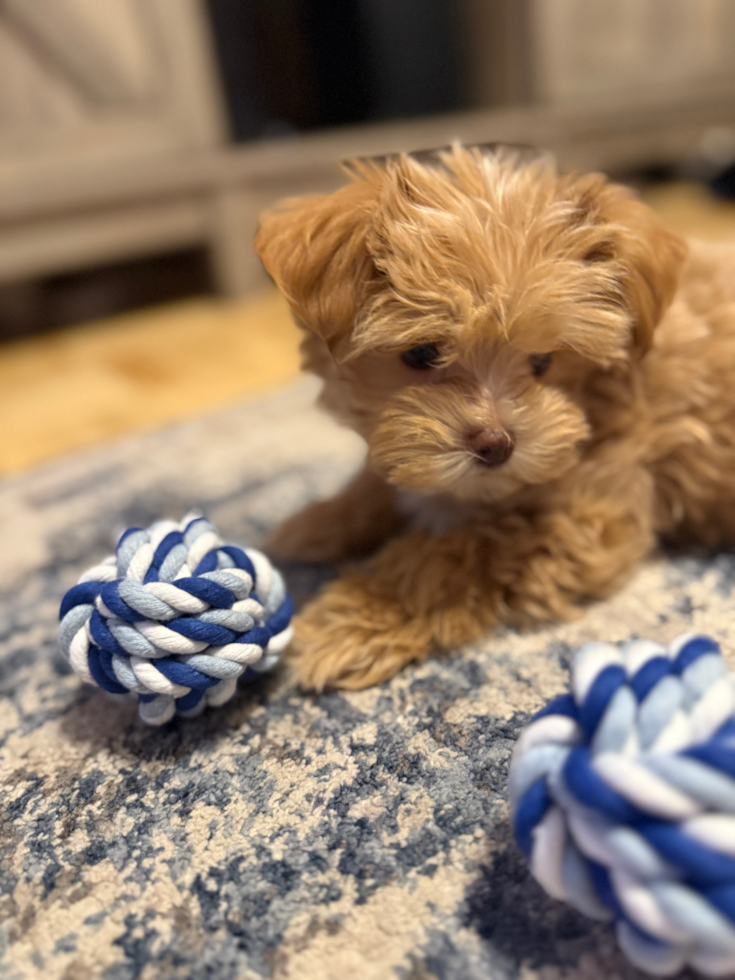
If you like the idea of a curious little dog who welcomes new games, responds enthusiastically to short lessons, and brings a lively presence to your daily routine, the Maltipoo deserves serious consideration. Its soft coat, expressive personality, and enthusiasm for human company make it especially appealing to people who enjoy active involvement with their pets. Just be prepared to give that enthusiasm some direction through consistent training and regular activity.

If you prefer a dog with a slightly more self-assured personality, the Malshi may feel like a better match. Its affectionate nature can sit comfortably alongside a bit of independence, and that combination gives the breed plenty of character. A Malshi can enjoy family activities without needing to approach every moment at full speed, although individual dogs vary. For someone who appreciates a little dog with definite preferences, cheerful playfulness, and a strong place in the household, the Malshi has a great deal to offer.
The important thing is to imagine an ordinary Tuesday rather than the excitement of bringing home a puppy. Think about the walks you enjoy, the time you have for grooming, the way your family interacts, and how much you like teaching new skills. Those everyday details will tell you more about the right choice than a photograph or a list of flattering adjectives. Whether you lean toward the Maltipoo or the Malshi, a thoughtful match creates the foundation for a rewarding life together.
Frequently Asked Questions
Are a Maltipoo and a Malshi the same breed? No, the Maltipoo and Malshi are two different crosses, even though they share Maltese ancestry. A Maltipoo comes from a Maltese and a Toy or Miniature Poodle, while a Malshi comes from a Maltese and a Shih Tzu. Both were developed as companion dogs and can have similar sizes, colors, and affectionate personalities. Their differences are most noticeable in coat texture, facial proportions, and some temperament tendencies. A fluffy white puppy from either cross can look similar in a photo, so the breed name and background matter.
Which dog is smaller, a Maltipoo or a Malshi? A Maltipoo from a smaller size line may be lighter than a typical Malshi, but that is not a rule for every dog. Maltipoos have a wider potential size range because Toy and Miniature Poodles differ in stature. Malshis tend to occupy a somewhat narrower range, although individual adults can fall outside the usual estimates. If size matters for your home or travel plans, it is worth paying attention to the adult size estimate for the individual puppy. Breed averages are useful guides, but they cannot promise an exact adult weight.
Is a Maltipoo coat easier to maintain than a Malshi coat? Neither coat is automatically easier because the natural texture makes such a difference. A curly Maltipoo may need daily attention to prevent tight knots near the skin, while a Maltipoo with loose waves may be easier to comb. A Malshi with longer, silky hair needs careful brushing where strands rub together, especially near the ears, collar, and legs. Shorter trims can reduce daily upkeep for either breed, although they do not eliminate brushing altogether. The most practical choice is a coat length you can maintain comfortably between professional appointments.
Do Maltipoos and Malshis shed a lot? Both are known for low-shedding coats, which is one reason people are interested in them. However, low shedding does not mean that no hair will ever appear on your clothes or furniture. Coat type varies, and individual dogs can shed different amounts even within the same cross. Neither breed is completely hypoallergenic, so someone sensitive to dogs should not rely on the breed name as a guarantee. Regular brushing also helps remove loose hair before it gathers in the coat.
Which breed is easier to train for a first-time owner? The Maltipoo may appeal to beginners who enjoy interactive lessons because many are eager to participate and respond well to rewards. Malshis can also learn quickly, but some show more independence and need a little extra patience. House rules, short lessons, and consistent rewards work well for both. A first-time owner who learns to recognize what motivates the individual dog can make excellent progress with either breed. Training success has much more to do with daily consistency than with choosing the supposedly smarter dog.
Can a Maltipoo or Malshi live happily in an apartment? Yes, both breeds can adapt well to apartment life because of their small size and manageable exercise needs. The bigger considerations are daily companionship, appropriate activity, and habits around noise. A dog who barks at hallway sounds will need patient guidance whether it is a Maltipoo or a Malshi. Regular walks provide opportunities to explore the neighborhood and practice calm behavior around people and other dogs. A comfortable indoor routine and clear expectations matter more than the number of rooms in the home.
Are Maltipoos or Malshis better with cats? Either breed can share a home with a cat when introductions are thoughtful and both animals have space to feel comfortable. A curious Maltipoo may show immediate interest in the cat, while a Malshi might approach more cautiously or confidently depending on its personality. Neither reaction tells you whether the relationship will succeed. The cat should have access to places the puppy cannot follow, and early interactions should be calm and supervised. Allowing both animals to adjust at their own pace gives the household the best chance of developing an easy routine.
Which breed is quieter, the Maltipoo or the Malshi? There is no reliable rule that makes one of these crosses consistently quieter than the other. Maltipoos can be vocal when excited or curious, and Malshis may bark when they notice unfamiliar activity. Some individual dogs are quite quiet, while others have plenty to say about the doorbell. Early training can teach either breed to acknowledge a sound without continuing to bark. If you live in a building with close neighbors, calm-greeting practice and a predictable routine are worthwhile from the beginning.
Can Maltipoos and Malshis stay home alone during the workday? Both are companion-oriented dogs that enjoy regular contact with their people, so a long day alone deserves careful planning. Puppies need more frequent attention and breaks than adult dogs, regardless of breed. Adults can learn to spend reasonable periods alone through gradual practice, but their comfort levels differ. A safe resting area, familiar routine, and appropriate opportunities for activity help make departures less disruptive. If your schedule keeps you away for many hours, arranging a visit or break during the day may be useful for either breed.
How do I decide between a Maltipoo and a Malshi if I love them both? Start with the details that will affect your ordinary life together. A Maltipoo might suit you better if you enjoy little training sessions, interactive play, and a dog with an enthusiastic interest in household activity. A Malshi might appeal more if you appreciate affectionate companionship with a bit of independent character and a soft, silky-coated appearance. Then consider the individual puppy, because personality and adult size can vary within either cross. The right decision is the one that fits your home, your available time, and the kind of everyday companionship you hope to share.