





Published Thursday, November 19, 2026 by Fairfield Furbabies
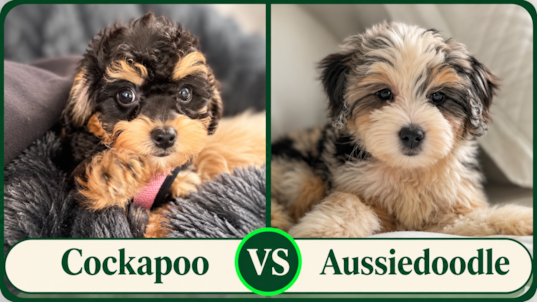
The Cockapoo and Mini Aussiedoodle have plenty in common, from their beautiful coats and affectionate personalities to their intelligence and enthusiasm for family life. Both have a playful side that can turn an ordinary afternoon into an adventure, and both enjoy the kind of companionship that comes from spending plenty of time with their favorite people. Yet these two dogs can have different ideas about what makes a day enjoyable, particularly in the activities that capture their attention. A closer look at the Cockapoo vs Mini Aussiedoodle reveals differences in their appearance, energy, behavior, and the way they interact with their surroundings.
The Cockapoo is a cheerful, outgoing companion with a playful curiosity that can make walks, games, and social experiences especially enjoyable. The Mini Aussiedoodle brings a more attentive style of enthusiasm, with a quick mind and an interest in activities that involve learning, movement, and cooperation. Neither breed has a completely predictable personality, and individual dogs can show a wide variety of characteristics as they mature. Understanding what distinguishes these companions can help you decide which one is more likely to enjoy the activities, routines, and relationships that already make up your everyday life.
Cockapoo vs Mini Aussiedoodle Comparison Table
The Cockapoo and Mini Aussiedoodle share several appealing qualities, but their physical characteristics and everyday needs can differ in meaningful ways. Their adult sizes overlap, although the Mini Aussiedoodle can have a taller, more athletic appearance, while the Cockapoo tends toward a compact frame with soft, expressive features. Both enjoy human interaction, but the activities that capture their attention may vary according to their individual temperaments. The table below highlights their most important characteristics before we explore what life with each breed can look like.
| Characteristic | Cockapoo | Mini Aussiedoodle |
| Parent Breeds | Cocker Spaniel and Toy or Miniature Poodle | Mini Aussie and Miniature Poodle |
| Other Names | Cockerpoo, Cockapoodle, Cocker Spaniel Poodle Mix | Miniature Aussiedoodle, Mini Aussiepoo, Mini Aussiepoodle, Mini Aussie Poodle Mix |
| Adult Weight | Approximately 12–25 pounds | Approximately 8–25 pounds, with some larger individuals |
| Adult Height | Approximately 10–15 inches | Approximately 12–18 inches |
| Coat Type | Soft, wavy, curly, or straighter with longer feathering | Wavy, curly, or straighter, with varying density and texture |
| Hypoallergenic Qualities | Low-shedding potential; no hypoallergenic guarantee | Low-shedding potential; no hypoallergenic guarantee |
| Grooming Needs | Moderate to high; frequent brushing and regular professional grooming | Moderate to high; consistent brushing and professional grooming according to coat type |
| Exercise Needs | Approximately 40–60 minutes daily | Approximately 45–75 minutes daily |
| Training | Intelligent, responsive, playful, and motivated by rewards and interaction | Highly intelligent, attentive, quick to learn, and enthusiastic about structured challenges |
| Colors | Cream, apricot, red, chocolate, black, gold, sable, and multicolored combinations | Black, blue merle, red merle, chocolate, cream, apricot, white, tan, and multicolored combinations |
| Temperament | Affectionate, sociable, cheerful, curious, playful, and outgoing | Affectionate, alert, intelligent, attentive, energetic, and loyal |
| Best Fit | Owners who enjoy an affectionate companion with enthusiasm for social activities, walks, and games | Owners who enjoy an attentive companion that participates enthusiastically in training, games, and varied activities |
Adult measurements are approximate because neither mix has a standardized size. Exercise estimates describe adult dogs and should be adjusted according to age, individual energy, and daily routines.
Cockapoo vs Mini Aussiedoodle Overview
The Cockapoo and Mini Aussiedoodle belong to different generations of modern companion crosses, although both have developed a loyal following among people who appreciate intelligent, affectionate dogs. The Cockapoo has been familiar to dog lovers for several decades, while the Mini Aussiedoodle belongs to a newer wave of smaller companions with an emphasis on interactive personalities. Their histories help explain how each developed its recognizable identity, but the appeal of these dogs extends well beyond their ancestry. Today, both attract families and individuals who enjoy close relationships with their pets, even if their preferences for daily activities are somewhat different.
Cockapoo History and Popularity
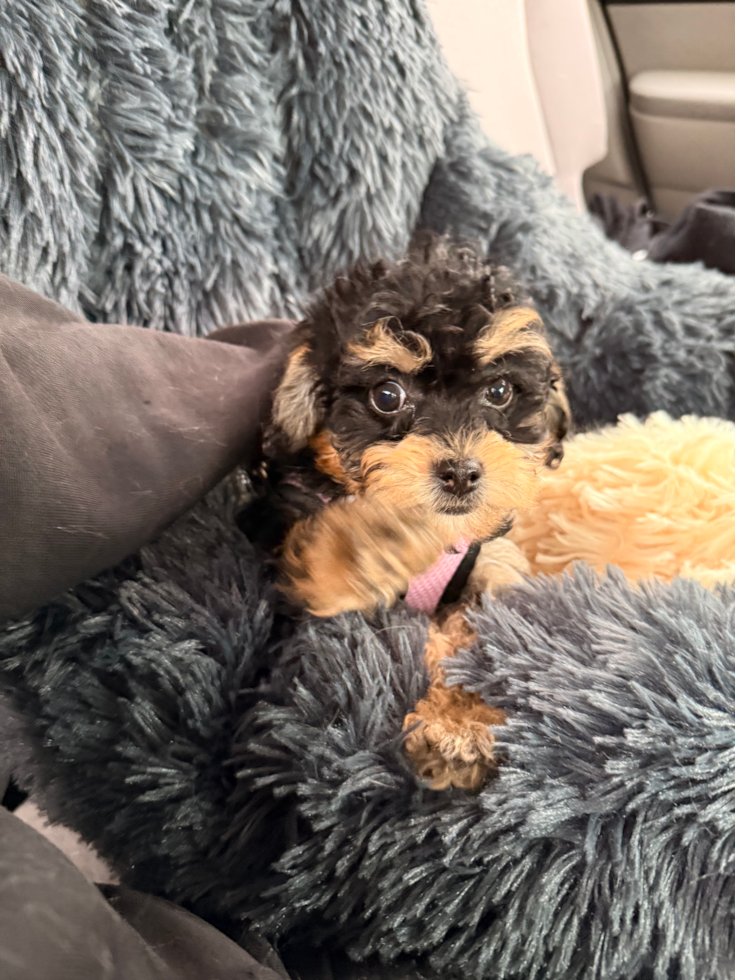
The Cockapoo has one of the longest histories among modern Poodle crosses, with examples documented in the United States during the 1950s. By the following decade, the mix had attracted attention from people who appreciated its cheerful personality, manageable size, and distinctive soft coat. Cockapoos were established as companion dogs well before the wider popularity of many modern Doodle mixes, which helped create a lasting identity among enthusiasts. Although no single breed standard defines every Cockapoo, dedicated clubs and generations of owners have contributed to a recognizable picture of the breed. That picture centers on an affectionate, playful dog with a strong interest in people and a lively approach to everyday experiences.
The Cockapoo's popularity has endured partly because its personality can suit people who enjoy a sociable companion without wanting a particularly large dog. Its cheerful disposition and enthusiasm for interaction can make it an entertaining presence in the household, especially when daily routines include walks, games, and opportunities to explore. Many Cockapoos also enjoy relaxed companionship after an active part of the day, which gives them an appealing balance between playfulness and affection. Their intelligence and willingness to participate in training add to their attraction, particularly for owners who appreciate a dog that enjoys learning. The Cockapoo's reputation has developed around these everyday qualities rather than one particular appearance or color.
Cockapoos can vary considerably because the mix may involve different Cocker Spaniel types and different Poodle sizes. Some have a more compact, companion-focused appearance and temperament, while others display greater athleticism and enthusiasm for outdoor activity. These differences influence the experience of living with an individual Cockapoo, particularly when it comes to exercise, training, and the amount of activity that captures the dog's interest. The breed's long history has not eliminated that variety, and prospective owners should appreciate the range of personalities within the mix. What unites many Cockapoo enthusiasts is their affection for a dog that brings warmth, curiosity, and a cheerful presence into family life.
Mini Aussiedoodle History and Popularity
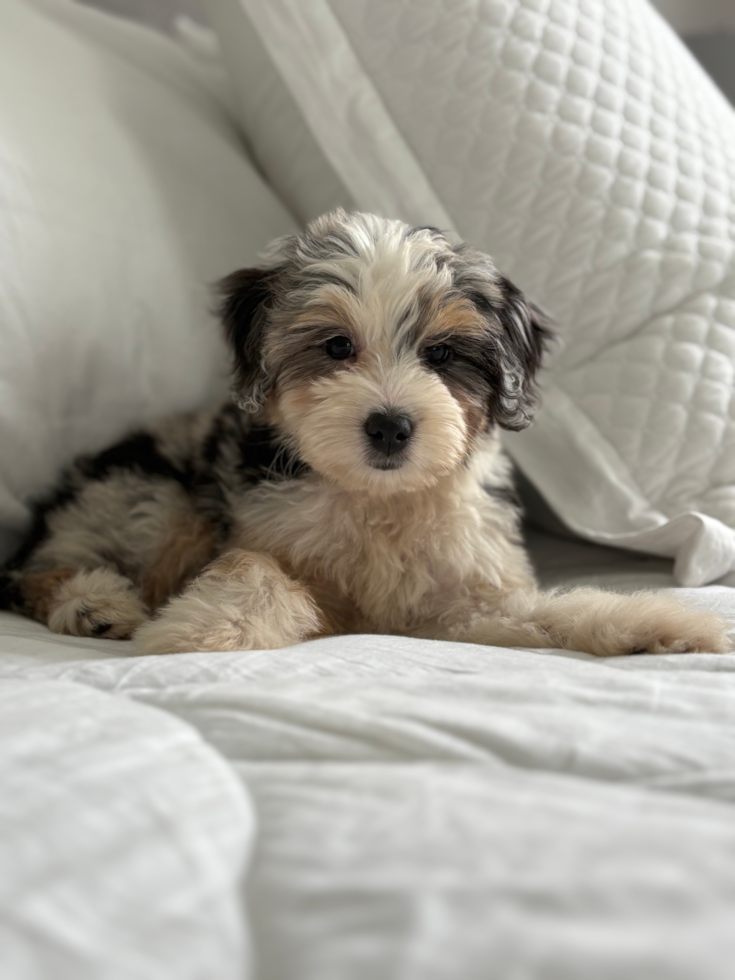
The Mini Aussiedoodle developed as interest expanded in smaller companions that could offer intelligence, trainability, and an active personality within a manageable size. Created through the combination of the Mini Aussie and Miniature Poodle, the mix belongs to the more recent development of companion Doodles. There is no universally documented founding date or single breeding program that defines the beginning of the Mini Aussiedoodle. Nevertheless, the mix has developed a recognizable identity through its alert expression, colorful appearance, and enthusiasm for interaction with its family. Its popularity reflects an interest in dogs that can enjoy close companionship while also participating in activities that engage their minds.
The Mini Aussiedoodle appeals to people who appreciate a dog that pays attention to its surroundings and enjoys learning how things work. Its intelligence can be particularly noticeable in the speed with which it recognizes familiar routines, learns the meaning of cues, and anticipates activities it enjoys. Many are enthusiastic about games that involve direction, movement, or problem-solving, which can create an especially rewarding relationship with owners who enjoy regular training. Their affectionate personalities add another appealing dimension because their interest in activities frequently goes hand in hand with a strong attachment to family members. This combination has helped the Mini Aussiedoodle attract people who want an involved companion rather than a dog whose main interest is quiet relaxation.
The Mini Aussiedoodle's distinctive appearance has also contributed to its appeal, particularly its wide variety of coat markings and eye colors. Some have soft, cream-colored curls that create a traditional teddy bear appearance, while others display dramatic merle patterns and contrasting markings that make their features especially striking. Their adult size can vary, and the word "Mini" does not guarantee that every dog will have the same proportions or weight. Personality is equally individual, with some Mini Aussiedoodles showing greater enthusiasm for structured activities and others displaying a more relaxed temperament. Their popularity is rooted in that combination of intelligence, affection, and visual variety, but each dog deserves to be appreciated as an individual.
Cockapoo vs Mini Aussiedoodle Appearance
The Cockapoo and Mini Aussiedoodle can look surprisingly similar when they have fluffy coats, rounded haircuts, and expressive eyes. However, their natural body shapes, facial proportions, and coat patterns can reveal distinct differences, particularly as the dogs reach adulthood. Cockapoos tend to have a softer, more traditional spaniel-influenced appearance, while Mini Aussiedoodles may display a taller frame and more striking color combinations. Neither breed has a fixed appearance, but understanding the range of possibilities can help prospective owners appreciate their individual characteristics and grooming needs.
Cockapoo Appearance
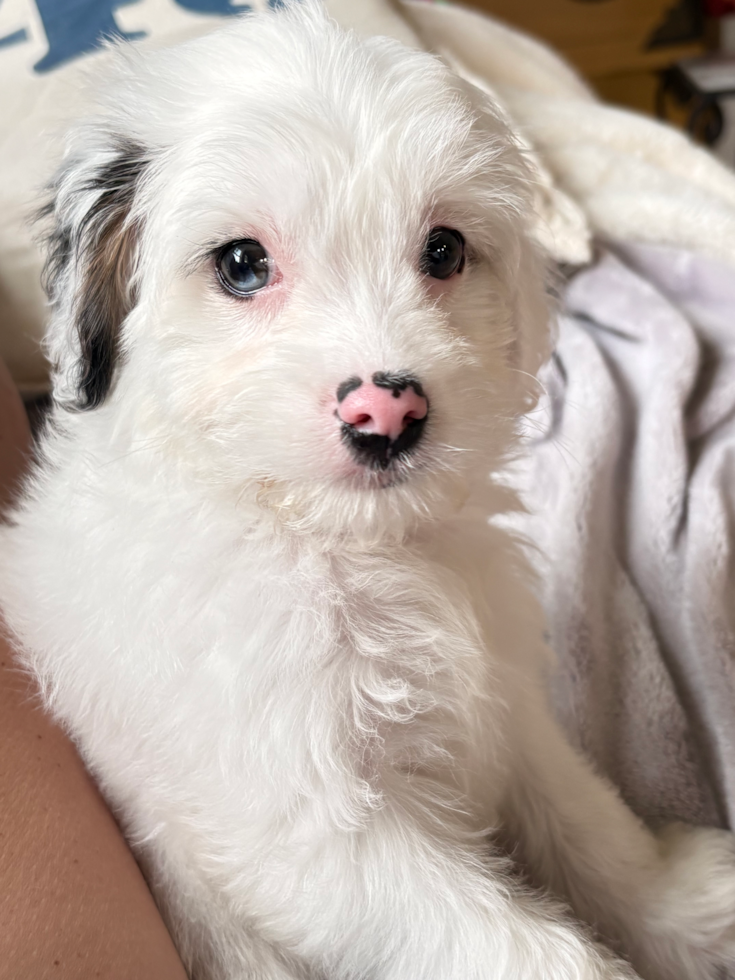
The Cockapoo is a small to medium-small dog with a balanced body, expressive face, and an attractive coat that can make its natural proportions difficult to judge at first glance. Adults commonly weigh approximately 12 to 25 pounds and stand around 10 to 15 inches tall, although individual dogs can fall outside these estimates. Some Cockapoos have a relatively compact frame with moderate legs and a rounded body, while others develop a taller outline with a little more length through the torso. Their bodies can feel surprisingly substantial beneath the fluffy hair, particularly when compared with their appearance in puppy photos. A shorter haircut can reveal the dog's natural proportions and give the Cockapoo a noticeably different look from its familiar teddy bear style.
The Cockapoo's coat can range from soft, loose waves to dense curls, with some individuals developing straighter sections and longer hair around the ears and legs. Its appearance depends partly on how the hair falls, since a loose coat can emphasize the dog's natural shape while a curlier coat creates a fuller silhouette. Cockapoos come in an attractive range of colors, including cream, apricot, red, gold, chocolate, black, and brown. Multicolored coats are also possible, with contrasting patches, white markings, sable shading, or other patterns that add character to the dog's appearance. Some colors lighten as the adult coat develops, which means a puppy's early shade may not provide a perfect picture of its future coloring.
The Cockapoo's face can have a particularly sweet expression, with rounded eyes, a gently defined muzzle, and hanging ears that frame the head. Ear length and the amount of hair around the face vary, but longer, softly feathered ears can give some Cockapoos an elegant appearance. The eyes tend to be dark and expressive, while the muzzle may appear broader or more refined depending on the dog's individual features. A rounded haircut can make the face appear especially plush, while a shorter trim reveals more of the natural head shape. These details contribute to the Cockapoo's familiar charm, even though two adult dogs may look quite different from one another.
Cockapoo grooming requires consistent attention because its coat can develop tangles around the ears, neck, legs, and areas where clothing or harnesses create friction. Loose waves may be easier to comb than dense curls, although longer styles still need regular brushing to prevent knots close to the skin. Many owners choose a practical pet trim that preserves the dog's soft appearance without requiring extensive daily maintenance. Professional grooming every six to eight weeks is a common routine, but the ideal schedule depends on coat texture and the preferred haircut. Shedding can vary from very little to more noticeable amounts, particularly when the coat contains longer, straighter sections.
Mini Aussiedoodle Appearance
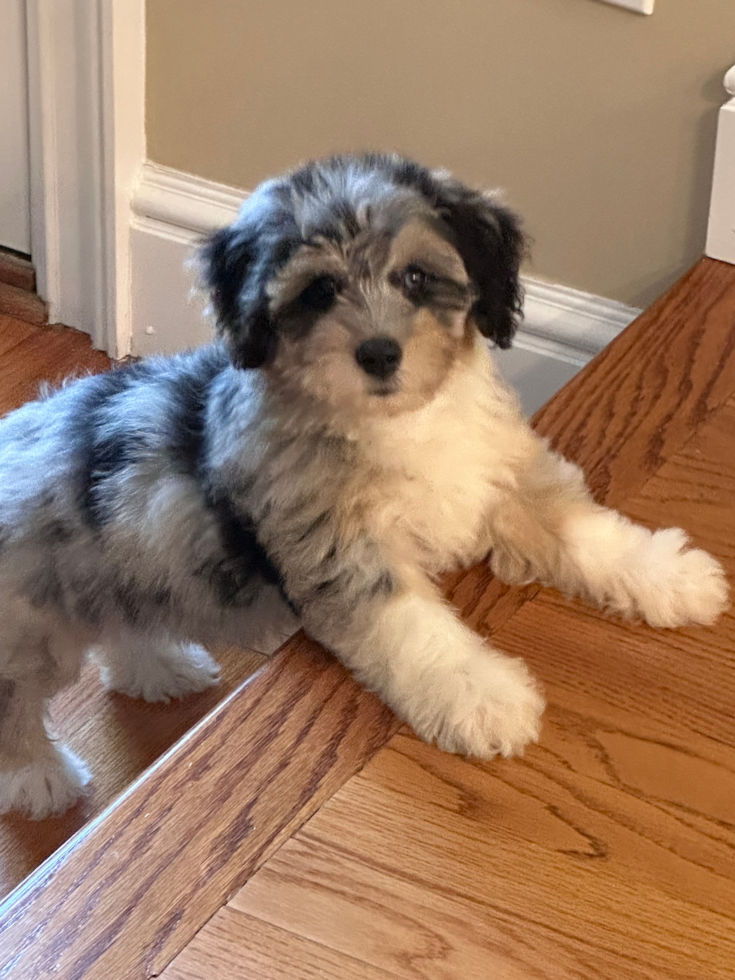
The Mini Aussiedoodle has an attractive physical presence that can look quite different from the Cockapoo, especially when its natural body proportions are visible beneath the coat. Adults commonly stand around 12 to 18 inches tall and weigh approximately 8 to 25 pounds, although some grow larger than the standard estimates. Their builds can range from fairly petite to sturdy and athletic, with a balanced frame and an alert way of carrying themselves. Some Mini Aussiedoodles have longer legs and a slightly more defined outline, while others appear compact and plush beneath generous curls. Their movement can look light and purposeful, particularly when they are interested in a toy or activity that captures their attention.
One of the Mini Aussiedoodle's most distinctive qualities is the variety of patterns that can appear across its coat. Blue merle and red merle create mottled combinations of color, while black, chocolate, tan, cream, apricot, and white can appear in solid coats or attractive multicolored arrangements. Copper points may frame the eyes, cheeks, or legs, and white markings can create bold contrasts across the chest and face. These details can give the Mini Aussiedoodle a striking appearance that differs from the warm, flowing coat colors associated with many Cockapoos. However, markings vary considerably, and some Mini Aussiedoodles have simple solid-colored coats that look similar to other small Doodle mixes.
Facial features also contribute to the Mini Aussiedoodle's distinctive expression, particularly around the eyes and muzzle. Brown eyes are common, but shades of blue or amber can appear, and some individuals have eyes of different colors. Their heads may look slightly more defined than those of particularly round-faced Cockapoos, especially when the facial hair is kept short. Ear carriage can vary, with some dogs displaying softly folded ears and others having ears that sit somewhat higher against the head. These differences can create an attentive expression that suits the Mini Aussiedoodle's curious personality, although grooming styles can dramatically change the overall appearance.
Mini Aussiedoodle coats vary from dense curls to loose waves and straighter textures, so grooming requirements can differ considerably between individuals. A curly coat may need thorough brushing to prevent mats close to the skin, while a straighter coat can release more visible hair and require extra attention during periods of increased shedding. Hair around the legs, chest, tail, and collar area can collect tangles even when the outer coat looks neat. Some Mini Aussiedoodles benefit from regular professional haircuts, while dogs with a more natural coat may need less frequent trimming but consistent brushing. The key is to follow the needs of the individual coat rather than assume every Mini Aussiedoodle requires the same grooming routine.
Cockapoo vs Mini Aussiedoodle Appearance Comparison
The most useful visual differences between the Cockapoo and Mini Aussiedoodle involve body shape, facial expression, and coat markings. Cockapoos frequently have a compact, rounded outline with hanging ears that emphasize their soft appearance, while Mini Aussiedoodles can display longer legs and a more athletic frame. The Mini Aussiedoodle may appear taller even when its weight is similar to that of a Cockapoo, particularly when the coat is trimmed close enough to reveal the body. However, their size ranges overlap considerably, and a small Mini Aussiedoodle can look remarkably similar to a Cockapoo of comparable weight. Individual proportions are more informative than the breed name alone.
Their coat colors create another noticeable distinction, although there are plenty of similarities between the two. Cockapoos can have beautiful solid coats in warm shades of cream, apricot, red, and chocolate, along with attractive multicolored combinations. Mini Aussiedoodles may display those same shades, but their range also includes striking merle patterns and unusual eye colors. A blue merle Mini Aussiedoodle with contrasting facial markings can look quite different from a red Cockapoo with long, flowing ears. Nevertheless, dogs with similar coloring and curly coats can be difficult to distinguish, particularly when both have rounded teddy bear haircuts.
Neither breed has a guaranteed advantage when it comes to grooming, because individual coat texture can create more variation than the difference between the mixes. A Cockapoo with dense curls may require just as much brushing as a similarly coated Mini Aussiedoodle, while a dog with straighter hair may need less clipping but release more loose hair. The areas around the ears, legs, and underside deserve particular attention for both breeds because tangles can develop beneath the visible coat. Owners who prefer longer, fluffy styles should expect a greater commitment to home maintenance and professional grooming. Their beautiful coats are part of their appeal, but the practical effort required to maintain them should be considered before choosing either dog.
Cockapoo vs Mini Aussiedoodle Temperament
The Cockapoo and Mini Aussiedoodle share intelligence, affection, and an enthusiasm for interaction, but they can express these qualities in different ways. A Cockapoo may find particular enjoyment in exploring its surroundings, meeting people, and participating in lively games with its family. A Mini Aussiedoodle may show greater interest in movement, patterns, and activities that involve close cooperation with its owner. These are tendencies rather than guarantees, but understanding them can help prospective owners picture what everyday life with each companion may feel like.
Cockapoo Temperament
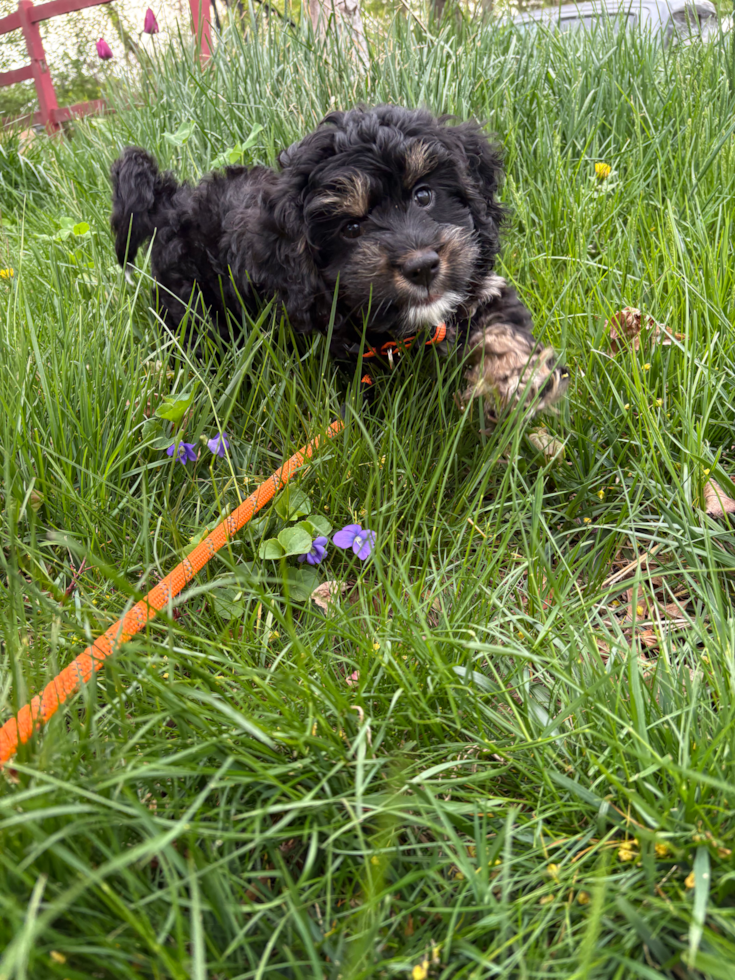
The Cockapoo has a cheerful, sociable personality that can make it a particularly enjoyable companion for people who appreciate an expressive and affectionate dog. Many Cockapoos greet familiar people enthusiastically and take an active interest in opportunities for play and companionship. Their personalities can be wonderfully entertaining, especially when a favorite toy or an invitation to go outside captures their attention. A Cockapoo may approach a new experience with curiosity, pause to investigate an interesting smell, and then hurry back to its owner for another moment of interaction. This combination of enthusiasm and affection gives the breed a lively but approachable presence within the household.
Exploration can be a particularly enjoyable part of a Cockapoo's daily routine because many appreciate opportunities to investigate their surroundings. Walks provide more than physical exercise, with unfamiliar smells, changing scenery, and new experiences offering valuable mental stimulation. A Cockapoo may show considerable interest in a patch of grass that another dog walks past without a second glance, which can make leisurely exploration an important part of its enjoyment.
Approximately 40 to 60 minutes of daily activity can suit many adults, although individual dogs may appreciate additional exercise or longer outings. Games of fetch, hide-and-seek, and simple scent activities can provide variety while strengthening the relationship between dog and owner.
Cockapoos can be enthusiastic learners, particularly when training feels enjoyable and offers clear rewards for cooperation. Their intelligence allows them to recognize familiar routines and understand commands, although curiosity can occasionally draw their attention toward something more interesting. Recall, polite leash manners, and the ability to respond around distractions deserve consistent practice, especially during puppyhood and adolescence. Positive reinforcement can make training particularly rewarding because praise, treats, and interactive games provide meaningful reasons to participate. A Cockapoo that receives clear guidance can develop excellent household manners while retaining the playful personality that makes the breed so appealing.
The Cockapoo's affectionate nature can create close family relationships, particularly when it has regular opportunities for companionship and social interaction. Many enjoy life with children and other pets, although individual confidence and comfort depend on temperament and early experiences. Their enthusiasm for play can be delightful in a busy household, but puppies also need guidance around excitement, jumping, and appropriate ways to greet people. Gradual independence training helps teach the dog that short periods alone are part of an ordinary routine rather than something to fear. With consistent socialization and enough daily attention, a Cockapoo can fit comfortably into a variety of family environments.
Mini Aussiedoodle Temperament
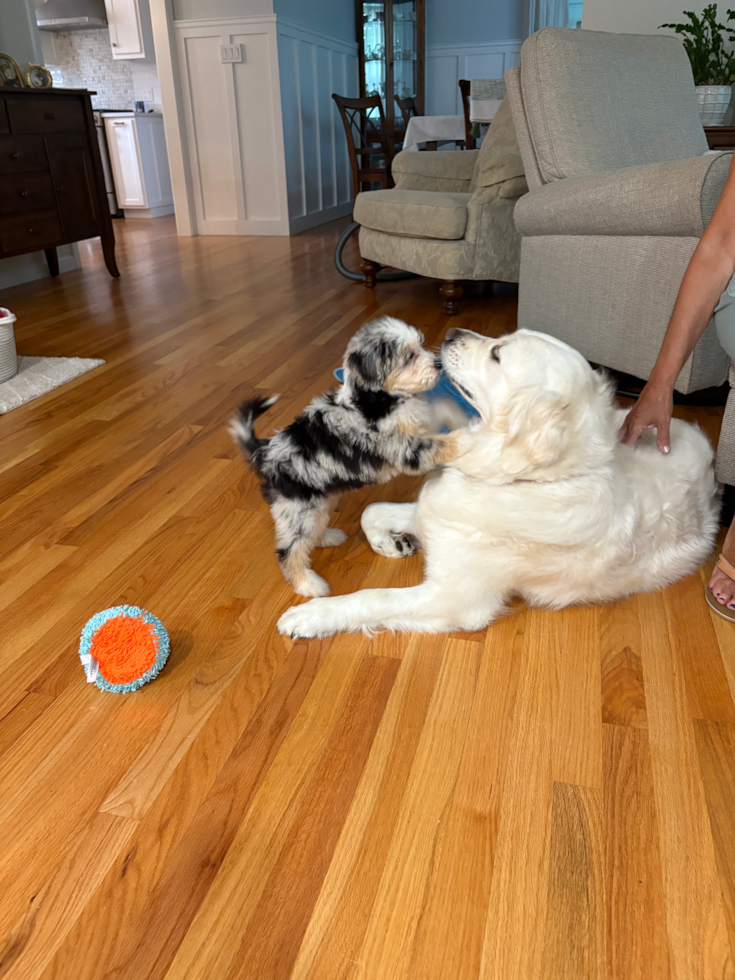
The Mini Aussiedoodle can have a particularly attentive personality, with an impressive ability to notice patterns and respond to familiar activities. Some quickly recognize the difference between an ordinary household movement and an action that signals an upcoming walk, training session, or favorite game. This alertness can make them entertaining companions because they seem genuinely interested in understanding what happens around them. A Mini Aussiedoodle may watch an owner organize toys, anticipate the beginning of a familiar activity, or respond enthusiastically to a cue that promises interaction. Their intelligence can be a wonderful quality for owners who enjoy building a close partnership through shared activities.
The Mini Aussiedoodle's interest in movement can influence the kinds of games it enjoys and the behaviors that capture its attention. Activities that involve retrieving toys, following directions, or changing between simple commands can provide enjoyable challenges for an attentive dog. Some may show herding-style behaviors, such as attempts to influence the movement of people or other animals, although these tendencies vary considerably between individuals. Early guidance is valuable because a behavior that seems amusing in a young puppy can develop into an unwanted household habit if it receives repeated encouragement. Training that rewards calm responses and appropriate play can help establish a comfortable relationship between the dog and its family.
Mini Aussiedoodles can learn new skills quickly, but their intelligence also makes consistency particularly important. A dog that recognizes patterns may learn household rules efficiently, yet it can also discover that certain behaviors reliably attract attention or produce a desired result. Short, varied lessons can help maintain interest, particularly when they include opportunities to practice commands in different environments. Activities such as retrieving specific toys, responding to directional cues, or completing simple obstacle games can offer enjoyable mental challenges. The goal is to encourage cooperation and confidence while teaching the dog that quiet relaxation is just as valuable as active participation.
Affection plays an equally important role in the Mini Aussiedoodle's personality, even when its enthusiasm for activities is particularly noticeable. Many develop close relationships with family members and enjoy spending time near the people they trust. Some may be more watchful around unfamiliar visitors or new environments, which makes calm introductions and positive social experiences especially valuable. Their attachment to family life also means they benefit from gradual independence training and a predictable routine that includes comfortable periods of rest. A Mini Aussiedoodle that receives appropriate activity, patient guidance, and close companionship can offer a particularly rewarding relationship with an involved owner.
Cockapoo vs Mini Aussiedoodle Temperament Comparison
The Cockapoo and Mini Aussiedoodle are both intelligent companions, but their preferred styles of interaction can create different everyday experiences. A Cockapoo may find particular pleasure in exploring a new walking route, investigating unfamiliar scents, and participating in games that involve playful discovery. A Mini Aussiedoodle may show greater enthusiasm for activities that involve following cues, responding to movement, and practicing familiar tasks. Neither breed is limited to one type of activity, and individual dogs can enjoy everything from scent games to agility-style challenges. The distinction is most useful when owners consider what kinds of shared activities they genuinely enjoy.
Their training experiences can also differ, particularly in the way each dog responds to distractions and repeated routines. A Cockapoo may need additional practice with focus during walks because interesting smells and unfamiliar surroundings can compete for attention. A Mini Aussiedoodle may respond enthusiastically to structured lessons but require guidance around excitement, anticipation, or an intense interest in movement. Both benefit from clear expectations, positive reinforcement, and opportunities to practice commands in ordinary household situations. The most successful approach is one that respects the dog's individual personality while developing reliable manners and comfortable behavior.
The ability to relax indoors is another important consideration because intelligence and activity do not automatically lead to calm household behavior. Cockapoos can enjoy quiet companionship after walks and games, although some need help learning to settle when the household is busy. Mini Aussiedoodles may benefit from a particularly consistent routine that includes active periods, mental challenges, and opportunities for undisturbed rest. Both can bark in response to visitors or unfamiliar sounds, and individual alertness can influence how quickly they react to activity outside the home. Early socialization and rewards for calm behavior can help either breed develop appropriate habits in apartments and family homes.
Family compatibility depends on more than affection because the dog's preferred play style should also suit the people and animals in the household. A Cockapoo may particularly enjoy games with children who appreciate toys, gentle chasing activities, and interactive play. A Mini Aussiedoodle can enjoy similar activities but may need additional guidance if fast movement encourages herding-style behavior. Both should have opportunities to retreat from unwanted attention, and children should learn how to recognize when the dog needs space. For households with other pets, respectful introductions and compatible personalities matter more than assuming either mix will automatically enjoy every companion.
Cockapoo vs Mini Aussiedoodle Conclusion
Choosing between a Cockapoo and Mini Aussiedoodle becomes easier when you think about the activities you would genuinely enjoy sharing with your dog.
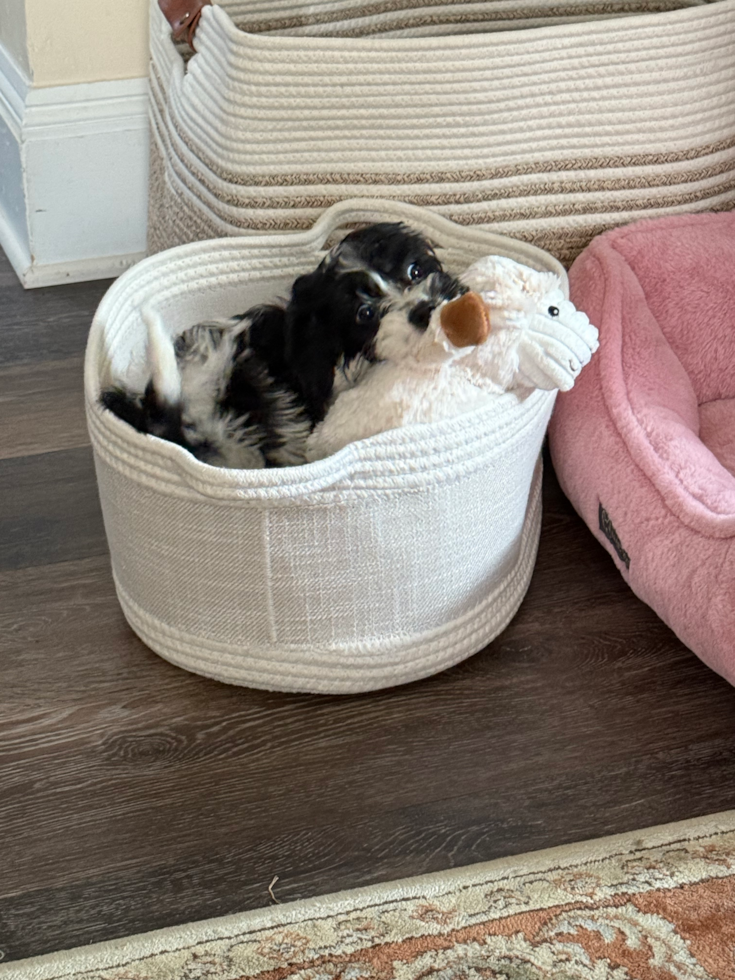
The Cockapoo may be a particularly appealing choice if you love an affectionate, cheerful companion that approaches walks, games, and social experiences with playful curiosity. Its outgoing personality can create a wonderful relationship with someone who enjoys relaxed exploration alongside regular play and training.
The Mini Aussiedoodle may feel like a stronger match if you appreciate an attentive dog that enjoys learning cues, participating in interactive challenges, and staying involved in structured activities. Neither preference makes one breed universally better, but it can reveal which companion fits more comfortably into your everyday routine.
The practical differences also deserve consideration, particularly around body size, coat maintenance, and household expectations. Cockapoos tend to have a compact appearance with soft facial features and flowing ears, while Mini Aussiedoodles can display a taller frame and distinctive coat markings. Both need consistent grooming, and neither should be expected to maintain a fluffy coat without regular brushing and professional care. Families with children, first-time dog owners, and apartment dwellers can find a suitable companion in either breed when they provide appropriate training, exercise, and daily attention. The most useful decision comes from understanding how the individual dog behaves and how naturally its needs fit the household.
A wonderful companion should add enjoyment to everyday life while fitting comfortably into the responsibilities and routines that come with dog ownership. A Cockapoo can bring cheerful affection and enthusiasm for exploration to a family that enjoys social experiences and playful adventures. A Mini Aussiedoodle can offer an especially rewarding partnership to someone who appreciates an attentive, clever dog and enjoys regular training and interactive activities. Both have the potential to develop close, affectionate relationships with their people, but each individual will have its own preferences and personality. The right match is the dog whose companionship feels as enjoyable during an ordinary weekday as it does during a fun weekend adventure.
Frequently Asked Questions
What is the main difference between a Cockapoo and a Mini Aussiedoodle? The main difference between a Cockapoo and a Mini Aussiedoodle is the way their personalities may influence their preferred activities and everyday behavior. Cockapoos tend to have a cheerful, sociable nature and enjoy opportunities for playful exploration and interaction. Mini Aussiedoodles can be particularly attentive and may show greater interest in movement, familiar routines, and structured training activities. Both are intelligent, affectionate companions, and individual personalities can differ considerably from these general tendencies.
Is a Cockapoo bigger than a Mini Aussiedoodle? Cockapoos and Mini Aussiedoodles have overlapping adult weight ranges, although their heights and body proportions can differ. Cockapoos commonly weigh approximately 12 to 25 pounds and stand around 10 to 15 inches tall, while Mini Aussiedoodles may weigh 8 to 25 pounds and reach 12 to 18 inches. Some Mini Aussiedoodles exceed those estimates, particularly when they develop a larger, more substantial frame. The Mini Aussiedoodle may appear taller or more athletic, but neither mix has a completely predictable adult size.
Which breed needs more exercise? Mini Aussiedoodles may need somewhat more daily activity, particularly when they have an enthusiastic personality and a strong interest in structured games. Many adult Cockapoos enjoy approximately 40 to 60 minutes of walks and play, while Mini Aussiedoodles may appreciate around 45 to 75 minutes. These estimates overlap considerably because individual dogs can have different energy levels and preferences. Both benefit from activities that encourage mental engagement alongside physical exercise, particularly when their routines include opportunities for exploration or learning.
Are Mini Aussiedoodles harder to train than Cockapoos? Mini Aussiedoodles are not necessarily harder to train, although their enthusiasm for activity can create a different learning experience. Cockapoos may respond particularly well to playful lessons and meaningful rewards, while Mini Aussiedoodles can enjoy structured challenges and activities that require concentration. Either dog may develop distracting habits if training is inconsistent or ordinary household rules are unclear. Positive reinforcement, patience, and regular practice are valuable for both breeds, regardless of their individual learning styles.
Do Mini Aussiedoodles try to herd people or other pets? Some Mini Aussiedoodles may show herding-style behaviors, particularly when fast movement or exciting games capture their attention. These behaviors can include attempts to influence direction, circle moving individuals, or follow activity with unusual intensity. Not every Mini Aussiedoodle develops these tendencies, and individual temperament plays an important role in how the dog responds to movement. Calm guidance, appropriate games, and consistent training can help establish comfortable interactions with children and other household pets.
Which sheds less, a Cockapoo or a Mini Aussiedoodle? Both Cockapoos and Mini Aussiedoodles can have low-shedding coats, but the amount of visible hair depends on individual coat characteristics. A Cockapoo with dense curls may shed very little, while one with straighter hair can release more loose strands. Mini Aussiedoodles show similar variation, particularly when some individuals develop thicker, straighter coats with more undercoat. Neither breed has a guaranteed advantage, so grooming requirements and the individual coat deserve more attention than the mix name alone.
Do Cockapoos and Mini Aussiedoodles need the same grooming routine? Cockapoos and Mini Aussiedoodles both require regular grooming, although their ideal routines can differ according to coat texture and length. A Cockapoo with long waves may need frequent combing around the ears and legs, while a curly Mini Aussiedoodle can develop mats close to the skin without thorough brushing. Straighter-coated individuals may require less clipping but can release more visible hair throughout the home. Professional grooming and consistent home maintenance are important for both breeds, particularly when owners prefer a longer, fluffy appearance.
Are Cockapoos or Mini Aussiedoodles better for apartment living? Both breeds can adapt to apartment living when they receive appropriate exercise, training, and daily interaction. Cockapoos may enjoy a routine that includes walks, exploratory activities, and regular opportunities for social interaction. Mini Aussiedoodles can also live comfortably in smaller homes, although some need more structured activities and mental challenges throughout the day. Calm behavior around household noises, appropriate barking habits, and the ability to relax indoors matter more than the amount of available floor space.
Are Cockapoos and Mini Aussiedoodles good with children and other pets? Cockapoos and Mini Aussiedoodles can develop wonderful relationships with children and other animals when they receive appropriate socialization and respectful introductions. Cockapoos may particularly enjoy playful games and affectionate interaction, while Mini Aussiedoodles can appreciate activities that involve learning and cooperation with family members. Some Mini Aussiedoodles may need additional guidance around chasing or herding-style behavior during exciting games. Compatibility depends on individual personalities, the behavior of children and other pets, and the household's approach to supervision and training.
Which is better for first-time dog owners, a Cockapoo or a Mini Aussiedoodle? Both breeds can make rewarding companions for first-time dog owners who are prepared to provide consistent training, grooming, and daily attention. Cockapoos may appeal to beginners who enjoy an affectionate, outgoing dog and appreciate walks, games, and social activities. Mini Aussiedoodles can also suit first-time owners, particularly those who enjoy structured training and are enthusiastic about providing mental stimulation. The best choice depends on the owner's lifestyle and willingness to develop a routine that respects the individual dog's energy, personality, and needs.