





Published Thursday, November 26, 2026 by Fairfield Furbabies
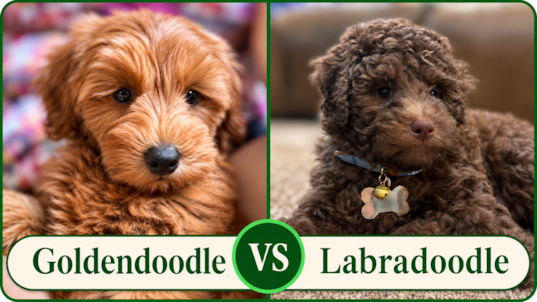
The Mini Goldendoodle and Mini Labradoodle have a remarkable talent for making people fall in love with them. Their expressive faces, soft coats, cheerful personalities, and enthusiasm for family life make both breeds incredibly appealing. They share enough characteristics that someone interested in one will almost certainly consider the other, especially when the puppies have similar colors and curls. Yet there are differences worth understanding before deciding which of these charming companions belongs in your home.
The Mini Goldendoodle vs Mini Labradoodle comparison is particularly interesting because some of the most familiar assumptions about these breeds don't tell the whole story. People sometimes expect the Mini Labradoodle to be the larger, more energetic dog, but that is not necessarily true. Their adult sizes overlap, and Mini Goldendoodles can actually grow larger than many Mini Labradoodles. Both also have affectionate, intelligent personalities, which means their differences are better understood through everyday behavior than simple labels such as calm or active.
Their appearance provides some clues, although even those can be misleading. A cream-colored Mini Labradoodle with loose waves may look almost identical to a Mini Goldendoodle, while two Mini Goldendoodles from different breeding generations can have noticeably different proportions. Coat texture, grooming needs, training preferences, and the way each dog participates in family activities all deserve consideration. This guide explores those details to help you appreciate both breeds and decide which one best suits your lifestyle.
Table of Contents
Mini Goldendoodle vs Mini Labradoodle Comparison Table
The Mini Goldendoodle and Mini Labradoodle share a great deal, particularly their affectionate personalities, intelligence, and enthusiasm for spending time with people. Their exercise requirements are similar, and both need consistent grooming despite their reputation for relatively low shedding. The most useful distinctions appear in their adult size ranges, common coat colors, and individual approaches to interaction and training. The table below offers a quick comparison before we explore those characteristics in detail.
| Characteristic | Mini Goldendoodle | Mini Labradoodle |
| Parent Breeds | Golden Retriever and Miniature Poodle | Labrador Retriever and Miniature Poodle |
| Other Names | Miniature Goldendoodle, Mini Goldenpoo, Mini Groodle | Miniature Labradoodle, Mini Labrapoo, Mini Labrador Poodle Mix |
| Adult Weight | F1B: approximately 20–35 pounds; F1: approximately 25–45 pounds | Approximately 16–25 pounds |
| Adult Height | Approximately 13–22 inches | Approximately 14–17 inches |
| Coat Type | Soft, wavy, curly, or occasionally straighter | Soft, wavy, curly, or loosely shaggy |
| Hypoallergenic Qualities | Low-shedding potential; no hypoallergenic guarantee | Low-shedding potential; no hypoallergenic guarantee |
| Grooming Needs | Thorough brushing several times weekly; professional grooming about every 6–8 weeks | Regular brushing, with more frequent care for curly coats; professional grooming about every 6–8 weeks |
| Exercise Needs | Approximately 45–60 minutes daily | Approximately 30–60 minutes daily |
| Training | Responsive, attentive, and receptive to positive reinforcement | Responsive, curious, and well suited to reward-based training and interactive activities |
| Colors | Cream, gold, apricot, red, caramel, brown, and combinations | Cream, apricot, gold, black, chocolate, caramel, and combinations |
| Temperament | Affectionate, cheerful, friendly, intelligent, sociable, and playful | Affectionate, outgoing, curious, playful, intelligent, and loyal |
| Best Fit | Families who enjoy an affectionate companion and have time for regular activity and interaction | Families who enjoy an engaging companion and appreciate games, walks, and shared activities |
These ranges reflect general breed information rather than fixed standards that apply to every dog. Mini Goldendoodle weight can differ considerably by breeding generation, and Mini Labradoodles may also fall outside their common adult range. Their exercise needs overlap enough that an energetic individual of either breed may enjoy a very active lifestyle. The most useful comparison considers the individual dog alongside these general characteristics.
Mini Goldendoodle vs Mini Labradoodle Overview
The Mini Goldendoodle and Mini Labradoodle developed from an interest in creating smaller versions of popular Poodle crosses. Their broader breed histories are connected to different periods of intentional crossbreeding, but both miniature varieties gained attention as families sought affectionate dogs in more manageable sizes. Today, each has a recognizable identity supported by enthusiastic owners and a growing collection of breed-specific information. Understanding their backgrounds helps explain their popularity without reducing either dog to a list of characteristics inherited from its ancestors.
Mini Goldendoodle History and Popularity
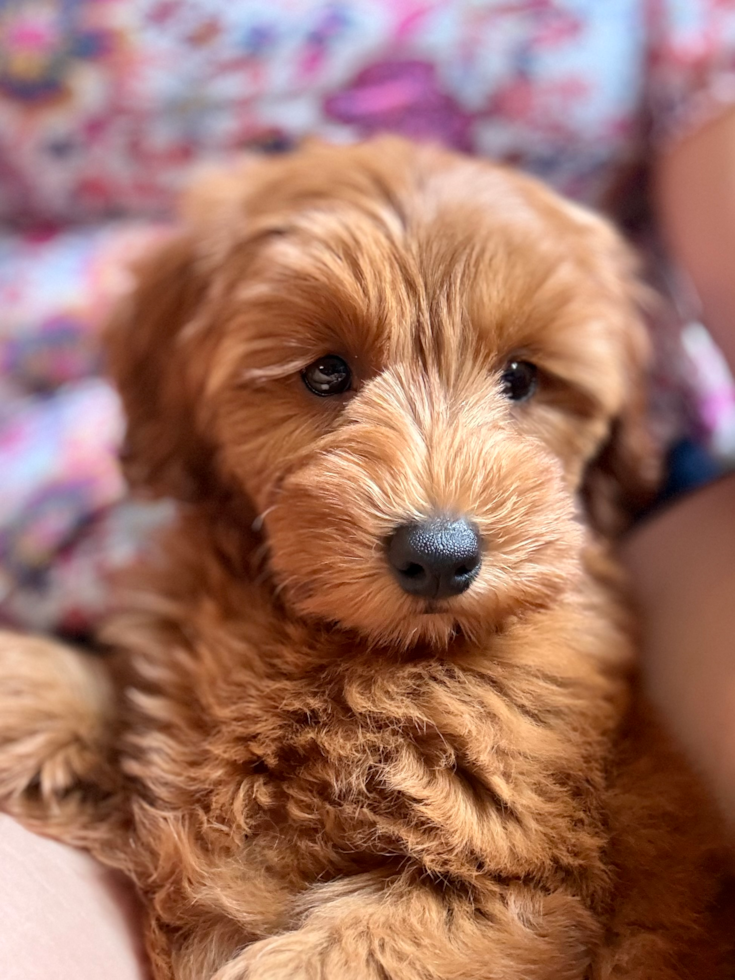
The Goldendoodle's history includes early Golden Retriever and Poodle crosses during the twentieth century, with documented breeding efforts dating back to the 1960s. The cross attracted broader attention during the 1990s and early 2000s as interest in companion Doodles increased. Mini Goldendoodles developed through smaller Poodle pairings and subsequent breeding generations, creating a dog that could offer the familiar Goldendoodle appearance in a more compact size. The miniature variety soon established its own following among families who wanted an affectionate companion without necessarily choosing a large dog.
Much of the Mini Goldendoodle's popularity developed through its appearance and its reputation as an enthusiastic family companion. Its soft coat, warm colors, and expressive face helped make it recognizable, particularly as photographs of fluffy puppies became familiar online. However, owners also appreciated a dog that could enjoy regular walks, participate in household activities, and learn through positive interaction. This combination of physical appeal and engaging personality helped the Mini Goldendoodle establish a place among popular companion crosses.
The Mini Goldendoodle's identity has continued to develop as different breeding generations have become more familiar. Terms such as F1 and F1B describe different crosses and help explain some of the variation in adult size and coat texture. This is important because the Mini Goldendoodle name can describe dogs with noticeably different proportions, even when their personalities share many appealing qualities. For families, understanding that variety makes it easier to appreciate the breed without expecting every puppy to match a single photograph or size description.
Mini Labradoodle History and Popularity
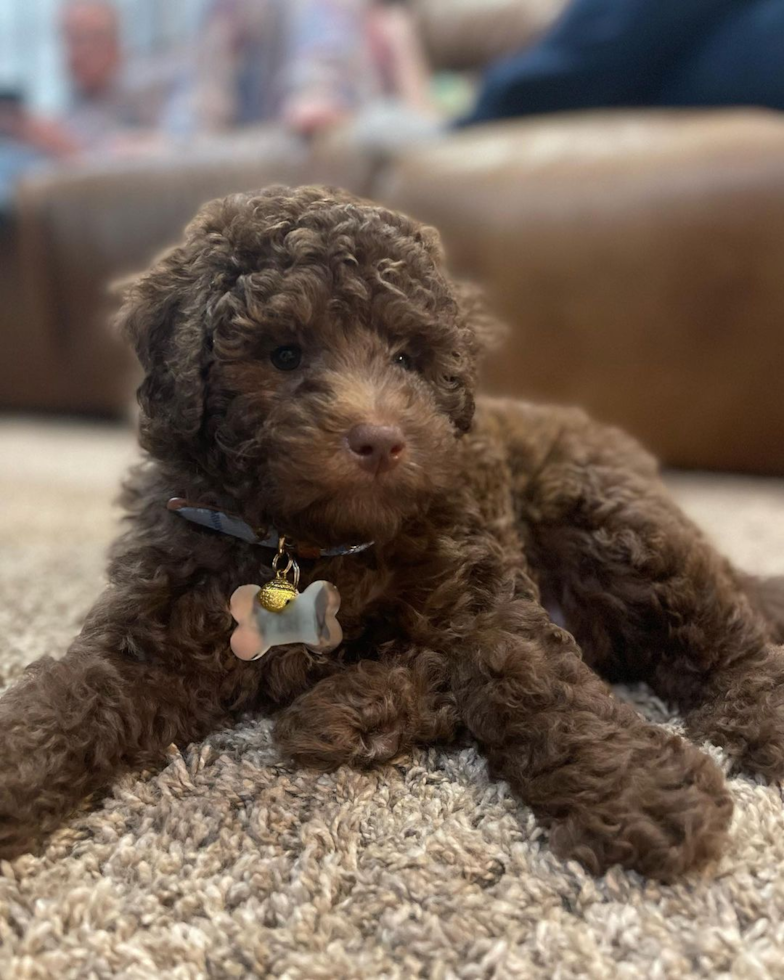
The Mini Labradoodle developed from a cross with an especially well-documented modern history. In 1989, Australian breeder Wally Conron produced a Labrador Retriever and Poodle litter as part of a guide-dog breeding program. The Labradoodle name gained attention, and interest in the cross expanded beyond its original purpose. Miniature Labradoodles developed later as breeders worked toward smaller companion dogs with the appealing characteristics associated with Labradoodles.
The Mini Labradoodle attracted attention because it offered a familiar combination of sociability, intelligence, and manageable size. Families appreciated its enthusiasm for interaction and the possibility of a soft, wavy or curly coat. The breed also appealed to people who wanted a dog with an interest in outdoor activities without committing to the size of a standard Labradoodle. Its popularity grew through household companionship, where its playful personality and responsiveness to training became important parts of its identity.
The Mini Labradoodle should also be distinguished from the Mini Australian Labradoodle, since those names are sometimes used as though they mean exactly the same thing. A Mini Labradoodle refers to a smaller Labrador Retriever and Poodle cross, while Australian Labradoodle lines may include additional breeds through established multigenerational programs. The distinction matters because size, coat, and temperament descriptions are not necessarily interchangeable. For this comparison, Mini Labradoodle refers specifically to the Labrador Retriever and Poodle cross.
Mini Goldendoodle vs Mini Labradoodle Appearance
The Mini Goldendoodle and Mini Labradoodle can be surprisingly difficult to distinguish by appearance alone. Both may have floppy ears, expressive eyes, soft curls, and the rounded facial hair that creates the familiar teddy bear look. Their sizes overlap, and professional grooming can make their coats appear even more alike. However, differences in proportions, colors, and coat texture can create distinct adult appearances.
Mini Goldendoodle Appearance
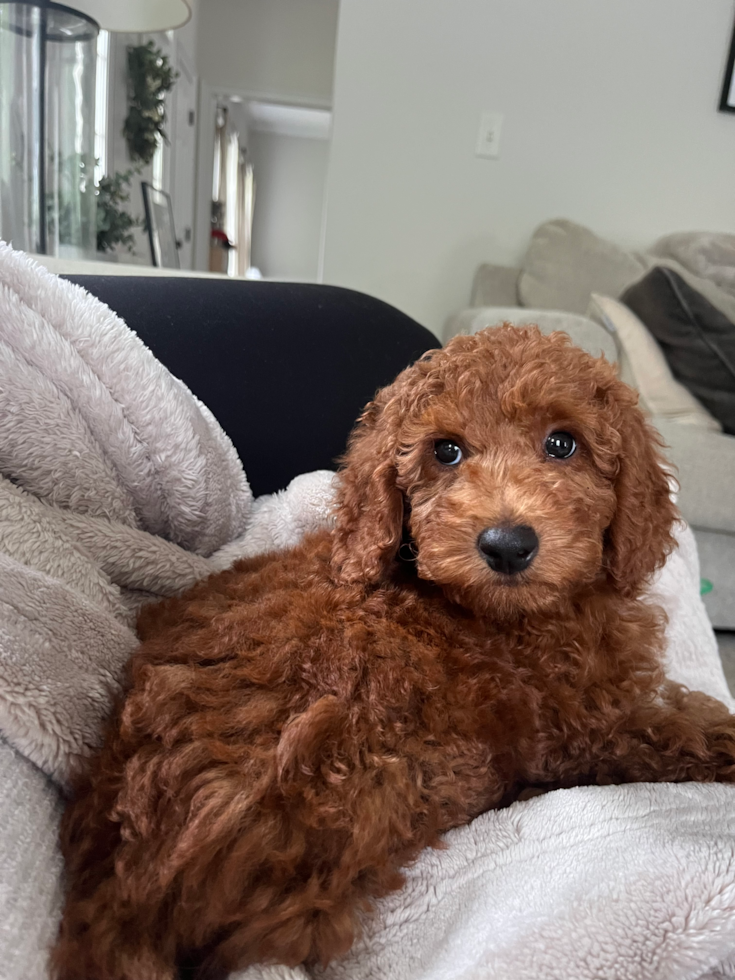
The Mini Goldendoodle is a small-to-medium-sized dog with an attractive, balanced appearance. F1B Mini Goldendoodles are approximately 20 to 35 pounds and F1 Mini Goldendoodles are around 25 to 45 pounds, with common heights between 13 and 22 inches. That range allows for considerable variation, from relatively compact dogs to adults with a more substantial build. Some have a light, refined appearance, while others develop a broader chest and longer body.
The face is one of the Mini Goldendoodle's most appealing features. Many have dark, expressive eyes, a softly defined muzzle, and hanging ears covered in wavy or curly hair. A fuller haircut can give the head a rounded appearance, while a shorter trim reveals more of the dog's natural facial structure. The expression can differ noticeably between individuals, particularly when coat texture changes the shape of the hair around the eyes and muzzle.
Mini Goldendoodle coats commonly appear in cream, gold, apricot, red, and caramel, although additional shades and combinations are possible. Some have an even color across the body, while others display white markings or subtle variations between the ears, back, and legs. A puppy's shade may change as its adult coat develops, particularly in dogs with darker apricot or reddish coloring. These differences make the breed visually diverse despite the familiar golden-colored appearance associated with its name.
Coat texture also varies considerably. Some Mini Goldendoodles have loose waves that fall naturally around the body, while others develop dense curls that create a fuller, rounded outline. Straighter coats can also occur, particularly among early-generation dogs, and they may release more loose hair than curlier varieties. A thorough brushing routine several times weekly is important, with professional grooming approximately every six to eight weeks for many dogs.
Mini Labradoodle Appearance
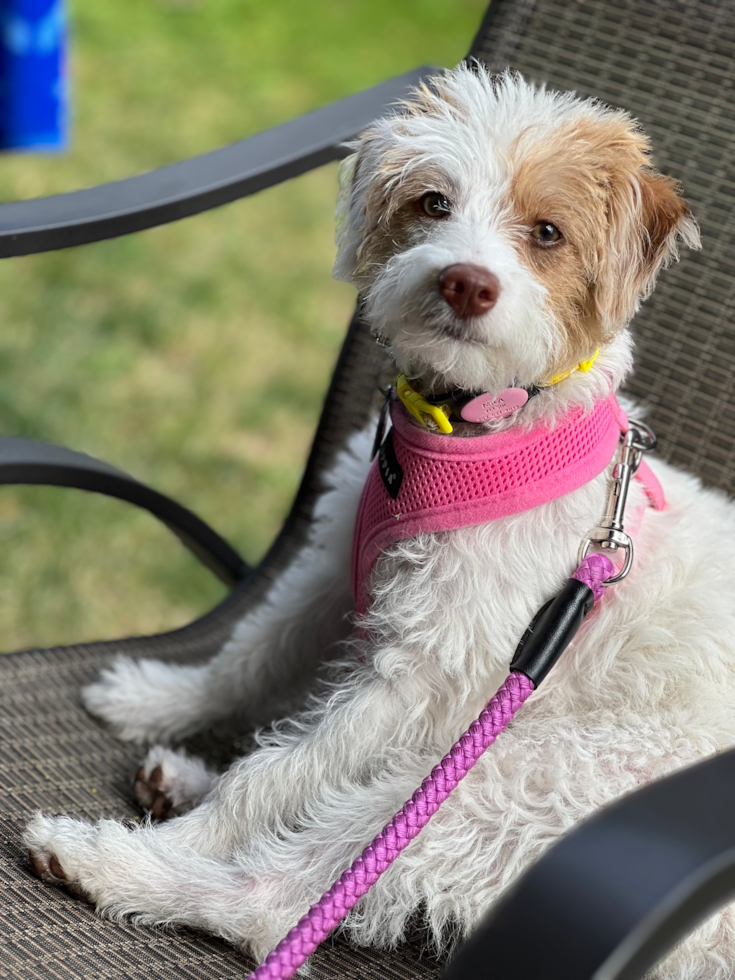
The Mini Labradoodle has a compact, appealing appearance that can range from lightly built and refined to sturdy and substantial. They have a common adult weight of approximately 16 to 25 pounds and a height of around 14 to 17 inches. Some dogs have relatively long legs and a balanced outline, while others appear broader through the chest and shoulders. Their coats can also change the way their proportions look, particularly when the hair is kept long.
Facial features contribute a great deal to the Mini Labradoodle's character. Many have a softly rounded head, dark eyes, and hanging ears covered in wavy hair. Some develop a broader muzzle, while others have a narrower facial outline that becomes especially visible after grooming. A dog with loose waves around the face may look quite different from one with a full, curly coat, even when their underlying features are similar.
Mini Labradoodles appear in a variety of colors, including cream, apricot, gold, caramel, black, and chocolate. Darker shades are particularly recognizable, although lighter Mini Labradoodles can look almost identical to Mini Goldendoodles. Some have solid coats, while others display lighter markings or slight variations in color. Puppies may also experience changes in shade as their adult coats develop.
The coat can be softly waved, curly, or loosely shaggy, with texture differences that affect daily grooming. A Mini Labradoodle with loose waves may have a relatively relaxed outline, while tighter curls can create a much fuller appearance. Hair around the ears, legs, and underside deserves regular attention because tangles can develop beneath the visible surface. Professional grooming approximately every six to eight weeks helps maintain a practical length, particularly for families who prefer a neat, shorter haircut.
Mini Goldendoodle vs Mini Labradoodle Appearance Comparison
Color is one of the easiest differences to notice, although it is far from a reliable way to identify every dog. Mini Goldendoodles are strongly associated with warm shades such as gold, apricot, and red. Mini Labradoodles can have those same colors, but black and chocolate coats are particularly familiar among them. A cream-colored dog with loose waves could belong to either breed, especially when both have similar haircuts.
Adult size provides a more useful distinction than many people expect. Some Mini Goldendoodles may grow considerably heavier than the Mini Labradoodles. A 40-pound Mini Goldendoodle occupies a different amount of space from a 20-pound Mini Labradoodle, even though both carry the word mini in their names. Families who have a strong size preference should consider the actual adult range associated with the type of puppy they are choosing.
Grooming needs are similar enough that neither breed has a clear advantage. A Mini Goldendoodle with tight curls may require more frequent brushing than a loosely waved Mini Labradoodle, but a curly Mini Labradoodle can be equally demanding. Coat density and length have more influence on grooming time than color or breed name. A practical haircut and a consistent schedule are useful for owners of both breeds.
Their overall appearance also changes considerably between puppyhood and adulthood. A puppy with a soft, relatively flat coat may develop more noticeable waves, while another may grow a denser, curlier coat. Changes in hair length can make the body look broader or narrower without any change in the dog's actual proportions. Appreciating that development is part of choosing either breed, particularly for families who love the fluffy puppy appearance.
Mini Goldendoodle vs Mini Labradoodle Temperament
Temperament is one of the most important parts of the Mini Goldendoodle vs Mini Labradoodle comparison. Both breeds are affectionate, intelligent, and enthusiastic about participating in family life, which means the differences can be subtle. Rather than dividing them into a calm dog and an active dog, it is more useful to consider how each may approach interaction, training, and familiar routines. Individual personality matters considerably, and the right match depends on the experiences a family hopes to share with its companion.
Mini Goldendoodle Temperament
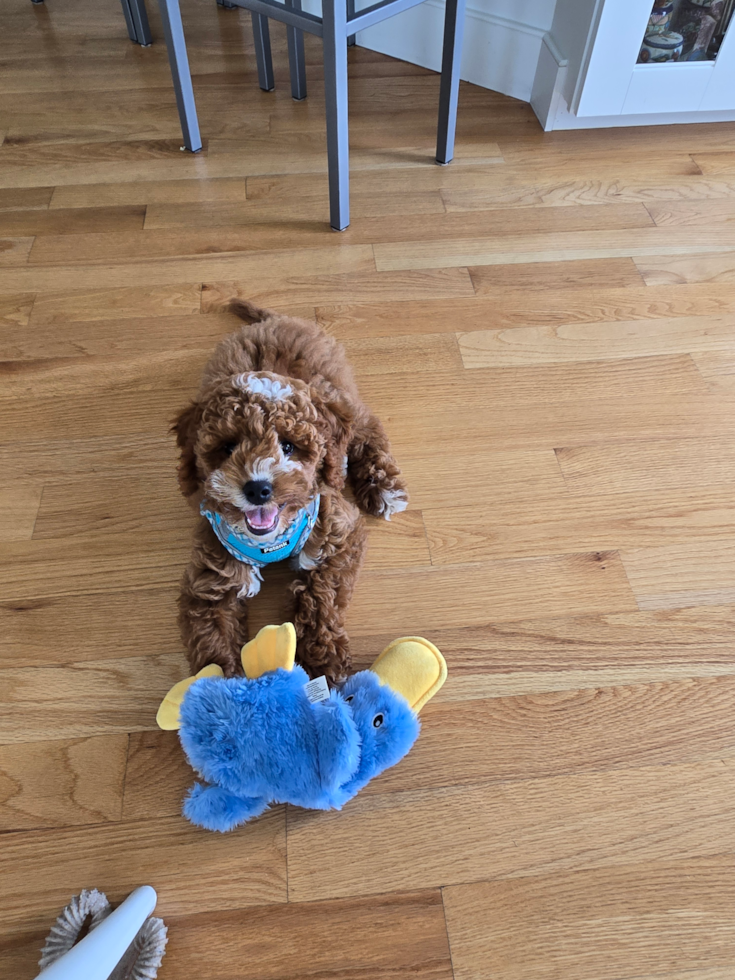
The Mini Goldendoodle has an affectionate personality that can make daily companionship particularly rewarding. Many enjoy being included in family activities and respond enthusiastically when someone invites them to participate. A Mini Goldendoodle may enjoy a familiar morning walk, a short game with a favorite toy, or a quiet afternoon near the people it knows best. Its social nature can create a close relationship with the household, particularly when affection and interaction are part of the regular routine.
Mini Goldendoodles can also be enthusiastic learners, especially when training feels like an enjoyable activity. Many respond well to small rewards, praise, and clear cues that help them understand what the owner expects. A puppy may learn to sit before receiving attention, wait politely while someone prepares a leash, or settle on a mat when the household becomes busy. These skills have practical value because they help the dog participate comfortably in ordinary family life.
The breed's friendly reputation should not create unrealistic expectations about puppy behavior. Young Mini Goldendoodles can be energetic, curious, and eager to greet everyone who approaches. Their enthusiasm may lead to jumping, grabbing tempting objects, or difficulty waiting when something exciting is about to happen. Patient repetition and positive reinforcement help teach the dog how to express that enthusiasm appropriately.
Many Mini Goldendoodles appreciate a mixture of activity and companionship throughout the day. A satisfying routine might include a walk in the morning, an opportunity to play later, and some quiet time with the family in the evening. Their interest in people makes them appealing companions, but they should also learn to relax independently. Building those habits gradually helps create a comfortable balance between interaction and rest.
Mini Labradoodle Temperament
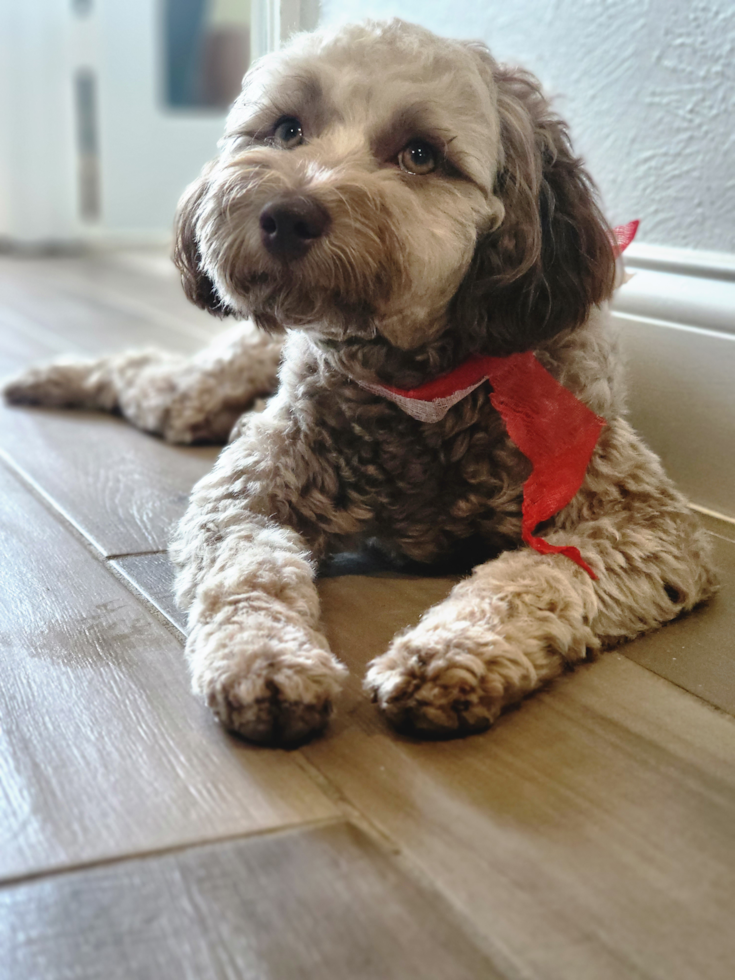
The Mini Labradoodle has an engaging, sociable personality that can bring plenty of enjoyment to family activities. Many show curiosity about their surroundings and appreciate opportunities to explore new places with familiar people. A Mini Labradoodle may investigate an unfamiliar toy, enthusiastically join a game, or respond quickly when someone prepares for a walk. That interest in the environment can make the breed an entertaining companion, particularly for owners who enjoy shared activities.
Training can be especially rewarding because Mini Labradoodles frequently respond well to clear instructions and positive reinforcement. Short lessons help establish useful behaviors, while familiar rewards encourage the dog to repeat successful actions. Some enjoy tasks that involve finding objects or responding to several cues in sequence. These activities provide an opportunity for the dog to use its intelligence while developing a pleasant relationship with its owner.
The Mini Labradoodle's enthusiasm also makes everyday manners worth teaching from an early age. A playful puppy may need help understanding when a game has ended or when it is time to settle. An exciting walk may introduce distractions that make familiar commands harder to follow than they are at home. Consistent practice in different environments helps the dog learn that household rules apply beyond a quiet training session.
Affection is a major part of the Mini Labradoodle's character, and many enjoy close relationships with the people around them. They may appreciate a familiar resting place near the family or show excitement when someone returns home. Their playful nature does not mean they need constant entertainment, particularly once they have learned a comfortable daily routine. The balance between activity and relaxation depends on the individual dog and the habits established by its owner.
Mini Goldendoodle vs Mini Labradoodle Temperament Comparison
The Mini Goldendoodle and Mini Labradoodle share enough personality traits that choosing between them based on temperament alone can be challenging. Both can enjoy games, respond well to training, and develop affectionate relationships with family members. Their differences may appear in individual preferences rather than a clear division between one breed that enjoys people and another that enjoys activity. A Mini Goldendoodle may be more enthusiastic about a toy game than a particular Mini Labradoodle, and the opposite can easily be true.
Their training potential is also similar, although owners may discover different motivations. One Mini Goldendoodle may respond particularly well to praise and familiar interaction, while another may work enthusiastically for a favorite toy. A Mini Labradoodle may enjoy a game that involves several steps, although some prefer simple, predictable rewards. The best approach is to observe what the individual dog enjoys and use that motivation to teach useful behavior.
For families with children, both breeds offer appealing possibilities. A Mini Goldendoodle may enjoy games that involve gentle interaction and familiar routines, while a Mini Labradoodle may appreciate opportunities for play with clear rules. Young children should learn how to respect the dog's space, and adults should supervise activities that create considerable excitement. Their medium size also means that enthusiastic greetings deserve attention, particularly around smaller children.
Life with other pets can be rewarding when introductions are handled thoughtfully. Both breeds may enjoy another dog's company, but differences in play style can influence how comfortably animals interact. A highly enthusiastic puppy may need encouragement to respect an older dog's preference for quiet, regardless of whether it is a Mini Goldendoodle or Mini Labradoodle. Gradual introductions and access to separate resting areas help establish comfortable relationships.
Apartment living is possible for individual dogs of either breed, although adult size and daily activity needs should be considered. A Mini Goldendoodle near the upper end of its weight range may feel quite substantial in a small apartment. A Mini Labradoodle may occupy less space, but that does not eliminate its need for exercise and interaction. A consistent schedule and opportunities for outdoor activity matter more than the breed name alone.
Barking is another behavior that depends heavily on the individual dog and its experiences. Either breed may alert the family when someone arrives or respond vocally when an exciting activity begins. Teaching a calm greeting routine and rewarding quiet behavior can help prevent repeated barking from becoming an established habit. Neither Mini Goldendoodles nor Mini Labradoodles should be expected to be silent simply because they have friendly temperaments.
Perhaps the most useful distinction is the way each dog fits into the family's schedule. Someone who enjoys regular walks, affectionate interaction, and positive training may find a Mini Goldendoodle especially rewarding. A person who likes playful activities, outdoor outings, and opportunities to teach new skills may appreciate a Mini Labradoodle's personality. These preferences overlap considerably, which is why individual temperament should play an important role in the final choice.
Mini Goldendoodle vs Mini Labradoodle Conclusion
The Mini Goldendoodle and Mini Labradoodle offer many of the same qualities that make companion Doodles so appealing. They are affectionate, intelligent, playful, and capable of developing close relationships with their families. Their coats require consistent care, and their activity needs are substantial enough to deserve a reliable daily routine. Choosing between them means looking carefully at the details that will influence everyday life rather than relying on familiar assumptions about their personalities.
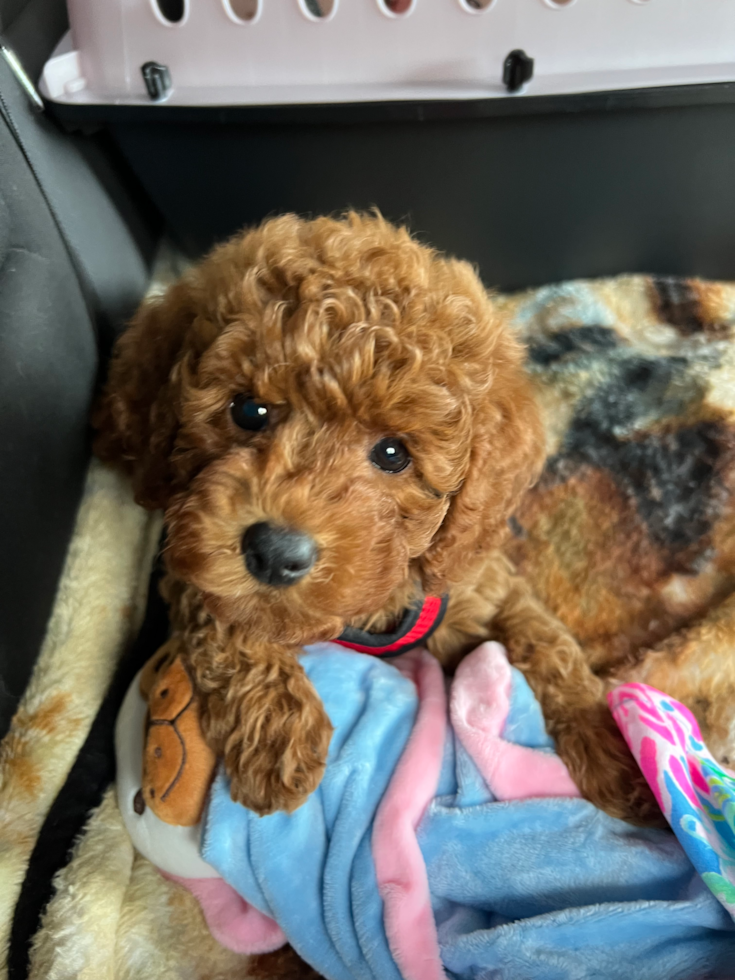
The Mini Goldendoodle may be especially appealing to families who enjoy a warm, interactive companion and appreciate the familiar cream, apricot, and golden coat colors associated with the breed. Its enthusiasm for people and training can make it a lovely partner for regular walks, games, and household activities. However, adult size deserves attention, particularly because some F1 Mini Goldendoodles can reach approximately 45 pounds. Families should be comfortable with the space and responsibilities that accompany a dog of that size.
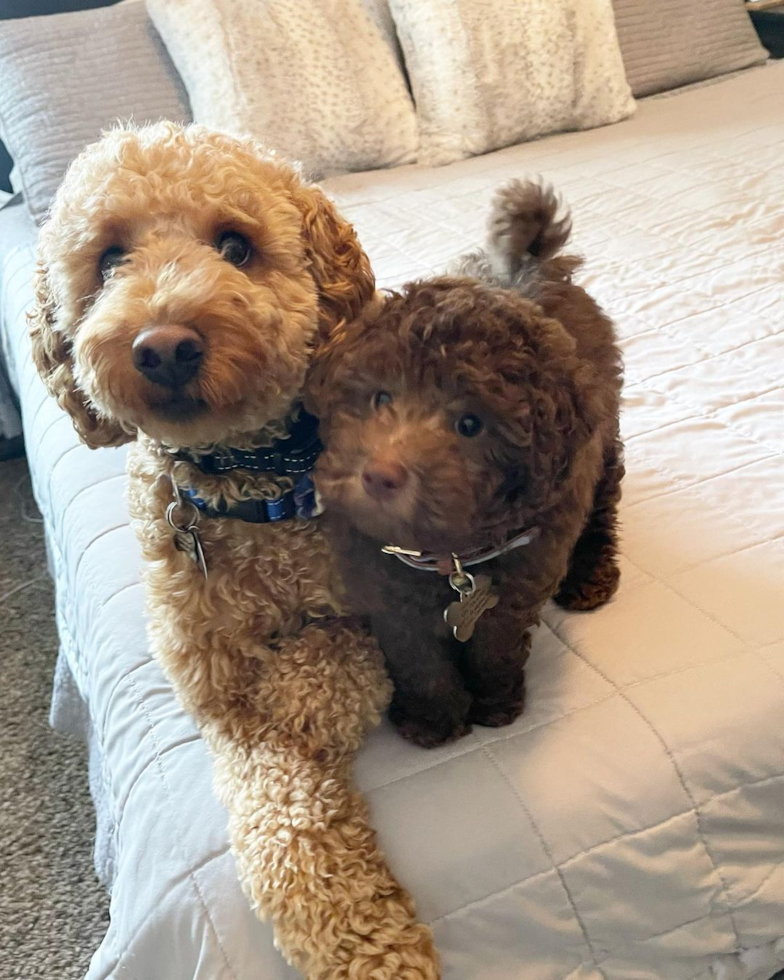
The Mini Labradoodle may appeal to people who appreciate a curious, playful companion and enjoy the variety of activities that can make daily life interesting. Its common adult size is somewhat narrower, which may appeal to families who prefer a smaller medium-sized dog. Mini Labradoodles can also develop beautiful coats in a wide range of colors, including black and chocolate. Their affectionate personalities and willingness to learn provide plenty of opportunities for enjoyable companionship.
Neither breed is automatically easier to train, calmer, or better suited to every household. Consider the adult size you can comfortably accommodate, the time you can devote to grooming, and the activities you hope to share with your dog. A relaxed Mini Labradoodle may fit one family perfectly, while a particularly playful Mini Goldendoodle may be exactly what another household wants. The best choice is the individual companion whose personality and daily needs feel natural alongside your own.
Frequently Asked Questions
Is a Mini Goldendoodle bigger than a Mini Labradoodle? A Mini Goldendoodle can grow larger than a Mini Labradoodle, particularly in some breeding generations. F1 Mini Goldendoodles are approximately 25 to 45 pounds and F1B Mini Goldendoodles are around 20 to 35 pounds. Mini Labradoodles common adult range is approximately 16 to 25 pounds. Individual dogs can fall outside these ranges, so the breed name alone does not guarantee a particular adult size.
Do Mini Goldendoodles and Mini Labradoodles look alike as adults? They can look remarkably similar, especially when both have cream-colored coats and loose waves. Their facial expressions, ear shapes, and body proportions may overlap enough that identifying the breed from a photograph is difficult. Coat color can provide some clues, but neither breed has one exclusive set of colors. Adult appearance is influenced by individual proportions, hair texture, and grooming style.
Which breed has a curlier coat? Neither breed is guaranteed to have curlier hair because both can develop straight, wavy, or curly coats. A Mini Goldendoodle may have loose waves while a Mini Labradoodle develops tight curls, or the opposite may occur. Coat texture can also change as a puppy matures and develops its adult hair. The individual dog's coat is more useful than the breed name when estimating grooming needs.
Does a Mini Labradoodle need more exercise than a Mini Goldendoodle? Not necessarily, because their daily activity requirements overlap considerably. Fairfield Furbabies recommends approximately 30 to 60 minutes for Mini Labradoodles and 45 to 60 minutes for Mini Goldendoodles. Both can enjoy walks, games, and opportunities to explore with their families. Individual energy levels and interests should guide the routine rather than an assumption that one breed is always more active.
Which breed is easier to groom? There is no guaranteed winner because coat density, length, and texture have more influence on grooming than the breed name. A loosely waved Mini Labradoodle may be easier to brush than a tightly curled Mini Goldendoodle, but the reverse can also be true. Both need regular home maintenance and professional grooming to keep longer coats manageable. A practical haircut can reduce daily brushing time without eliminating grooming responsibilities.
Are Mini Goldendoodles and Mini Labradoodles good for first-time dog owners? Both breeds can be suitable for first-time owners who are ready to establish clear routines and devote time to training. Their intelligence and responsiveness can make learning enjoyable, particularly when positive reinforcement is used consistently. Puppies still need guidance with greetings, leash manners, independence, and household rules. The better match depends on the individual dog and the owner's willingness to meet its needs.
Can a Mini Goldendoodle or Mini Labradoodle live with a cat? Either breed can share a home with a cat when introductions are gradual and respectful. A playful puppy may be interested in following the cat or attempting to start a game, even when the cat prefers quiet. Supervision and access to separate resting spaces help both animals feel comfortable. Individual temperament and previous experiences matter more than the breed name alone.
Do Mini Goldendoodles and Mini Labradoodles enjoy learning tricks? Both breeds can enjoy trick training, particularly when lessons include clear cues and meaningful rewards. A Mini Goldendoodle may respond enthusiastically to praise or familiar games, while a Mini Labradoodle may enjoy tasks that involve finding or retrieving an object. These preferences vary between individuals, so owners should try different activities to discover what motivates their dogs. Short, enjoyable sessions can help establish a positive relationship with training.
Can either breed settle quietly while someone works from home? Both breeds can learn to relax during household work hours when comfortable routines are established. A puppy may initially need guidance about resting independently rather than requesting attention whenever someone moves. A designated resting place and short periods of quiet practice can help teach that the family is not always available for play. Regular walks and interaction outside work periods also provide a satisfying balance for either breed.
Which breed is better for a family that enjoys weekend outings? Both Mini Goldendoodles and Mini Labradoodles can enjoy family outings that match their individual activity levels. A walk through a new neighborhood, a visit to a familiar outdoor space, or a gentle game can provide enjoyable shared experiences. Some dogs may be enthusiastic about longer adventures, while others prefer shorter trips with plenty of opportunities to rest. The best companion is the one whose personality, adult size, and activity preferences fit the family's usual plans.