





Published Tuesday, November 24, 2026 by Fairfield Furbabies
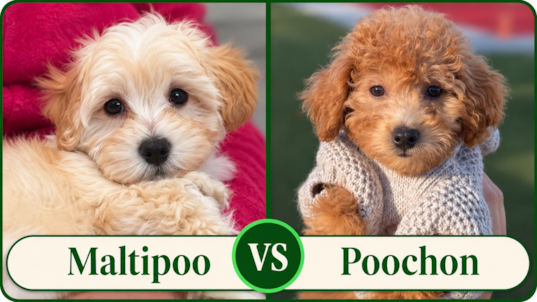
The Maltipoo vs Poochon comparison can be surprisingly difficult because these two adorable dogs have so much in common. They are small, affectionate, intelligent, and known for their soft, low-shedding coats. Both have Poodle ancestry, which helps explain their love of interaction and their ability to learn new things. And if you place a cream-colored Maltipoo next to a cream-colored Poochon, especially when both have the same fluffy haircut, you might have trouble telling them apart.
Their personalities reveal more of the difference. Maltipoos have a reputation for their affectionate, attentive nature and the close relationships they develop with their favorite people. Poochons have a cheerful, sociable character, with a playful enthusiasm that can make them particularly enjoyable in homes where there is plenty of family activity. Both love companionship, but they may approach people, games, and new experiences in slightly different ways.
There are practical differences as well. Poochons tend to have a somewhat sturdier appearance, while Maltipoos can be especially petite and fine-boned. Their coats share some similarities, although the Poochon's plush, curly texture can demand a little more attention from the brush. Exercise needs are manageable for both, but the Poochon may appreciate a bit more activity and variety.
If you're trying to decide between these two breeds, the goal is to look beyond their puppy photographs and understand what life with each one might feel like. We'll explore their history, appearance, grooming, temperament, and everyday habits, with particular attention to the differences that matter to future owners. By the end, you should have a much clearer picture of the companion that belongs in your home.
Table of Contents
Maltipoo vs Poochon Comparison Table
The Maltipoo and Poochon belong to the same general category of small Poodle mixes, but their characteristics are not identical. Their adult size ranges overlap, and both have coats that require consistent care. Their exercise needs are also fairly close, although a Poochon may enjoy a slightly more active schedule. This table offers a quick introduction to the characteristics we'll explore in greater detail.
| Characteristics | Maltipoo | Poochon |
| Parent Breeds | Maltese × Toy or Miniature Poodle | Bichon Frise × Toy or Miniature Poodle |
| Other Names | Malt-A-Poo, Maltipoodle, Moodle | Bichpoo, Bichon Poo, Bichonpoo, Bichon Poodle mix |
| Adult Weight | Commonly 5–10 pounds; some size lines reach 15–20 pounds | Approximately 6–17 pounds |
| Adult Height | Commonly 9–12 inches; some reach around 14 inches | Approximately 9–15 inches |
| Coat Type | Soft, fluffy, straight to wavy or curly | Soft, dense, plush, wavy to curly |
| Hypoallergenic Qualities | Low-shedding reputation; not completely hypoallergenic | Low-shedding reputation; not completely hypoallergenic |
| Grooming Needs | Brush 3–4 times weekly or daily for longer, curlier coats; professional grooming approximately every 4–8 weeks | Brush several times weekly or daily for dense curls; professional grooming approximately every 4–6 weeks |
| Exercise Needs | Approximately 30–45 minutes daily | Approximately 30–60 minutes daily |
| Training | Intelligent, attentive, responsive to positive reinforcement | Intelligent, enthusiastic, responsive to positive reinforcement |
| Colors | White, cream, apricot, red, tan, black, chocolate, gray | White, cream, apricot, tan, black, gray, and mixed-color patterns |
| Temperament | Affectionate, gentle, lively, sensitive, devoted | Cheerful, affectionate, sociable, playful, confident |
| Best Fit | Individuals, couples, and families who enjoy close companionship and interactive play | Families and individuals who enjoy a sociable dog with a playful, outgoing personality |
Maltipoo vs Poochon Overview
Although both are relatively recent designer breeds, the Maltipoo and Poochon have established recognizable identities among small-dog enthusiasts. Their popularity comes from more than their appearance. Each offers a particular style of companionship that appeals to people with different lifestyles and expectations. Their histories also help explain why they are familiar choices for people who want a little dog with a big place in family life.
Maltipoo History and Popularity
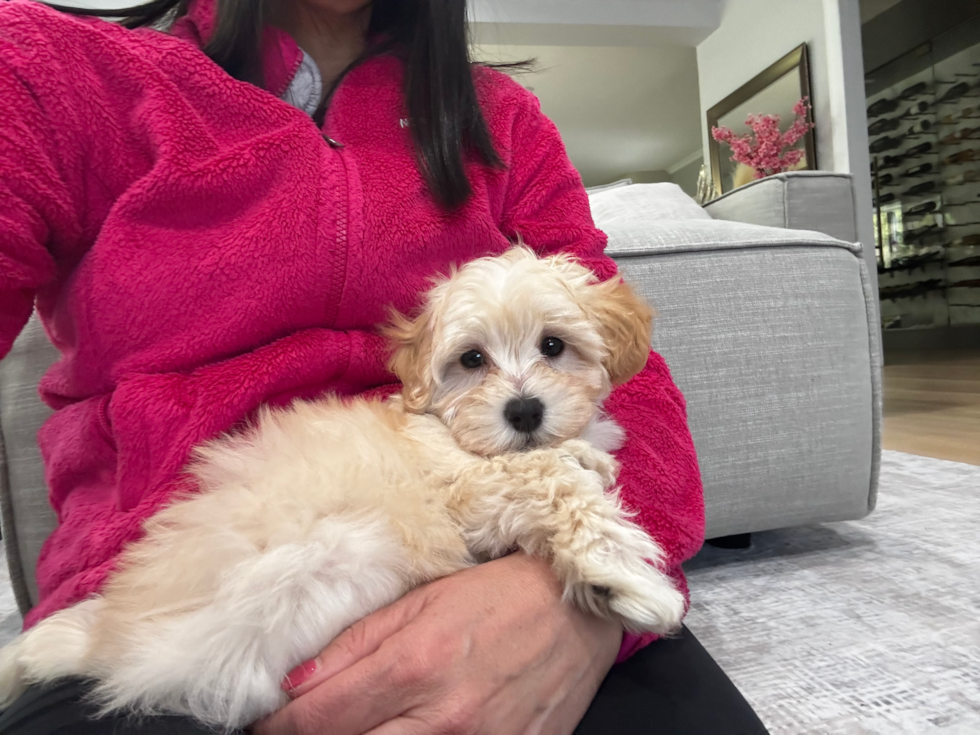
The Maltipoo gained popularity during the late twentieth century and early 2000s, when interest in small Poodle crosses began to grow. People were attracted to its manageable size, affectionate personality, and soft coat. The breed was developed primarily for companionship, with an emphasis on qualities that would suit life inside the home. It quickly found an audience among people who wanted a little dog that enjoyed attention, responded well to training, and could adapt to different household routines.
The Maltipoo's popularity has endured because it offers a combination of qualities that many companion-dog owners appreciate. It can have the playful curiosity of a dog that enjoys learning, along with a gentle, affectionate side that makes quiet time together especially pleasant. Its small size also suits a wide variety of homes, from apartments to houses with large yards. The breed has developed a particularly strong following among people who enjoy a dog that takes an active interest in its owner's daily life.
There is considerable variety within the Maltipoo population, which is part of the breed's appeal. Some are tiny dogs with delicate features, while others have a somewhat taller, more athletic build. Their coats can range from loose waves to tight curls, and their personalities are equally individual. Despite those differences, the Maltipoo has earned its reputation as a companion that values affection, familiarity, and a close relationship with its family.
Poochon History and Popularity
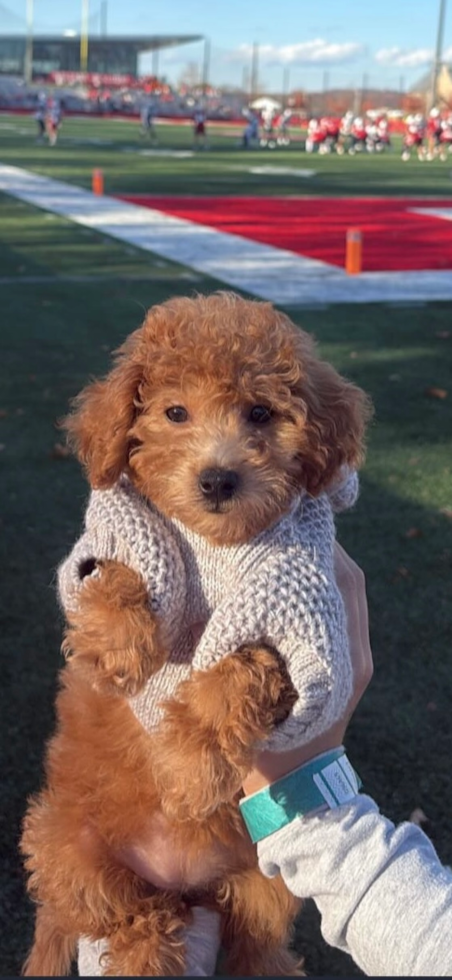
The Poochon, also known as the Bichpoo, became better known during the 1990s as interest in companion crosses expanded in Australia and the United States. The breed was developed from the Bichon Frise and Toy or Miniature Poodle, with the goal of creating a small, affectionate dog with a soft, low-shedding coat. Early interest centered on the Poochon's cheerful personality and its suitability for everyday family life. Its reputation gradually grew as more people discovered the breed's sociable nature and enthusiasm for human interaction.
The Poochon has a recognizable personality that helped establish its own following. Owners are drawn to a dog that can be affectionate and cuddly while still having plenty of enthusiasm for games, walks, and social activities. Its lively character gives the breed a particularly appealing presence in homes where family members enjoy spending time together. At the same time, the Poochon is small enough to fit comfortably into apartments and other compact living spaces, provided it receives appropriate activity and attention.
One interesting aspect of the Poochon's popularity is that it appeals to people with different levels of dog-owning experience. First-time owners appreciate its intelligence and responsiveness, while experienced owners may enjoy its playful character and interest in training. Families are drawn to its sociable personality, and individuals appreciate the affection it brings to everyday routines. The Poochon has built its identity around that balance of companionship, playfulness, and an unmistakably cheerful outlook.
Maltipoo vs Poochon Appearance
The Maltipoo and Poochon share many of the features that make small Poodle mixes so appealing. Their dark eyes, floppy ears, soft coats, and compact bodies give them an adorable appearance throughout puppyhood and adulthood. Yet the similarities can make the differences less obvious than they really are. Body proportions, coat density, facial shape, and adult size offer useful clues, especially when the dogs are viewed without the influence of elaborate haircuts.
Maltipoo Appearance
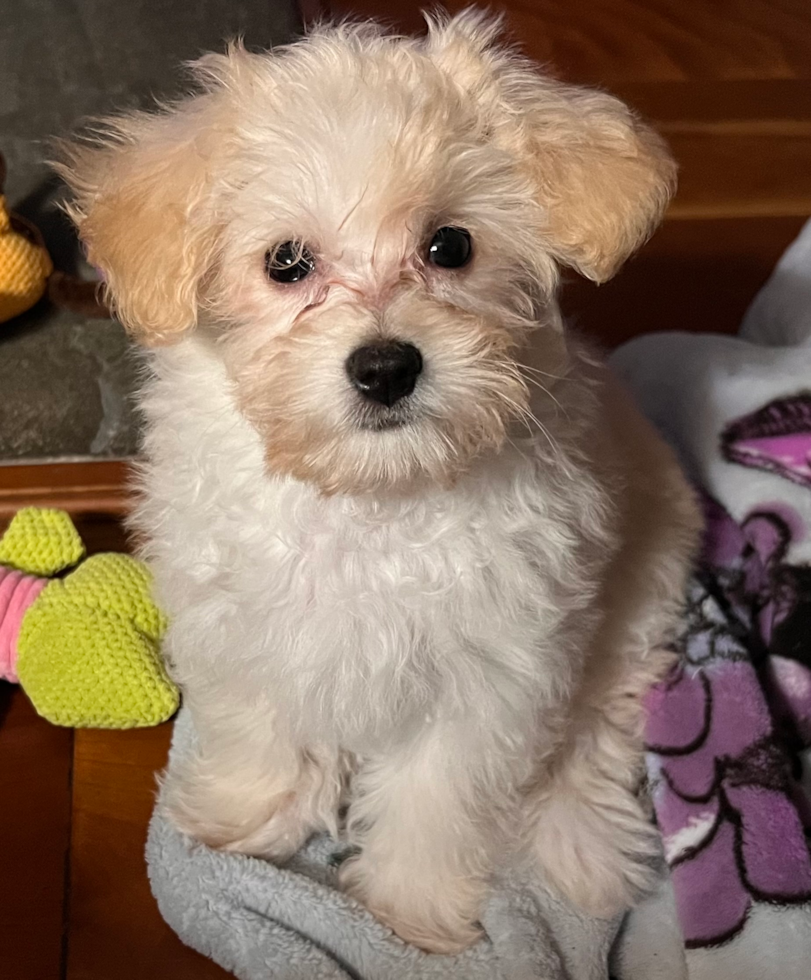
Maltipoos are small dogs with compact, balanced bodies and proportions that can vary considerably. Many adults weigh around 5 to 10 pounds and stand approximately 9 to 12 inches tall, although larger size lines can exceed those ranges. Some have delicate legs, a slim frame, and a relatively fine-boned appearance beneath their fluffy coat. Others have a slightly taller build with longer legs and a more athletic outline. The variety means that two adult Maltipoos can look noticeably different even when they share the same coat color.
The Maltipoo's coat is one of its most attractive features, partly because it comes in several distinct textures. Some dogs have soft, loose waves that give their hair a gently tousled appearance. Others develop defined curls that create a fuller shape around the body and face. A Maltipoo with a straighter coat may have hair that falls closer to the body, particularly when it is left at a longer length. Colors include white, cream, apricot, red, tan, black, chocolate, and gray, with subtle color changes possible as the dog matures.
The face tends to be expressive, with dark eyes, a small nose, and ears that hang beside the cheeks. Many Maltipoos have a defined muzzle that gives their face a slightly elongated appearance compared with some other fluffy companion dogs. Their tails may curve upward and carry a plume of soft hair, which adds to their delicate outline. A shorter haircut can emphasize their eyes and facial proportions, while a longer coat creates a softer, rounder appearance. The same dog can look surprisingly different after a visit to the groomer.
Grooming needs depend heavily on the coat's texture and length. A loosely waved Maltipoo may be easier to comb than one with dense curls, but both require regular attention. Tangles can develop beneath the ears, around the legs, and in areas where a harness or collar touches the coat. Brushing several times a week is a sensible minimum for many Maltipoos, while longer or curlier coats may need daily care. Professional trims every four to eight weeks help keep the coat manageable and preserve the style the owner prefers.
Poochon Appearance
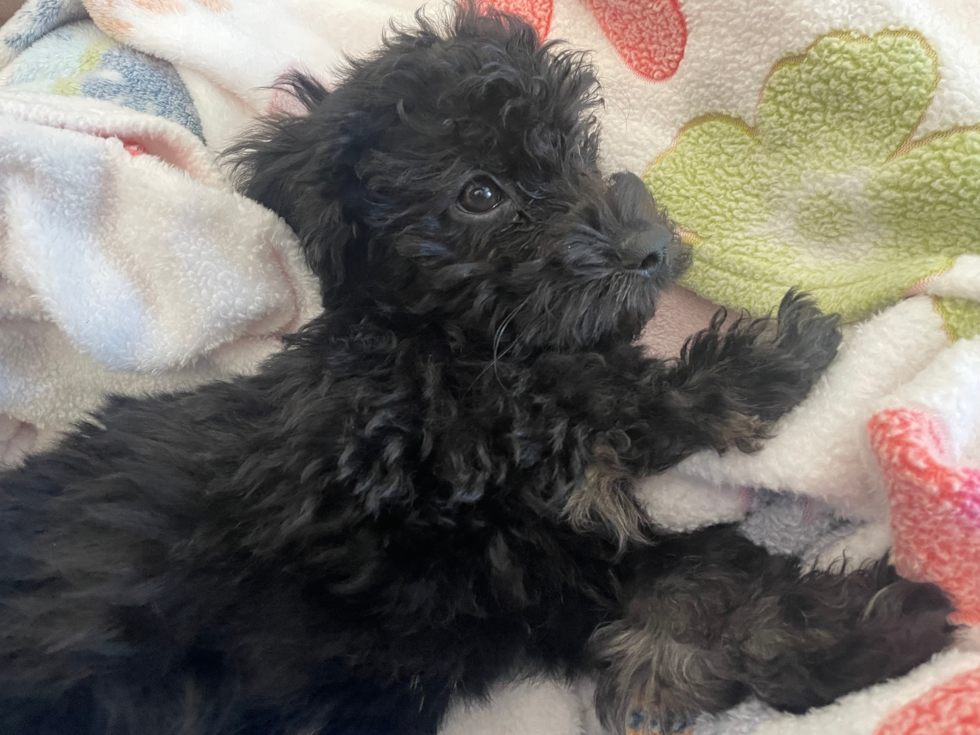
The Poochon has a compact, well-proportioned body that can look a little sturdier than the Maltipoo's. Adults typically weigh between 6 and 17 pounds and stand approximately 9 to 15 inches tall. Some are petite enough to resemble a small toy dog, while others have a more substantial frame beneath their coat. The chest can appear broad, the legs well balanced, and the overall silhouette rounded without looking heavy. This combination gives many Poochons the appealing appearance of a little dog with a surprisingly solid build.
A Poochon's coat tends to have a plush quality that creates volume around the body. Some coats feature defined curls, while others have a softer wave with considerable density. Because the hair can stand away from the body, a Poochon may look larger than its actual measurements suggest. White, cream, and apricot are familiar colors, although black, tan, gray, and mixed patterns also occur. The coat's texture and fullness can change during the transition from puppyhood to adulthood, so the fluffy appearance of a young puppy is not a precise guide to its mature coat.
Poochons commonly have dark, round eyes that sit within a full, soft face. Their ears hang beside the head and blend into the surrounding hair, especially when the coat is left longer. The muzzle is generally defined but can appear shorter beneath the facial hair, particularly with a rounded teddy-bear haircut. Many Poochons carry their tails upward with a fluffy plume that complements their compact outline. Their overall appearance has a cheerful quality that suits the breed's lively personality.
The Poochon coat needs consistent grooming because its density can hide knots beneath an apparently smooth surface. A quick brush across the outer layer may leave tangles close to the skin, especially under the front legs and around the chest. Owners should make sure a comb passes comfortably through the coat rather than relying solely on how fluffy it looks. Several brushing sessions each week are important, and dense curls may require daily attention. Professional grooming approximately every four to six weeks helps maintain a tidy length and keeps the coat easier to manage at home.
Maltipoo vs Poochon Appearance Comparison
The Maltipoo generally offers a broader range of delicate, fine-boned appearances, while the Poochon tends toward a compact, somewhat sturdier silhouette. That difference can be noticeable when both dogs have short haircuts, because there is less fluff to conceal their natural proportions. However, size ranges overlap considerably, and some Maltipoos are larger than some Poochons. A breed name alone cannot guarantee which individual dog will be taller or heavier. Adult size estimates are more useful than assuming every Maltipoo will be tiny and every Poochon will be stockier.
Coat texture provides another distinction, although it is not absolute. Maltipoos may have flowing waves, soft curls, or a relatively loose coat that gives them a delicate appearance. Poochons tend to have more volume and a plush texture, which can create a rounded shape even before a haircut. Both have low-shedding reputations, but that does not eliminate the need for brushing or professional grooming. The practical difference is that a dense Poochon coat may demand particularly careful combing, while a Maltipoo's grooming schedule can vary more noticeably with texture.
If appearance is a major factor in your decision, consider how each dog looks beyond the puppy stage. A cream-colored Maltipoo with loose waves may develop a distinctly different adult silhouette from a cream-colored Poochon with a dense, curly coat. Both can wear a teddy-bear cut, but the texture beneath the style still influences the final look. It is also worth remembering that a shorter trim changes the appearance of both breeds dramatically. Choosing a coat you enjoy caring for matters just as much as choosing a photograph you love.
Maltipoo vs Poochon Temperament
The personalities of these two dogs are closely related in some ways, particularly their affection for people and their interest in interaction. Both enjoy attention, learn household routines, and appreciate regular opportunities to play. The more useful comparison concerns how they direct that enthusiasm. Maltipoos can show a particularly attentive, one-on-one style of companionship, while Poochons are known for a cheerful sociability that may extend readily to the people and activities around them.
Maltipoo Temperament
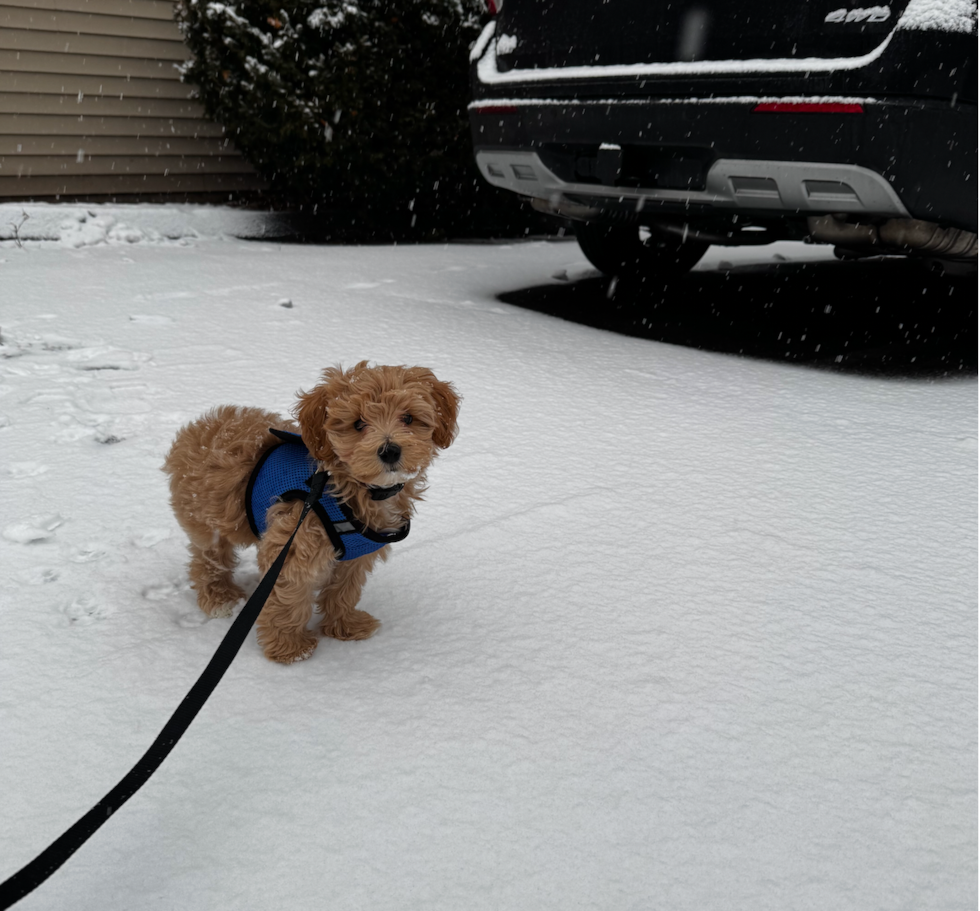
The Maltipoo has a wonderfully affectionate personality that can make its relationship with its owner feel very personal. Many are attentive little dogs that notice where their favorite person is and take an interest in what that person does. A Maltipoo may settle nearby while someone works, then show immediate enthusiasm when the possibility of a walk or game appears. This interest in shared activity is part of the breed's appeal, especially for people who enjoy frequent interaction with their pets. Their affection can be quiet and gentle one moment, then lively and expressive the next.
Maltipoos also have a sensitive side that deserves thoughtful handling. They can respond closely to tone of voice, body language, and changes in household activity. A calm approach to training helps build confidence and encourages them to participate without hesitation. Short lessons with rewards tend to suit their attention span, particularly during puppyhood. Skills such as settling in a familiar spot, responding to their name, and waiting politely for attention help them develop good household habits.
Playfulness is another important part of the Maltipoo temperament, but it does not necessarily mean constant high energy. A Maltipoo may enjoy a lively game for several minutes and then settle comfortably beside its owner. Around 30 to 45 minutes of daily activity is a reasonable starting point for many adults, with the total divided between walks and play. Some enjoy a familiar neighborhood route, while others appreciate a little variety and the chance to investigate new surroundings. Their small size makes daily activity manageable, but it should never be overlooked.
Maltipoos can be friendly with visitors and other animals, particularly when they have positive experiences from an early age. Some approach new people eagerly, while others prefer a little time before they feel comfortable. Their alertness may lead to barking at unfamiliar sounds, so early practice with everyday household noises is useful. Families with children should also teach gentle handling, especially with the smallest Maltipoos. This is a breed that can enjoy family life immensely when affection is balanced with consistency and respect.
Poochon Temperament
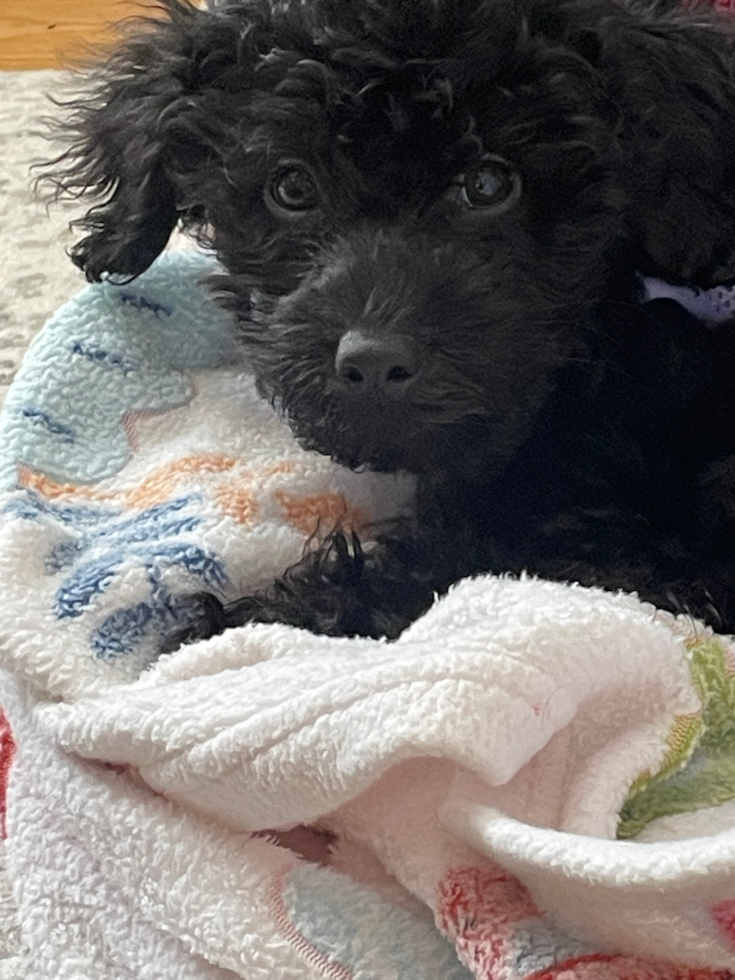
The Poochon has a cheerful, sociable personality that makes it particularly appealing to people who enjoy a lively household atmosphere. Many show interest in the people around them and welcome opportunities to interact. A Poochon may approach a visitor with enthusiasm, investigate a new activity, or eagerly join a family game. This social confidence is one of the breed's most attractive characteristics, although individual dogs differ in how readily they greet unfamiliar people. Their affectionate nature gives that enthusiasm a warm, companionable quality.
Poochons have a playful streak that can make them entertaining throughout the day. They may enjoy a short game of fetch, a chance to explore the yard, or an activity that involves several family members. Their intelligence adds another dimension because they can learn how to earn rewards and attention quite quickly. That ability is useful during training, although a clever Poochon can also discover which behaviors make people respond. Teaching calm greetings and polite manners early helps direct its enthusiasm into habits that suit everyday life.
The Poochon's exercise requirements are moderate, with approximately 30 to 60 minutes of daily activity suitable for many adults. A couple of walks and some play at home may satisfy one dog, while another appreciates additional games or opportunities to explore. The breed's playful nature can make activities such as gentle fetch, simple obstacle exercises, and scent games especially enjoyable. Mental activity matters because an intelligent dog needs something worthwhile to do between naps. A Poochon with a balanced routine can enjoy lively participation without expecting entertainment every minute.
One quality that makes the Poochon appealing is its adaptability to different social environments. It can enjoy the company of adults, children, and other pets when introductions and household expectations are appropriate. A home with regular visitors may suit a sociable individual particularly well, although polite behavior still needs to be taught. Excitement can lead to jumping, barking, or persistent requests for attention if those habits are encouraged during puppyhood. Consistent rules help preserve the Poochon's cheerful personality while making daily life easier for everyone.
Maltipoo vs Poochon Temperament Comparison
The Maltipoo and Poochon are both affectionate, but their social styles can differ in subtle ways. Maltipoos may direct more of their attention toward familiar people and the small activities they share with them. Poochons tend to have a broader social enthusiasm, which can make them eager participants in family gatherings and everyday household events. These tendencies should not be mistaken for rules about friendliness or loyalty. A sociable Maltipoo can love visitors, and a Poochon can develop an especially close attachment to one person.
Training offers another interesting comparison because both breeds are intelligent and responsive. A Maltipoo may work especially well with an owner who uses a gentle tone and enjoys short, personal training sessions. The Poochon can respond enthusiastically to lessons, although its excitement around people and activity may call for extra practice with patience and impulse control. Neither breed needs harsh correction, and neither benefits from confusing rules that change from day to day. The most rewarding approach is to give the dog clear expectations and plenty of opportunities to succeed.
Their exercise needs are similar enough that lifestyle matters more than the numbers alone. A Maltipoo can be an energetic little companion, and a Poochon can appreciate a quiet afternoon. Still, the Poochon may enjoy a slightly longer daily activity schedule, particularly if it has an enthusiastic interest in games and outings. The Maltipoo's desire for interaction can also make simple activities feel rewarding, even when they take place inside the home. The goal for either dog is a routine that includes movement, attention, and time to relax.
Family life brings out another practical distinction. A Poochon's somewhat sturdier build can appeal to households that want a small but active companion, although children still need to handle the dog gently. A petite Maltipoo may suit a household that prefers a lighter, more delicate dog and can provide appropriate supervision. Both can live with other pets, but careful introductions and respect for each animal's space matter more than the breed label. In homes where visitors come and go, the Poochon's sociability can be an advantage, while a Maltipoo's attentive nature may particularly appeal to someone who values close daily companionship.
Neither breed is automatically more affectionate, intelligent, or suitable for every family. Their strongest differences are matters of degree, and individual personalities can easily challenge expectations. A reserved Poochon and an outgoing Maltipoo are entirely possible, just as two puppies from the same cross can develop different preferences. That is why the best comparison connects typical breed characteristics with the routine you actually want to share with your dog. The right companion should feel comfortable in the quiet hours of the day as well as the exciting ones.
Maltipoo vs Poochon Conclusion
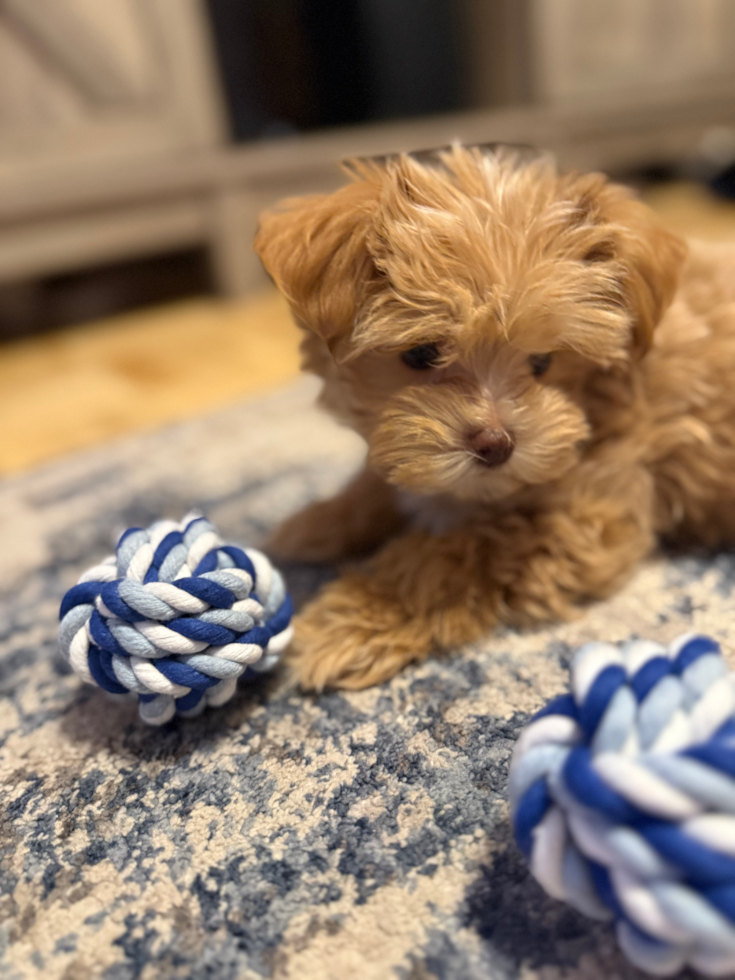
If you're drawn to a little dog that pays close attention to its people and enjoys frequent one-on-one interaction, the Maltipoo has a particular appeal. Its affectionate nature, manageable exercise needs, and range of beautiful coat textures make it a lovely choice for people who enjoy an involved but gentle companion. A Maltipoo can bring plenty of playfulness to the home without requiring the schedule of a large, highly active dog. The important commitment is to provide companionship, consistent training, and regular coat care.
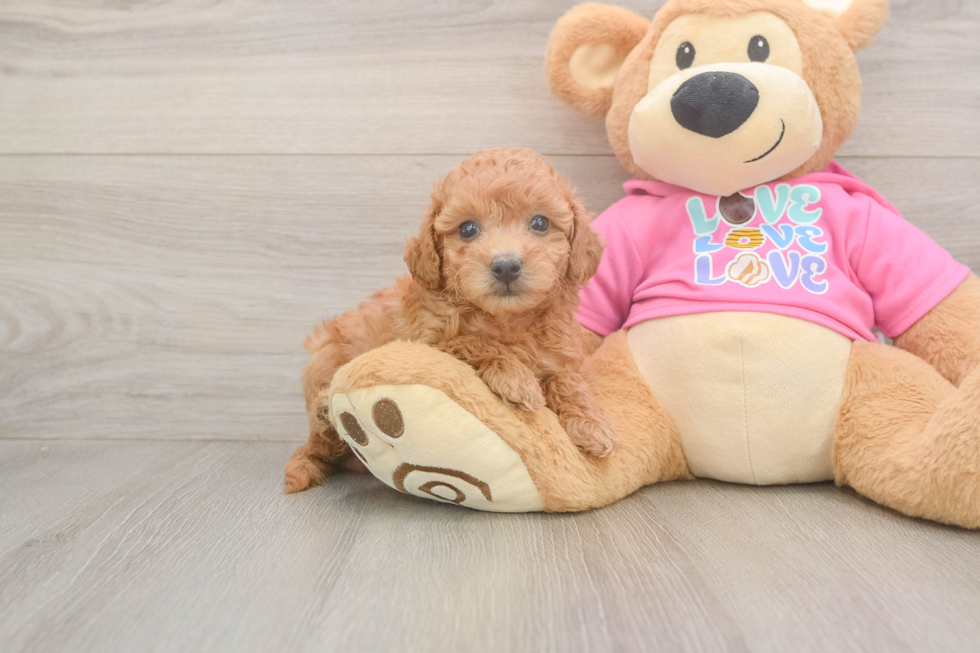
The Poochon may be the better fit if you enjoy a cheerful, sociable dog that takes an enthusiastic interest in family activities. Its playful personality and compact, sturdy appearance appeal to people who want a little companion with a lively presence. A Poochon can settle comfortably into home life, but its interest in games and interaction deserves regular attention. The dense, plush coat also calls for a grooming routine you are willing to maintain.
The deciding factor is the ordinary life you hope to share. If your favorite moments involve a little dog beside you through quiet routines and short interactive games, you may feel a stronger connection with the Maltipoo's style of companionship. If you picture an affectionate dog eager to join family activities and greet the day's events with enthusiasm, the Poochon may suit you better. Both have plenty of personality, but the one that fits your household's natural rhythm is the one most likely to feel right long after the excitement of puppyhood has passed.
Frequently Asked Questions
Are the Maltipoo and Poochon both Poodle mixes? Yes, both breeds have Poodle ancestry, although they are not the same cross. The Maltipoo combines a Maltese with a Toy or Miniature Poodle, while the Poochon combines a Bichon Frise with a Toy or Miniature Poodle. This shared background helps explain why both can have curly coats, quick minds, and an interest in training. However, their physical proportions and social tendencies can differ. The Maltipoo and Poochon have developed separate identities despite their similarities.
Is a Poochon always bigger than a Maltipoo? No, although Poochons can have a sturdier appearance and a broader typical adult size range. Maltipoos commonly weigh around 5 to 10 pounds in smaller size lines, but some adults are considerably larger. Poochons typically weigh between 6 and 17 pounds, which creates substantial overlap between the breeds. A small Poochon may weigh less than a taller Maltipoo, even if its coat looks fuller. Individual adult size estimates are more useful than assuming one breed will always be larger.
Which has a curlier coat, the Maltipoo or Poochon? Poochons are known for dense, plush coats that frequently have noticeable curls or waves. Maltipoos show considerable variation, with coats that may be straight, softly waved, or tightly curled. Some Maltipoos have curls every bit as defined as those of a Poochon, so texture alone is not a reliable way to identify the breed. A puppy's coat can also change as the adult hair develops. For grooming purposes, the density and length of the individual coat matter more than the breed name.
Do Maltipoos and Poochons need professional grooming? Yes, regular professional grooming is a practical part of life with either breed. Their coats can grow long enough to collect tangles, especially around the ears, legs, and areas beneath a collar or harness. Maltipoos may visit the groomer approximately every four to eight weeks, depending on coat type and preferred length. Poochons with dense curls commonly benefit from appointments every four to six weeks. Home brushing is still necessary between visits, even when the dog has a short puppy cut.
Which breed is better for a household with frequent visitors, Maltipoo or Poochon? A sociable Poochon may particularly enjoy a home where familiar visitors come and go. Its cheerful personality can make new interactions appealing, although manners around greetings still need attention. Maltipoos can be friendly with guests as well, and some are exceptionally outgoing. Individual temperament and early social experiences matter more than the expectation that every Poochon will love every stranger. Whichever breed you choose, teaching polite greetings will make visits more pleasant.
Is the Poochon more energetic than the Maltipoo? The Poochon may enjoy a little more daily activity, with approximately 30 to 60 minutes as a typical exercise range compared with the Maltipoo's 30 to 45 minutes. However, these ranges overlap, and the individual dog's energy level is important. A lively Maltipoo can enjoy more activity than a relaxed Poochon. Both benefit from regular walks, interactive games, and opportunities to explore their surroundings. The difference is better understood as a possible preference for a fuller activity schedule rather than a dramatic gap in energy.
Which breed is easier for first-time owners to train, Poochon or Maltipoo? Both breeds can suit first-time dog owners who are prepared to establish a consistent routine. Maltipoos tend to respond well to gentle encouragement and short lessons that involve direct interaction with their owners. Poochons are also quick learners, but their enthusiasm may require extra practice with calm greetings and patience around distractions. Neither breed learns good manners without regular guidance. A first-time owner who enjoys positive reinforcement and clear household rules can do well with either dog.
Are Maltipoos or Poochons better with young children? Both can enjoy family life, although the ages and behavior of the children matter greatly. A Poochon's somewhat sturdier build may appeal to families who want an active small companion. A petite Maltipoo may need especially careful supervision around enthusiastic young children because of its delicate size. Neither breed should be expected to tolerate rough handling or constant interruption during rest. Children who learn to approach gently, respect the dog's space, and participate in suitable games can develop lovely relationships with either breed.
How should I choose between a Maltipoo and a Poochon puppy? Start by considering which type of daily companionship appeals to you most. The Maltipoo may suit someone who enjoys close one-on-one interaction with a small, attentive dog, while the Poochon may appeal to a household that welcomes a more socially enthusiastic personality. Think about the grooming schedule, likely adult size, and amount of time you can devote to training and play. Then consider the individual puppy's temperament, because even closely related dogs can have different preferences and responses to new experiences. A thoughtful choice should reflect the way you live rather than the breed that looks cutest in a photograph.