





Published Monday, November 23, 2026 by Fairfield Furbabies
There is a particular kind of little dog that wants to know what everyone in the house is doing, even when nothing especially interesting is happening. Both the Havapoo and Havashu have that affectionate curiosity about family life, along with sweet expressions, soft coats, and personalities that make them wonderful companions. They enjoy attention, appreciate familiar routines, and have an undeniable talent for making themselves comfortable wherever their favorite people happen to be. Yet, despite their similarities, these two breeds can offer surprisingly different experiences once you get to know them.
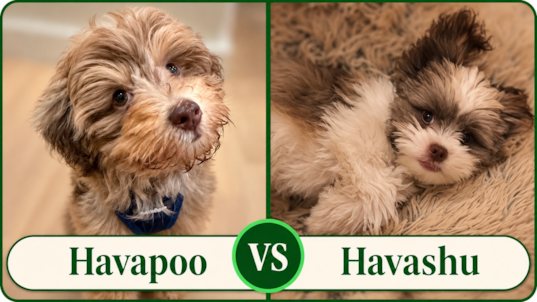
The Havapoo vs Havashu comparison brings together two small companion crosses with a shared Havanese background. The Havapoo combines the Havanese with a Toy or Miniature Poodle, while the Havashu pairs the Havanese with the Shih Tzu. Both are intelligent, loving dogs, but the Havapoo may show more enthusiasm for interactive activities and learning, while the Havashu can have a somewhat more relaxed approach to everyday companionship. Their personalities certainly overlap, and individual dogs will have their own preferences, but these differences are worth understanding before choosing a puppy.
Appearance also plays an important role in this comparison, particularly because both breeds can look remarkably similar during puppyhood. The Havapoo has a wider range of coat textures and adult proportions, while the Havashu may develop a fuller face, a compact body, and a softer, more flowing coat. Their exercise requirements are close, and both appreciate a household where affection and regular interaction are part of the daily routine. The real decision comes down to the particular qualities you enjoy in a companion and how those characteristics fit into your home.
Table of Contents
Havapoo vs Havashu Comparison Table
The Havapoo and Havashu share several characteristics, especially their small size, affectionate temperament, and appreciation for human companionship. Their exercise needs are similar, but their adult appearance and approach to training can differ. The Havapoo has a broader potential size range, while the Havashu may inherit a somewhat different facial structure and coat texture. The following table provides a practical overview of both breeds, with approximate ranges that allow for individual variation.
| Characteristics | Havapoo | Havashu |
| Parent Breeds | Havanese and Toy or Miniature Poodle | Havanese and Shih Tzu |
| Other Names | Poovanese, Havanoodle, Hava Poo | Hava-Tzu, Havatzu, Havanese Shih Tzu Mix |
| Adult Weight | Approximately 8–20 pounds | Approximately 7–15 pounds |
| Adult Height | Approximately 8–15 inches | Approximately 8–12 inches |
| Coat Type | Soft, wavy, curly, or occasionally silky | Soft, silky, straight to wavy, sometimes slightly curled |
| Hypoallergenic Qualities | Low-shedding potential; no guaranteed hypoallergenic coat | Low-shedding potential; no guaranteed hypoallergenic coat |
| Grooming Needs | Brush 3–4 times weekly, more with tight curls; professional grooming about every 6–8 weeks | Brush approximately 3–5 times weekly, more with longer coats; professional grooming about every 6–8 weeks |
| Exercise Needs | Approximately 30–45 minutes daily | Approximately 30–45 minutes daily |
| Training | Intelligent, responsive, eager to learn, and interested in interactive lessons | Intelligent, receptive to positive training, patient, and sometimes independent |
| Colors | Cream, white, black, chocolate, apricot, brown, gray, and mixed shades | White, cream, gold, tan, black, brown, and multicolored combinations |
| Temperament | Affectionate, curious, gentle, playful, intelligent, and devoted | Affectionate, cheerful, sociable, gentle, playful, and loyal |
| Best Fit | People who enjoy a loving companion with an interest in activities, learning, and regular interaction | People who appreciate an affectionate companion with a comfortable daily routine and a potentially more relaxed personality |
Havapoo vs Havashu Overview
The Havapoo and Havashu are relatively modern companion crosses that developed during a period of growing interest in smaller dogs with affectionate personalities and appealing coats. Neither has the centuries of formally documented history associated with established purebred breeds, but both have developed recognizable identities. Their popularity reflects the appeal of small companions that enjoy close relationships with people and adapt comfortably to different household routines. Although their origins share certain similarities, the two breeds attracted attention for somewhat different combinations of characteristics.
Havapoo History and Popularity
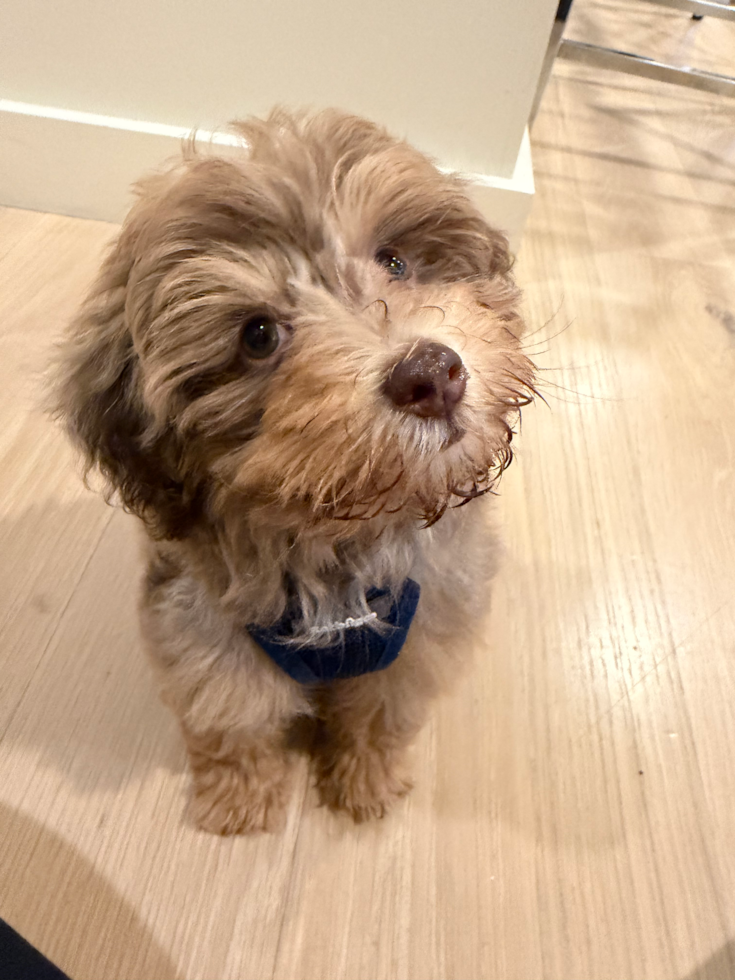
The Havapoo developed during the growing popularity of smaller Poodle crosses in the late twentieth century and early twenty-first century. Its history is associated with breeding programs that sought affectionate companions with intelligence, manageable proportions, and soft coats. There is no single widely documented breeder or specific date credited with the creation of the first Havapoo. Instead, the cross developed through different programs, which helps explain the variety seen among adults today. The names Poovanese and Havanoodle are also associated with the breed, although Havapoo has become a familiar term among enthusiasts.
As the Havapoo gained recognition among small-dog lovers, its appeal extended beyond appearance. People appreciated a companion that could enjoy quiet affection while also showing interest in games, training, and daily activities. Its adaptable personality made it attractive to people with different lifestyles, from apartment residents to families with children. The breed's intelligence became another important part of its reputation, particularly for owners who enjoyed teaching useful skills and spending time with their pets. These qualities helped establish the Havapoo as a recognizable member of the small Doodle family.
One distinctive aspect of the Havapoo's development is the variation associated with Toy and Miniature Poodle ancestry. This creates a broader range of possible adult proportions than people sometimes expect from a small companion cross. Some Havapoos are petite and compact, while others develop longer legs and a slightly more substantial frame. Their coats also vary, with soft waves, curls, and silkier textures among the possibilities. This diversity contributes to the breed's popularity, although it also means that adult appearance should be understood as a range rather than one fixed look.
Havashu History and Popularity
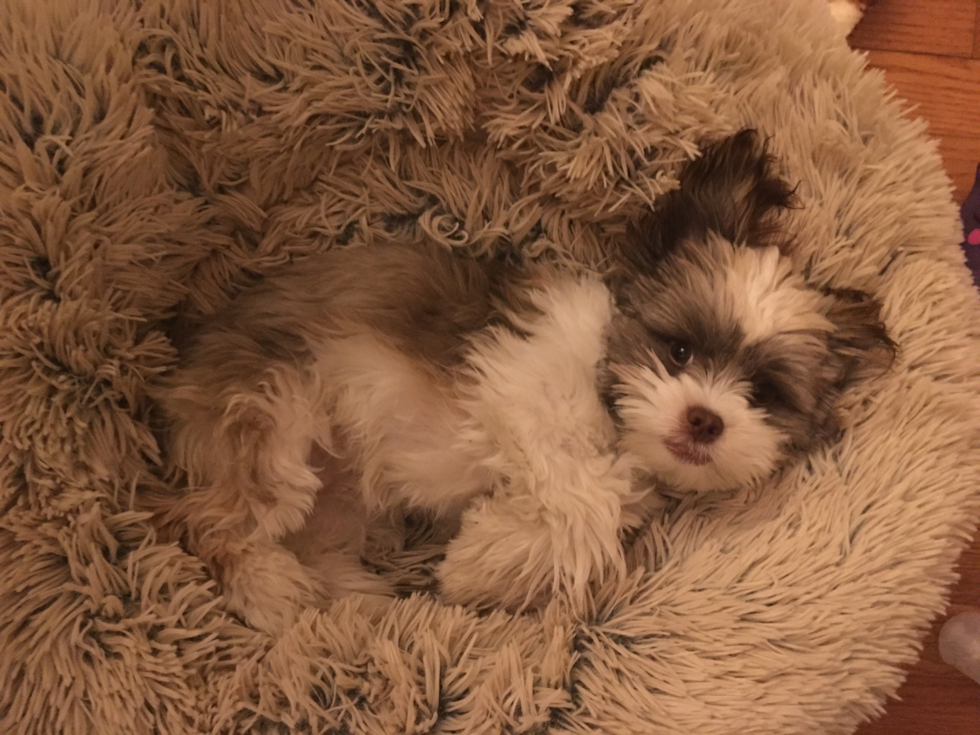
The Havashu developed as interest grew in companion crosses that combined the qualities of established small breeds. Its history is less formally documented than that of the Havanese or Shih Tzu, and there is no universally accepted creation date or individual credited with its development. The cross became associated with the modern preference for affectionate dogs that fit comfortably into family homes. Its name combines elements of Havanese and Shih Tzu, while Hava-Tzu and Havatzu are alternative names for the same breed. Despite its relatively recent origins, the Havashu has developed a recognizable identity among small companion enthusiasts.
The Havashu attracted attention because of its combination of affectionate temperament, manageable size, and distinctive appearance. Its soft coat and expressive face certainly contributed to its appeal, particularly among people who appreciate rounded teddy bear features. However, the breed's personality has played an equally important role in its popularity. Havashus have earned a reputation for close companionship, gentle social behavior, and an enjoyable balance between play and relaxation. These qualities make them appealing to families, couples, individuals, and older adults who appreciate a dog that enjoys everyday company.
Because the Havashu does not have a single official purebred standard, its appearance and temperament can vary between individuals. Some adults have proportions that closely resemble the Havanese, while others develop a fuller face and a more compact outline. Their coats may be relatively straight, softly waved, or lightly curled, with colors that range from solid shades to contrasting combinations. This variety has become part of the breed's appeal, particularly for people who appreciate a companion with its own distinctive appearance. The Havashu's popularity reflects a preference for affectionate household dogs with a strong interest in familiar people and comfortable routines.
Havapoo vs Havashu Appearance
The Havapoo and Havashu can look remarkably similar, especially when both have soft puppy coats and rounded haircuts. Their expressive eyes, compact bodies, dropped ears, and affectionate expressions create an appearance that many people associate with small teddy bear dogs. However, their physical differences become easier to recognize when we look at adult proportions, facial structure, and coat texture. These characteristics are particularly important because two puppies with nearly identical appearances can grow into noticeably different adults.
Havapoo Appearance
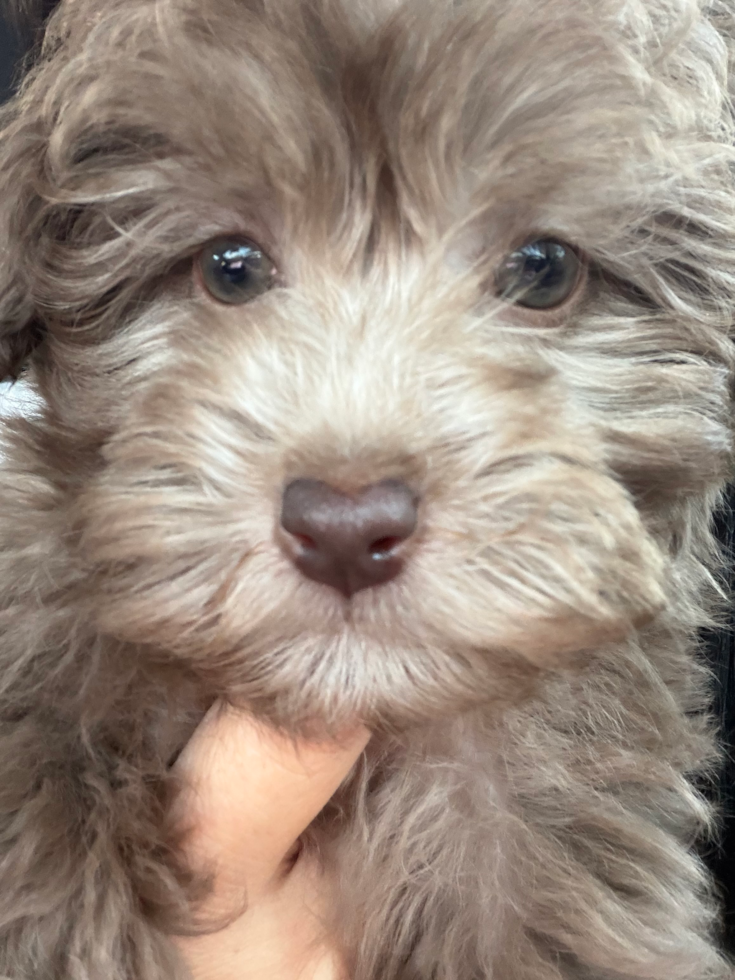
The Havapoo is a small, well-proportioned dog with an adult size that can vary considerably. Most weigh approximately 8 to 20 pounds and stand around 8 to 15 inches tall at the shoulder. Some Havapoos have a petite, compact outline, while others develop longer legs and a slightly taller appearance. Their bodies commonly look balanced and sturdy beneath the coat, with proportions that suit their playful temperament. The difference between a smaller and larger Havapoo can be quite noticeable, particularly when the dogs are viewed side by side as adults.
Facial features add another layer of variety, especially because the Havapoo can inherit different combinations of muzzle shape and coat texture. Many have dark, expressive eyes and a gently defined muzzle that gives the face an alert appearance. Their ears hang close to the head and are commonly covered in soft waves or curls that frame the cheeks. Some Havapoos have a fuller forehead and rounded facial hair, while others show more definition around the muzzle and eyes. Their tails may curve over the back or extend behind the body, with hair that creates a soft plume.
The Havapoo coat is one of the breed's most distinctive physical characteristics, particularly when it develops pronounced curls. Some dogs have loose waves that fall naturally along the body, while others grow a denser coat with tighter curls. A silkier texture is also possible, which gives certain Havapoos a softer, more flowing appearance. Colors include cream, white, apricot, chocolate, black, brown, gray, and various mixed combinations. Some puppies develop changes in shade as their adult coats grow, so the final appearance may differ from their early photographs.
Grooming needs depend on the coat's texture and the length preferred by the owner. A Havapoo with tighter curls may need more frequent brushing than one with loose waves, particularly around the ears, underside, and legs. Brushing three to four times weekly provides a practical starting point, while denser coats can require daily attention. Professional grooming approximately every six to eight weeks helps maintain a comfortable length and keeps the facial hair neat. Owners who appreciate a rounded puppy cut can enjoy that appearance without maintaining a particularly long coat.
Havashu Appearance
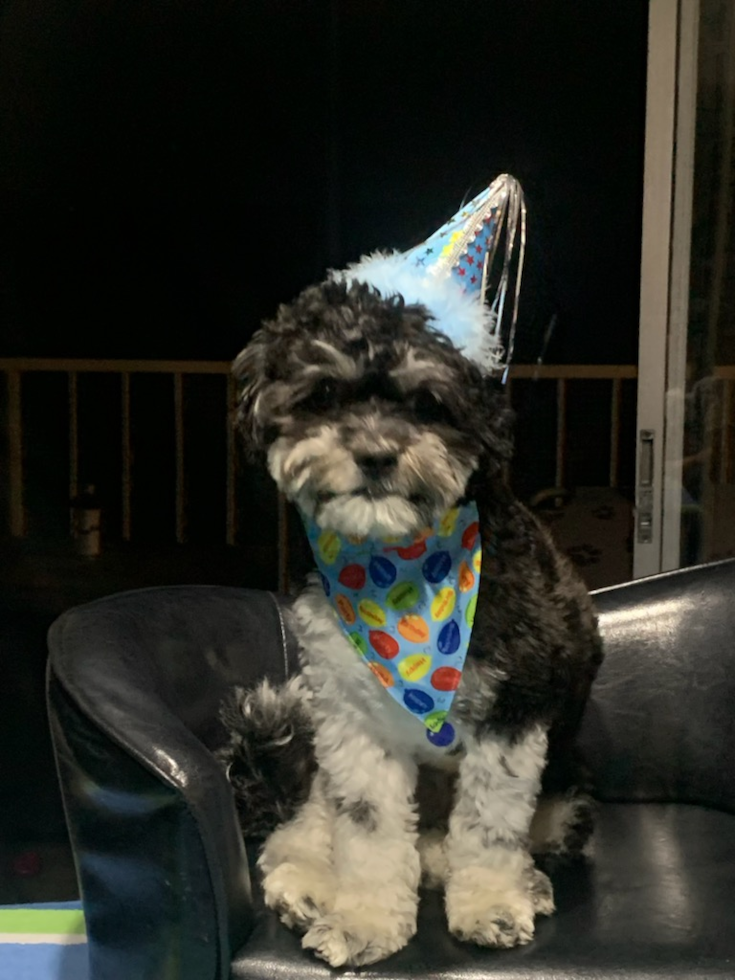
The Havashu has a compact, appealing body with an adult weight commonly between 7 and 15 pounds. Most stand approximately 8 to 12 inches tall at the shoulder, although individual proportions can vary. Some Havashus have a relatively light frame, while others develop a broader chest and a fuller appearance beneath the coat. Their legs may look slightly shorter in proportion to the body, particularly when the hair around the chest and underside is left long. This creates a small companion with a soft, rounded outline that many owners find especially attractive.
The face is one of the Havashu's most recognizable features, particularly when the dog develops a broader muzzle and a full arrangement of facial hair. Some Havashus have a moderate muzzle that closely resembles the Havanese, while others inherit a shorter, more rounded facial structure. Their eyes are commonly dark and expressive, and their ears hang beside the cheeks beneath soft hair. A rounded haircut can emphasize the fullness of the face, especially when the muzzle and forehead are trimmed into a balanced shape. The result is a sweet expression that gives the breed much of its visual appeal.
The Havashu coat commonly has a soft, silky texture, although the amount of wave or curl varies. Some dogs have hair that falls smoothly along the body, while others develop a fuller coat with loose waves and a plush appearance. White, cream, tan, gold, brown, and black are among the familiar colors, with mixed patterns that can create attractive contrasts around the face and chest. The tail commonly curves over the back or toward one side beneath a soft plume of hair. Coat color may also change slightly during the transition from puppyhood to adulthood.
Maintaining the Havashu's coat requires regular brushing, especially when the hair is left at a medium or longer length. Soft hair can develop tangles in areas that experience friction, particularly behind the ears, beneath the legs, and around the collar. Three to five brushing sessions each week are a practical starting point, with more attention for dogs that wear fuller coats. Many owners choose a neat puppy cut that keeps the face expressive and makes daily grooming easier. Professional appointments every six to eight weeks help preserve the preferred length and shape.
Havapoo vs Havashu Appearance Comparison
The most noticeable difference between the Havapoo and Havashu is the variety of adult proportions and facial features. A Havapoo can develop a taller, slightly more athletic outline, particularly when its size falls toward the upper end of the breed's range. The Havashu commonly has a more compact appearance, although some individuals are just as light and proportionate as a smaller Havapoo. Their height and weight ranges overlap, so size alone is not a reliable way to distinguish them. The differences become more apparent when their coats are short enough to reveal the body beneath.
Coat texture offers another useful comparison, particularly for people who prefer a specific appearance. Havapoos can develop tighter curls that create a textured, Doodle-like look, while Havashus are more commonly associated with soft, silky hair and gentle waves. However, a loosely waved Havapoo can resemble a Havashu closely, especially when both wear similar haircuts. Their facial proportions may offer additional clues, with some Havashus showing a fuller, rounder face and a shorter-looking muzzle. Adult photographs can provide a better understanding of these possibilities than puppy pictures alone.
Grooming is an important consideration for both breeds, but neither has an automatic advantage. A curly Havapoo may require more detailed brushing close to the body, while a long-coated Havashu can need careful attention around the ears, neck, and underside. The chosen haircut influences maintenance just as much as the breed itself. A shorter companion trim can make either coat easier to manage, although regular brushing and professional grooming remain necessary. The best choice is a dog whose appearance you genuinely enjoy and whose coat care fits comfortably into your routine.
Havapoo vs Havashu Temperament
The Havapoo and Havashu have affectionate personalities and a strong appreciation for familiar people, but their individual habits can create different experiences at home. Both enjoy companionship, respond to attention, and appreciate activities that allow them to participate in family life. Their exercise requirements are similar, and neither needs a particularly demanding activity schedule to enjoy a satisfying day. The interesting differences appear in how they respond to training, approach social situations, and settle into the daily rhythm of the household.
Havapoo Temperament
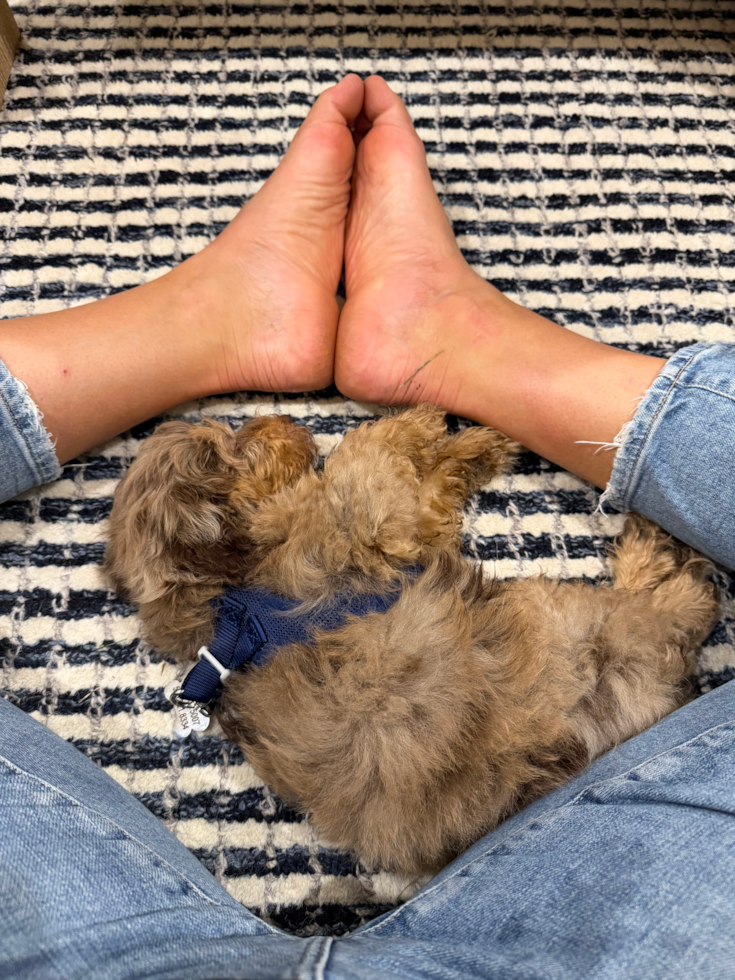
The Havapoo has an affectionate, attentive personality that can make it a particularly enjoyable companion for people who appreciate regular interaction with their dogs. These dogs commonly take an interest in household activity and learn to recognize the routines that shape their day. A Havapoo may notice when its owner prepares to leave, anticipate the familiar sequence before a walk, or respond quickly to an invitation to play. Their alertness creates an engaging presence without necessarily making them demanding companions. Many Havapoos enjoy participation, even when the activity is something as ordinary as spending time together in the living room.
One appealing characteristic of the Havapoo is its willingness to respond to direction, particularly when communication is clear and positive. These dogs can learn useful household habits through short lessons that reward attention and cooperation. A Havapoo may respond enthusiastically to training that introduces small challenges, although repetition should still feel enjoyable rather than tedious. Their intelligence allows them to recognize patterns quickly, which makes consistency important when establishing rules. Owners who appreciate a responsive companion can find the training experience particularly rewarding.
The Havapoo's affectionate temperament can suit a variety of households, but its attachment to people deserves attention. Many enjoy close physical contact and appreciate a comfortable place near their family, especially during quieter parts of the day. Others show affection through playful interaction and regular invitations to participate in activities. Their social behavior can be friendly and welcoming, although unfamiliar situations should still be introduced gradually. A Havapoo that receives positive experiences during puppyhood can develop confidence around visitors, other pets, and everyday household activity.
Exercise needs are moderate, with approximately 30 to 45 minutes of daily activity providing a useful starting point for many adults. Short walks, gentle play, and occasional training activities can create a satisfying routine without requiring long outdoor sessions. Their compact size makes apartment life possible, particularly when owners provide regular opportunities for interaction and movement. Some Havapoos appreciate variety in their activities, especially when familiar games begin to feel predictable. A little creativity can help keep the daily routine interesting without making it complicated.
Havapoos also benefit from learning how to relax when family members are occupied with other tasks. Their interest in people can make them attentive companions, but they should not expect constant interaction throughout the day. Gradual practice with independent rest helps establish comfortable habits, particularly for puppies that receive considerable attention. Some Havapoos alert their owners to visitors or unfamiliar sounds, so calm responses should be encouraged early. With consistent guidance, the breed can offer a lovely balance between playful interaction and affectionate companionship.
Havashu Temperament
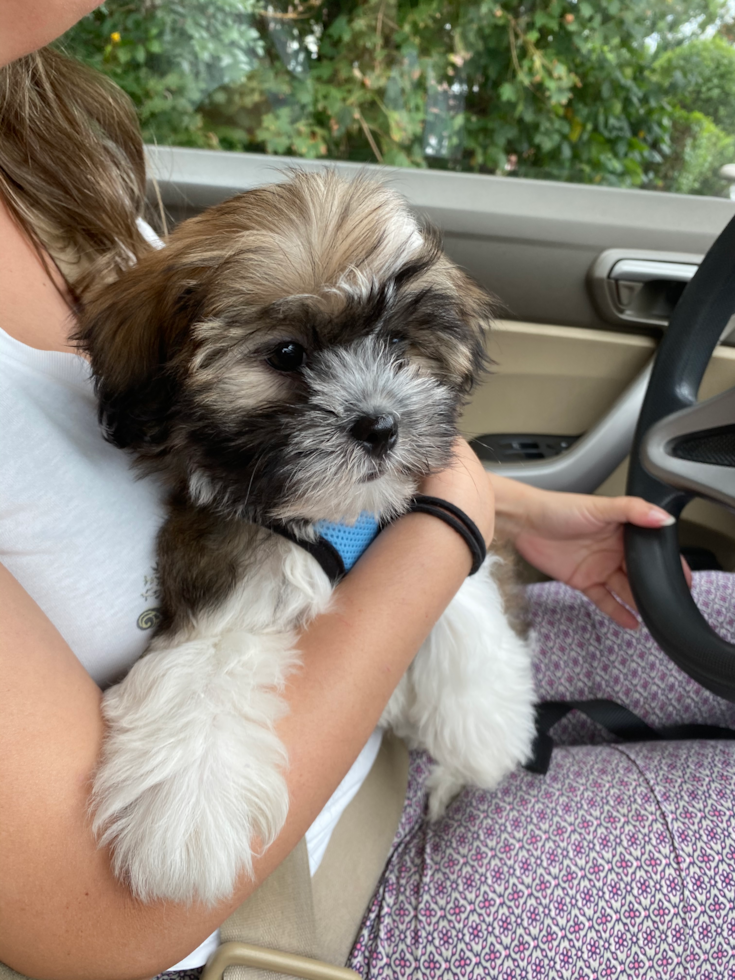
The Havashu has a warm, affectionate personality that places familiar companionship at the center of its everyday life. These dogs appreciate the people they know and can develop a strong preference for comfortable household routines. A Havashu may enjoy a lively greeting when someone returns home, then happily settle nearby once the excitement passes. Their social nature can make them enjoyable companions, particularly for people who appreciate a dog that values closeness without requiring an endless schedule of activities. Many Havashus have a gentle presence that suits a comfortable, affectionate household.
One interesting aspect of the Havashu temperament is the way some individuals approach new experiences. A confident Havashu may greet unfamiliar people with immediate friendliness, while another may prefer a moment to observe before accepting attention. Both responses can be perfectly natural, and positive introductions help the dog develop comfortable social habits. Their behavior can reflect a thoughtful approach to unfamiliar situations rather than a lack of sociability. Owners who respect the dog's pace can help establish confidence without forcing interaction.
Training a Havashu can be enjoyable, particularly when lessons are calm, positive, and easy to understand. These dogs are intelligent and capable of learning familiar commands, although some show a more independent attitude toward repeated exercises. A Havashu might understand an instruction but prefer a moment of encouragement before participating, especially when another activity has captured its interest. Praise, treats, and patient repetition help create positive associations with learning. Consistent rules are important because a small dog can develop inconvenient habits when expectations change from one day to the next.
The Havashu's activity requirements are moderate, with approximately 30 to 45 minutes of daily exercise suitable for many adults. Short walks and gentle games can provide enjoyable opportunities for movement without demanding a particularly active lifestyle. Some Havashus enjoy exploring unfamiliar places, while others show a clear preference for familiar routes and activities. Their compact size makes them suitable for apartments and smaller homes when regular interaction is part of the routine. A comfortable place to rest near the family can be just as important to a Havashu as an enjoyable outing.
The breed can also be a lovely companion for families with respectful children, particularly when play is gentle and supervised. Havashus can develop friendly relationships with other household pets, although introductions should always consider individual confidence and play styles. Their affectionate personalities make them appealing to people who spend considerable time at home, but gradual independence training is still valuable. Some Havashus bark when unfamiliar sounds interrupt the household, and early guidance helps establish calmer habits. Their appeal lies in the combination of affection, manageable activity needs, and a personality that appreciates the familiar comforts of home.
Havapoo vs Havashu Temperament Comparison
The Havapoo and Havashu share enough temperament characteristics that neither should be described as the energetic or affectionate winner. Both enjoy companionship, appreciate attention, and can participate happily in family activities. The Havapoo may show greater enthusiasm for interactive learning and new activities, while the Havashu can have a somewhat more measured approach to familiar routines. These differences are tendencies rather than fixed rules, and individual dogs may show a combination of characteristics associated with either breed. The comparison is most useful when you consider what kind of interaction you enjoy with your companion.
Training provides one of the more interesting distinctions because both breeds are intelligent but may respond differently to repeated exercises. A Havapoo can appreciate the opportunity to learn something new, especially when the activity involves variety and positive feedback. A Havashu can learn the same commands but may respond better to shorter lessons and familiar rewards that maintain its interest. Neither approach reflects a difference in intelligence, since motivation and temperament influence how dogs participate. Owners who adapt their training style to the individual dog can enjoy success with either breed.
Their social behavior also deserves attention, particularly in homes where visitors are a regular part of family life. Havapoos can be curious about unfamiliar activity and interested in the people who enter their surroundings. Havashus may approach visitors with immediate friendliness or take a little more time before joining the interaction. Both benefit from early social experiences that encourage confidence and polite behavior. A friendly temperament is an advantage, but calm greetings still need to be taught rather than expected automatically.
Their activity needs are remarkably similar, so exercise alone is unlikely to determine the decision for most families. A Havapoo may enjoy greater variety in its games, while a Havashu may appreciate the comfort of familiar activities. Both can enjoy short neighborhood walks, gentle indoor play, and regular opportunities to interact with family members. Neither needs an extensive outdoor routine, but both should receive daily activity and attention. The more meaningful difference is how each individual dog prefers to spend that time with its owner.
Family compatibility is another area where the breeds share strong potential. Havapoos and Havashus can enjoy life with respectful children and other pets when introductions are appropriate. Their small size requires gentle handling, especially around younger children who may not understand how easily a little dog can be overwhelmed. A Havapoo may show interest in interactive games, while a Havashu can appreciate social play and comfortable companionship. Individual confidence, early experiences, and household expectations influence compatibility more than breed labels.
For first-time owners, both breeds can be approachable choices when expectations are realistic. A Havapoo may appeal to someone who enjoys training and wants a responsive companion that appreciates regular interactive activities. A Havashu may suit someone who values affectionate company and a comfortable daily routine with gentle play and moderate exercise. Both require grooming, patient guidance, and opportunities to develop confidence in unfamiliar situations. The better match is the dog whose personality and individual needs fit naturally into the owner's lifestyle.
Havapoo vs Havashu Conclusion
The Havapoo and Havashu are closely matched companions, but their differences can help make the decision clearer for someone who appreciates both breeds.
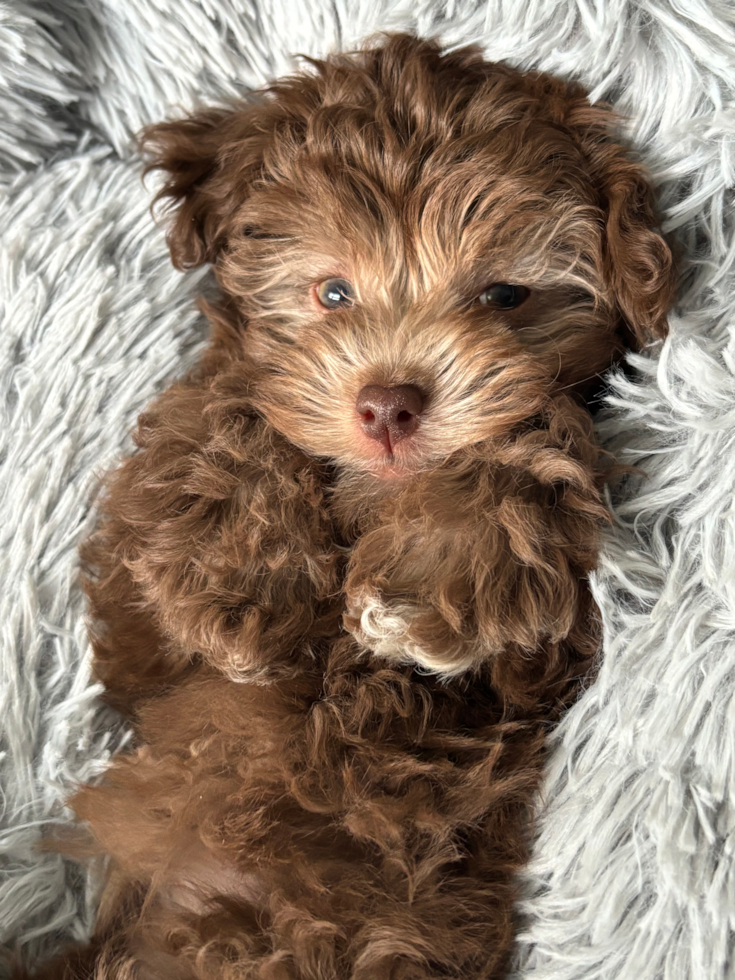
The Havapoo is an appealing choice for people who enjoy an affectionate dog with an interest in learning, interactive activities, and regular engagement. Its variety of coat textures and adult proportions also gives it a distinctive appearance, particularly for people who admire the softer, curly look of small Doodles. An owner who enjoys teaching little skills and sharing activities throughout the day may find the Havapoo especially rewarding.
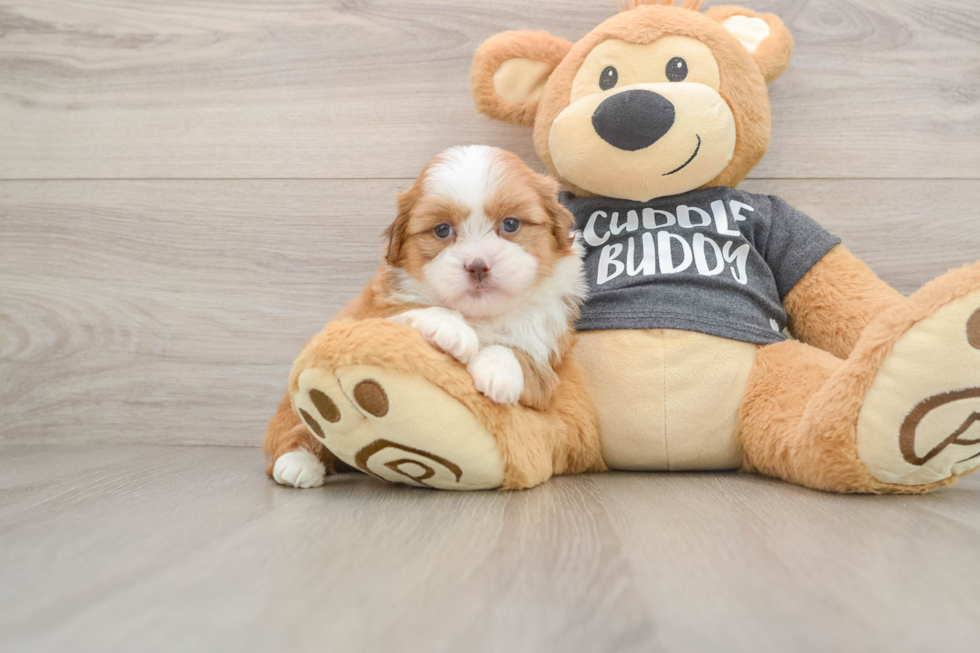
The Havashu offers a different kind of appeal through its affectionate personality, compact proportions, and appreciation for familiar routines. It can be a wonderful companion for people who enjoy gentle interaction, comfortable evenings at home, and regular but manageable daily activities. Its soft coat and rounded facial appearance give many Havashus an especially endearing look, although individual dogs can differ considerably. The breed may appeal to someone who wants a small companion with a potentially more relaxed approach to everyday life.
Ultimately, the choice should reflect the kind of relationship you want to enjoy with your dog. A Havapoo may suit someone who appreciates affectionate companionship with a little extra enthusiasm for interactive learning and varied activities. A Havashu may be particularly appealing to someone who values gentle affection, familiar routines, and a companion that enjoys the comfortable rhythm of home. Both offer plenty of charm, but the better choice is the individual dog whose temperament, appearance, and daily needs feel most natural in your household.
Frequently Asked Questions
Are Havapoos and Havashus the same breed? Havapoos and Havashus are different companion crosses, although they share Havanese ancestry. The Havapoo combines the Havanese with a Toy or Miniature Poodle, while the Havashu combines the Havanese with a Shih Tzu. Both are small, affectionate dogs with similar exercise requirements and an appreciation for human companionship. However, their adult appearance and individual temperament can differ, particularly in coat texture, facial proportions, and preferred activities. Their similarities make them closely related in character, but they are not interchangeable breed names.
Is a Havashu always smaller than a Havapoo? A Havashu is not automatically smaller than a Havapoo, although the Havapoo has a broader potential adult weight range. Havapoos commonly weigh approximately 8 to 20 pounds, while Havashus commonly fall between 7 and 15 pounds. Some Havapoos are exceptionally petite, while others develop a taller and more substantial frame. A larger Havashu can therefore weigh more than a smaller Havapoo, despite the difference in their typical ranges. Adult size should be considered individually rather than assumed from the breed name alone.
Do Havapoos and Havashus have different coat textures? Havapoos can develop loose waves, tighter curls, or silkier hair, which gives the breed considerable variation in appearance. Havashus are more commonly associated with soft, straight to wavy coats, although some develop light curls. These differences can influence the amount of grooming required, particularly when the hair is kept long. However, individual coats overlap, and a wavy Havapoo may look very similar to a Havashu with a fuller coat. The specific dog's coat texture is more useful than the breed name when planning a grooming routine.
Can a Havashu learn tricks as easily as a Havapoo? Havashus are intelligent dogs and can learn tricks, commands, and household routines through positive training. Havapoos may show greater enthusiasm for varied learning activities, particularly when lessons involve small challenges and rewards. A Havashu can enjoy the same exercises but may appreciate shorter sessions and familiar encouragement. Neither breed should be considered incapable of learning more advanced skills simply because its motivation differs. Consistency and an enjoyable training approach matter more than choosing one breed over the other.
Are Havapoos and Havashus good for first-time dog owners? Both breeds can make suitable companions for first-time owners who understand the responsibilities of a small dog. Havapoos are intelligent and responsive, which can make training enjoyable for someone who appreciates regular interaction. Havashus can also learn household rules through patient guidance and may suit owners who prefer a comfortable daily routine. Both need grooming, regular exercise, and opportunities to develop confidence around unfamiliar experiences. The best choice depends on the owner's preferences and the individual puppy's temperament.
Which breed is better for an older adult? Havapoos and Havashus can both be wonderful companions for older adults who enjoy spending time with a small dog. A Havashu may appeal to someone who prefers gentle activities and a comfortable routine with regular affection. A Havapoo may suit a person who enjoys interactive games, training, and a little more variety in daily activities. Both have manageable exercise requirements, although individual energy levels should be considered. The best match is a dog whose size, temperament, and daily needs fit comfortably into the owner's lifestyle.
Can Havapoos and Havashus live with cats? Both breeds can share a home with cats when introductions are handled thoughtfully. Their curious personalities may encourage them to investigate a cat, especially during the early stages of their relationship. Some dogs are naturally gentle and uninterested in chasing, while others need additional guidance around smaller pets. Cats should have access to comfortable spaces away from the dog, particularly during introductions. Patient supervision and gradual interaction can help establish a peaceful household.
Are Havapoos or Havashus quieter in apartments? Neither breed is guaranteed to be quieter, since individual barking habits can vary considerably. Havapoos may alert their owners to unfamiliar sounds, while Havashus can also respond vocally when something interrupts the household routine. Early training helps establish calm behavior around hallway noises, visitors, and other everyday distractions. Both breeds can adapt comfortably to apartment living when exercise, companionship, and mental engagement are part of the daily schedule. The individual dog's temperament and learned habits matter more than assuming one breed will always be silent.
How can I help a Havapoo or Havashu puppy accept grooming? Both breeds benefit from early, positive experiences with brushing and gentle handling. Short sessions with praise and small rewards can help a puppy associate grooming with comfortable attention rather than frustration. Owners should introduce brushes and combs gradually, with particular care around the ears, legs, and other areas that require regular maintenance. Consistency helps establish a routine that feels familiar to the dog. A puppy that learns to relax during grooming can make coat care much more enjoyable for everyone involved.
How should I choose between two puppies with similar personalities? If a Havapoo and Havashu puppy seem equally appealing, consider the adult appearance, grooming needs, and type of interaction you enjoy most. A Havapoo may offer greater variety in coat texture and a personality that appreciates regular interactive activities. A Havashu may appeal to someone who prefers a compact companion with a potentially more relaxed approach to everyday routines. Experiences shared by owners of adult dogs can also provide useful insight into the range of characteristics found within each breed. The best choice is the puppy whose individual temperament and expected adult characteristics suit your home and preferences.