





Published Thursday, November 19, 2026 by Fairfield Furbabies
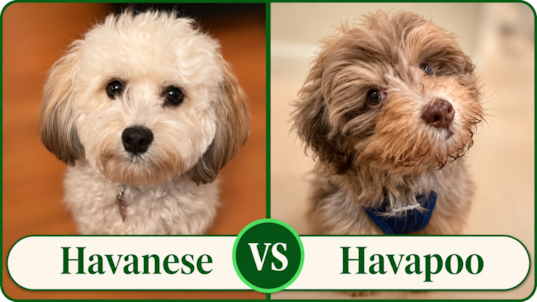
There is something wonderfully appealing about a small dog with a big personality, especially one that seems genuinely delighted to share your day. The Havanese and Havapoo both have that charm, along with affectionate personalities, beautiful coats, and an impressive talent for making themselves part of the family. They are closely related, and their similarities can make choosing between them surprisingly difficult. Spend a little time getting to know each breed, however, and you begin to appreciate the qualities that give each one its own character.
The Havanese vs Havapoo comparison is especially interesting because these dogs can look almost identical as puppies, yet their adult appearance and everyday habits may tell different stories. The Havanese has a distinctive way of moving, an expressive social nature, and a silky coat that is part of its long history as a companion dog. The Havapoo brings its own personality to the relationship, with an engaging curiosity, a love of interactive activities, and a coat that can take on several textures. Both enjoy affection and family life, but their individual appeal extends well beyond those familiar qualities.
Choosing between these breeds means considering more than which puppy has the sweetest face. You'll want to think about how much time you enjoy spending on grooming, whether you prefer relaxed companionship or frequent little activities, and what kind of personality feels right for your household. It also helps to understand the differences between a long-established purebred dog and a modern companion cross without assuming that one is automatically a better choice. This guide explores the details that matter, from their histories and physical features to the everyday experiences that make each breed so rewarding.
Table of Contents
Havanese vs Havapoo Comparison Table
The Havanese and Havapoo share many characteristics, but a closer look reveals some useful distinctions. Both are small, affectionate dogs with relatively modest exercise requirements and coats that need consistent care. The Havanese is associated with a recognizable silky coat and a lively, social personality, while the Havapoo has a broader range of adult sizes and coat textures. This table offers a quick comparison before we explore the breeds in greater detail.
| Characteristic | Havanese | Havapoo |
| Parent Breeds | Purebred Havanese | Havanese and Toy or Miniature Poodle |
| Other Names | Bichon Havanais, Havaneser, historically Havana Silk Dog | Havadoodle, Poovanese, Havanoodle, Havanese Poodle Mix |
| Adult Weight | 7–13 pounds | 8–20 pounds |
| Adult Height | Approximately 9–12 inches | Approximately 8–15 inches |
| Coat Type | Long, soft, lightweight, silky double coat with straight or wavy texture | Soft, wavy, curly, or loosely textured coat |
| Hypoallergenic Qualities | Low shedding; no dog is completely hypoallergenic | Low-shedding potential; no hypoallergenic guarantee |
| Grooming Needs | Frequent brushing, especially with a long coat; professional grooming as preferred | Frequent brushing, with greater attention for dense curls; professional grooming about every 6–8 weeks |
| Exercise Needs | Approximately 20–40 minutes daily | Approximately 30–45 minutes daily |
| Training | Responsive, socially motivated, and receptive to positive reinforcement | Responsive, curious, and well suited to reward-based training and interactive games |
| Colors | White, cream, gold, black, chocolate, silver, sable, brindle, and numerous combinations | Cream, apricot, red, brown, black, white, gray, and various combinations |
| Temperament | Cheerful, affectionate, expressive, playful, alert, and sociable | Affectionate, bright, curious, playful, attentive, and people-oriented |
| Best Fit | Families who enjoy an expressive little companion and a close social bond | Families who enjoy an affectionate companion with an interest in games and shared activities |
These measurements represent common adult ranges rather than exact predictions for every puppy. A Havapoo may be close to the Havanese in size, or it may develop a taller frame and weigh several pounds more. Their exercise preferences also overlap, so an energetic Havanese may enjoy more activity than a particularly relaxed Havapoo. The most valuable differences emerge when we look beyond the table and consider each breed as an individual companion.
Havanese vs Havapoo Overview
The Havanese and Havapoo come from very different periods in the history of companion dogs. One has a centuries-old identity closely connected to Cuban culture, while the other developed much more recently as interest in small Poodle crosses increased. Despite this difference in background, both have earned admirers through the experience of living with them. Their histories offer an interesting perspective on how two dogs with a close family connection can establish separate identities.
Havanese History and Popularity
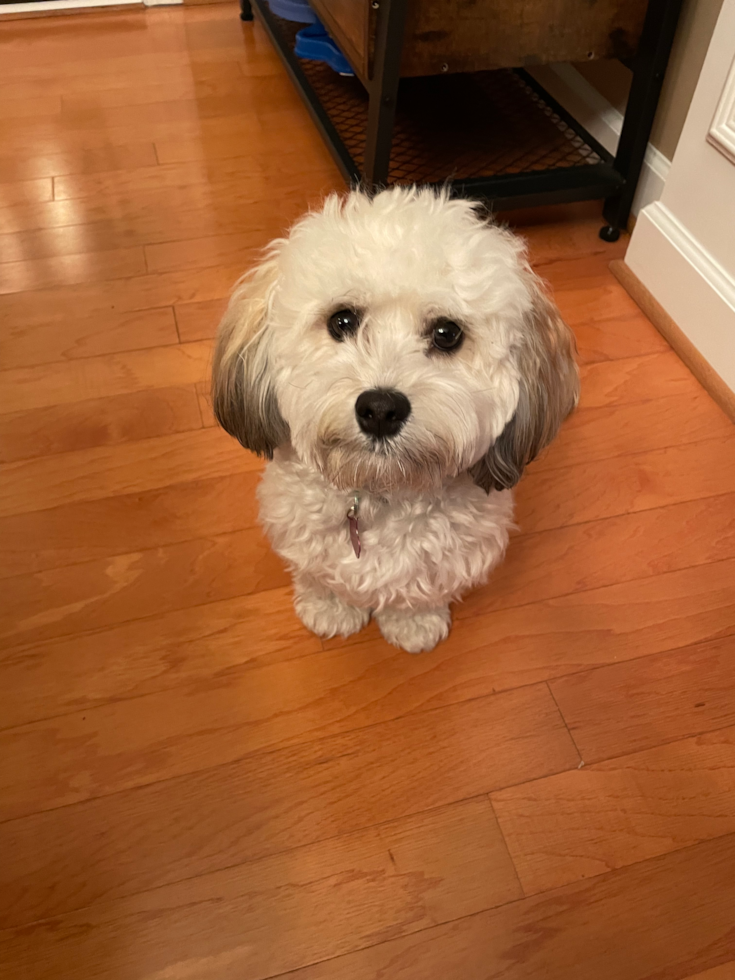
The Havanese holds a special place in the world of companion dogs as the only native dog breed of Cuba. Its history extends back several centuries, when small companion dogs with Mediterranean roots arrived in the Caribbean through trade and migration. Over time, these dogs developed into a distinctive Cuban breed that became particularly popular among wealthy families in Havana. Their silky coats, cheerful personalities, and affectionate nature helped establish them as treasured household companions.
For generations, the Havanese was associated with elegant homes and the social life of Cuban families. These little dogs were valued for companionship rather than demanding physical work, although their intelligence and playful personalities made them remarkably versatile. Some Havanese later appeared in traveling entertainment acts, where their willingness to learn and lively manner attracted attention. That part of their history is especially interesting because the modern Havanese still has a reputation for enjoying tricks, games, and an appreciative audience.
The breed faced a difficult period during the political changes of the twentieth century, when established Havanese populations in Cuba were disrupted. Families who left the country brought a small number of dogs with them, and those animals played an important role in preserving the breed outside Cuba. Dedicated breeders helped restore the Havanese population in the United States, where interest gradually increased. The American Kennel Club officially recognized the Havanese in 1996, an important milestone in its modern history.
Today, the Havanese is admired far beyond its country of origin. Its reputation rests on a combination of attractive physical features, manageable size, and an engaging personality that suits many kinds of families. The breed has maintained its identity through generations of careful development, and its recognizable features continue to attract people who appreciate traditional companion breeds. Perhaps the nicest part of its story is that the same qualities that made it a cherished household dog centuries ago still account for much of its appeal today.
Havapoo History and Popularity
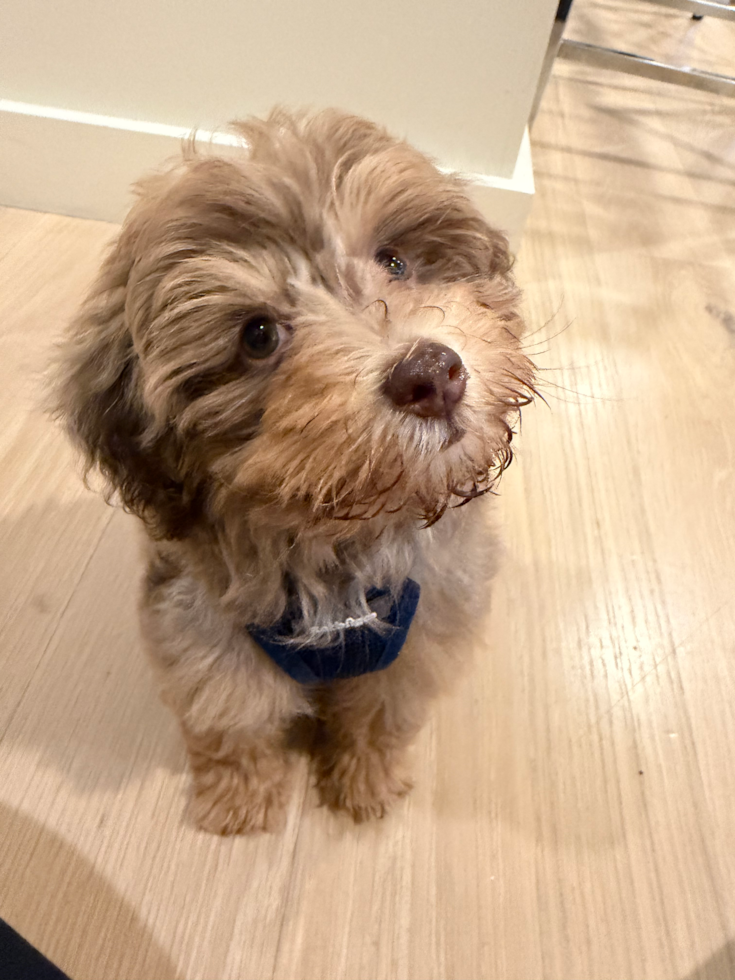
The Havapoo belongs to a much newer chapter in the development of companion dogs. It emerged as interest in small Poodle crosses expanded during the late twentieth century and the decades that followed. The breed was developed from the Havanese and a Toy or Miniature Poodle, with the goal of producing an affectionate, intelligent companion in a manageable size. Unlike the Havanese, the Havapoo does not have a documented centuries-long history or a universally established foundation date.
The absence of a single documented origin has not prevented the Havapoo from establishing a recognizable place among small companion dogs. Its appeal grew through the combination of a friendly personality, engaging behavior, and a soft coat that can take several forms. Families became interested in the breed for everyday reasons, including its suitability for smaller homes and its enthusiasm for human companionship. As more Havapoos entered family homes, the breed developed an identity that extended beyond the novelty of its name.
The Havapoo is also known as the Havadoodle, Poovanese, or Havanoodle, although Havapoo is one of the most familiar names in the United States. Its popularity is part of the broader interest in affectionate Poodle mixes, but individual Havapoos have plenty of personality to offer on their own. Their appearance can vary considerably, which contributes to their appeal among people who enjoy the individuality of mixed-breed dogs. Some have a soft, relaxed look, while others have a compact, curly-coated appearance that is immediately recognizable as a Poodle mix.
Modern Havapoos are primarily valued as household companions rather than dogs developed for a specialized working role. They can enjoy interactive activities, short training sessions, and plenty of time with the people they love. Their size allows them to participate comfortably in many daily routines without demanding a large amount of space. For families who appreciate a bright, affectionate little dog with an engaging personality, the Havapoo offers a modern approach to a familiar kind of companionship.
Havanese vs Havapoo Appearance
The physical similarities between these breeds are easy to understand, especially when both have dark eyes, floppy ears, and beautifully groomed coats. However, their natural outlines can differ more than photographs suggest. The Havanese has a characteristic silhouette that includes a flowing coat, a plumed tail, and a distinctive way of moving, while the Havapoo may have a more rounded or curly appearance. Their grooming needs also differ in practical ways, particularly when owners prefer longer hairstyles.
Havanese Appearance
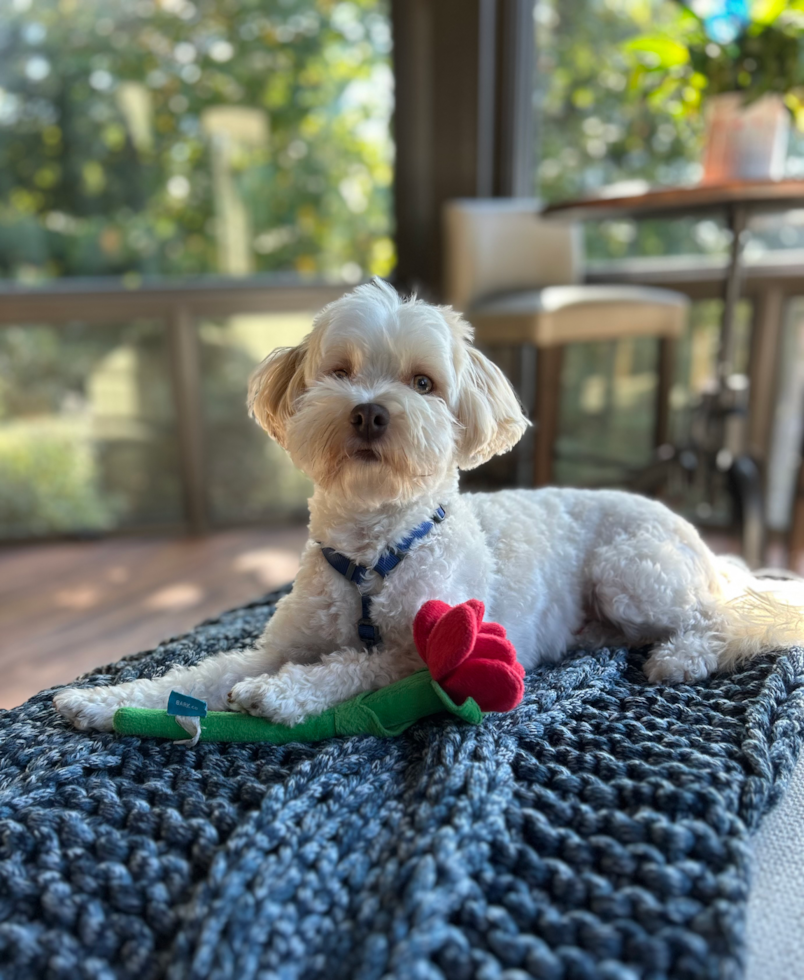
The Havanese is a small but sturdy dog with an elegant outline and a surprisingly lively presence. Adults commonly weigh between 7 and 13 pounds and stand approximately 9 to 12 inches tall at the shoulder. Their bodies are slightly longer than they are tall, which creates a balanced, gently elongated shape. Although their abundant coat can make them appear larger, the Havanese is a true toy-sized companion with a light, comfortable build.
One of the loveliest features of the Havanese is its distinctive movement. The breed has a naturally springy gait that gives its steps an almost cheerful rhythm, particularly when it trots across a room or approaches someone it knows. Its tail is carried in an arch over the back and decorated with long hair that creates an attractive plume. These details give the Havanese a recognizable outline even before its facial features come into view.
The coat deserves special attention because it is central to the breed's appearance. A Havanese has a soft, lightweight double coat that can grow quite long, with hair that falls naturally around the body rather than forming a dense, sculpted shape. The texture may be straight or gently wavy, and a full coat can create beautiful movement as the dog walks. Although the hair appears abundant, it has a delicate, airy quality that distinguishes it from heavier, tightly curled coats.
Havanese come in an impressive range of colors, including white, cream, gold, black, chocolate, silver, sable, and brindle. Some dogs have a single dominant color, while others display contrasting patches or blended shades throughout the coat. Their eyes are typically dark and expressive, while the ears hang beside the face beneath long, soft hair. Depending on the haircut, a Havanese can look elegant and flowing or wonderfully tousled and puppy-like.
Maintaining the natural Havanese coat takes patience and consistency. Long hair can tangle behind the ears, around the legs, and anywhere the coat experiences friction during daily activities. A thorough brushing and combing routine is especially important for families who prefer the traditional long-haired appearance. Owners who favor a shorter haircut can make daily maintenance easier, although regular attention is still necessary to keep the coat neat and comfortable.
Havapoo Appearance
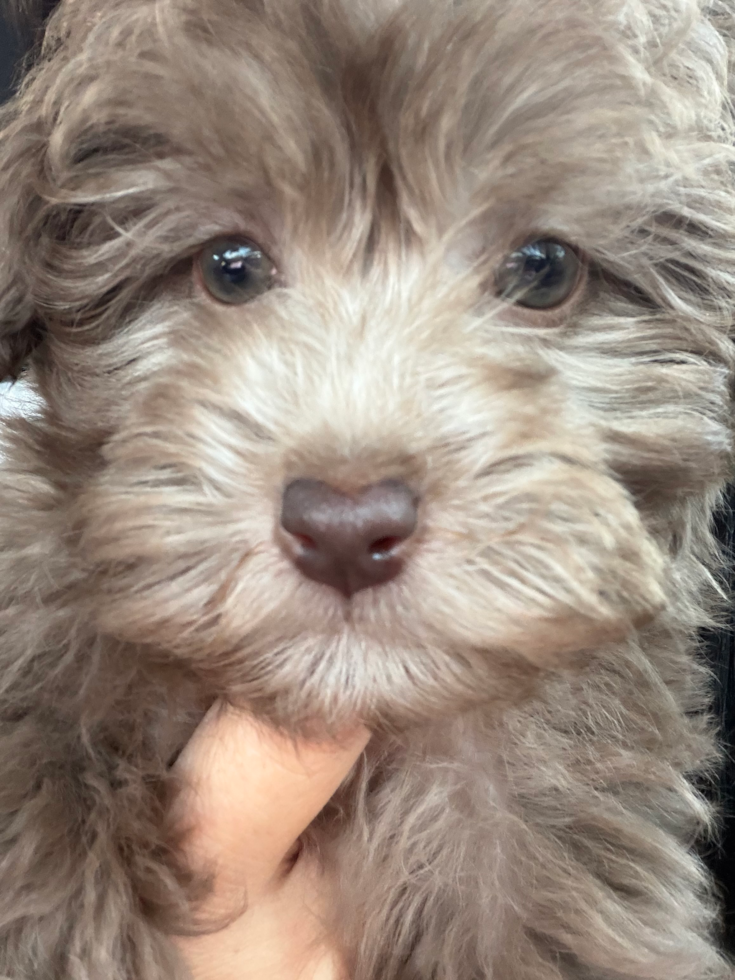
The Havapoo has a softer and more variable physical outline, with individual dogs that can look quite different from one another. Adults commonly weigh between 8 and 20 pounds and stand approximately 8 to 15 inches tall. Some Havapoos have compact bodies and short, sturdy legs, while others develop a taller frame with a slightly more athletic appearance. Their proportions can influence the way they move, how they look in photographs, and even which grooming styles suit them best.
A Havapoo's coat can change its appearance dramatically. Loose waves may create a relaxed, fluffy look with hair that falls softly around the ears and legs. A tighter curl can produce a fuller outline, particularly around the head, chest, and tail. Other Havapoos have a coat that falls somewhere between these textures, with soft waves across the body and more noticeable curls around the face.
The face is one of the Havapoo's most endearing features, although there is considerable variety in its shape. Many have dark, expressive eyes and hanging ears that are covered in soft hair. Some have a rounded muzzle and a compact teddy bear appearance, while others show a slightly longer muzzle and a more defined facial outline. A shorter haircut can reveal these differences, while a fuller coat may make two quite different Havapoos appear similar.
Havapoo colors include cream, apricot, brown, red, black, white, gray, and various combinations. Some have clear patches of color, while others develop softer transitions between shades. A puppy with a dark coat may gradually lighten as it grows, and changes in texture can also affect the way its color appears. This makes the Havapoo particularly interesting for people who enjoy seeing a dog's adult appearance develop over time.
Grooming depends heavily on the coat's texture and density. A curly Havapoo may require frequent brushing to prevent tangles close to the body, even when the outer coat looks perfectly tidy. A dog with loose waves may be easier to comb, but the hair around its legs, ears, and chest can still need extra attention. Professional grooming every six to eight weeks is a practical routine for many owners, particularly when they prefer a neat, shorter haircut.
Havanese vs Havapoo Appearance Comparison
The Havanese and Havapoo can have similar faces, but their coats create different visual impressions. The Havanese is especially recognizable for its long, silky hair, which tends to fall naturally around the body and move with each step. A Havapoo may have that same soft appearance, although its coat is more likely to form noticeable curls or a fuller, rounded shape. The difference becomes particularly clear when both dogs have their coats grown out rather than trimmed into similar styles.
Body size also deserves consideration because the Havapoo has a wider common adult range. A Havanese will usually stay within a fairly compact toy-sized frame, while a Havapoo may reach a height or weight that makes it noticeably larger. A 10-pound Havapoo and a 10-pound Havanese may look similar in a photograph, but their proportions and coat textures can create distinct silhouettes in person. Families who have a particular size preference should remember that individual Havapoos can vary quite a bit.
The grooming experience may be the most important appearance-related difference for an owner. A long-coated Havanese needs careful combing to preserve the silky appearance that makes the breed so distinctive. A Havapoo with dense curls may need equally attentive care, but the challenge is more about working through the coat's thickness than maintaining a long, flowing style. Neither breed should be considered maintenance-free, even though both can shed relatively little.
There is also a practical difference between admiring a haircut and maintaining it at home. A full Havanese coat can be beautiful, but it may collect leaves, grass, and other little souvenirs during a walk through the yard. A fluffy Havapoo can return from the same outing with debris tucked into its curls, particularly around the feet and legs. These are small details, yet they are the kind of everyday realities that matter to people who want their dog's appearance to stay as lovely as it looks in photographs.
Havanese vs Havapoo Temperament
Temperament brings the Havanese vs Havapoo comparison into much sharper focus. Both breeds enjoy people, respond well to affection, and can develop close relationships with the members of their household. The differences are less about one dog being friendly and the other being energetic, because both can display those qualities. Instead, it helps to look at how each breed expresses its personality, responds to attention, and approaches familiar activities.
Havanese Temperament
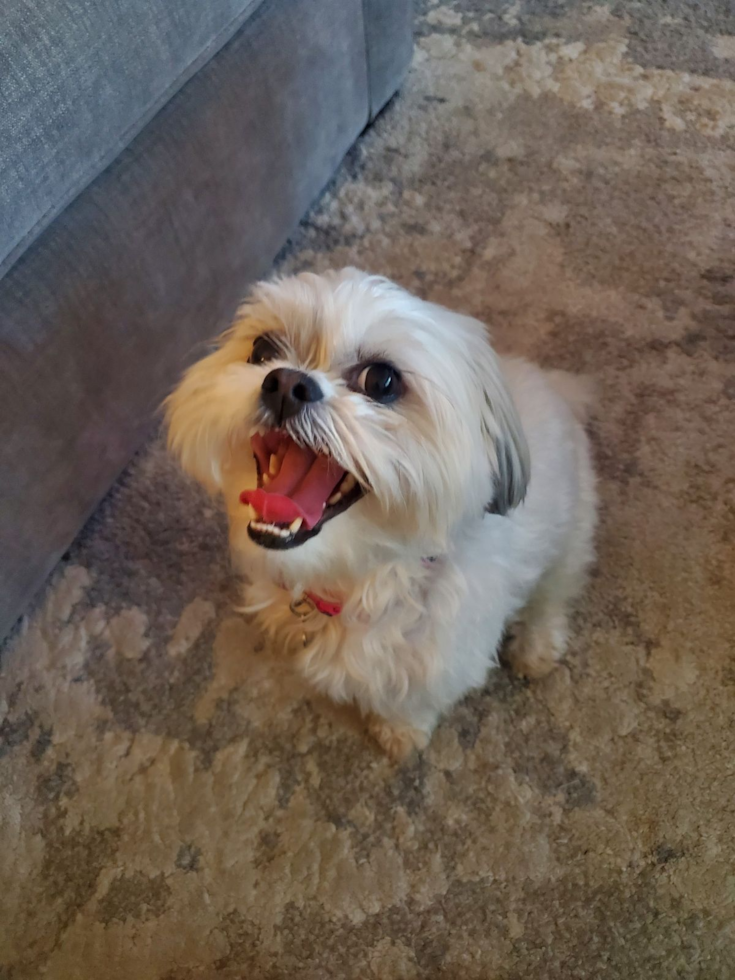
The Havanese has a particularly expressive personality that can make it a delightful presence in the home. This is a breed that seems to understand the social nature of family life and enjoys participating in it. A Havanese may greet familiar people with obvious enthusiasm, respond eagerly when someone speaks to it, or turn a simple invitation to play into a cheerful little performance. Its lively manner is part of the breed's charm, but affection and companionship are equally important.
One interesting characteristic of the Havanese is its reputation for enjoying attention without requiring constant activity. Many are happy to participate in a playful exchange, then settle nearby while the family returns to an ordinary routine. They may enjoy a busy household with familiar faces, conversations, and visitors, provided they have been introduced to those experiences in a positive way. Their social nature can make them engaging companions for people who appreciate a dog that responds warmly to everyday interaction.
The Havanese also has an entertaining side that deserves more recognition than it sometimes receives. Its history includes dogs that learned performance routines, and the modern breed can show genuine enthusiasm for tricks and games. A Havanese may enjoy learning to spin, give a paw, retrieve a small toy, or perform a familiar trick when someone asks. These activities provide entertainment, but they also give the dog a pleasant way to interact with its favorite people.
Training tends to work best when the experience feels rewarding and consistent. Havanese can respond enthusiastically to praise, small treats, and short lessons that allow them to succeed without frustration. Their social confidence does not mean they automatically understand boundaries, particularly during puppyhood when every visitor or interesting object may deserve attention. Teaching calm greetings, polite leash habits, and a reliable response to familiar cues helps turn that lively personality into enjoyable companionship.
The breed's sensitivity to household routines is another part of its appeal. A Havanese may learn the sequence of a family's morning activities, recognize the usual time for a walk, or settle into a favorite spot when everyone gathers in the evening. These familiar habits can create a close bond between dog and owner because the dog participates in so many ordinary moments. At the same time, it is useful to introduce changes gradually so the dog learns that different schedules and experiences can also be comfortable.
Havanese can live happily with families, couples, and single owners who appreciate a close relationship with their dog. Their manageable size is convenient, but children should still learn how to handle and play with a small companion respectfully. Many Havanese enjoy the company of other dogs and can share a home with cats when introductions are thoughtful. Their cheerful social nature makes them appealing, although the individual dog's personality should always guide expectations.
Havapoo Temperament
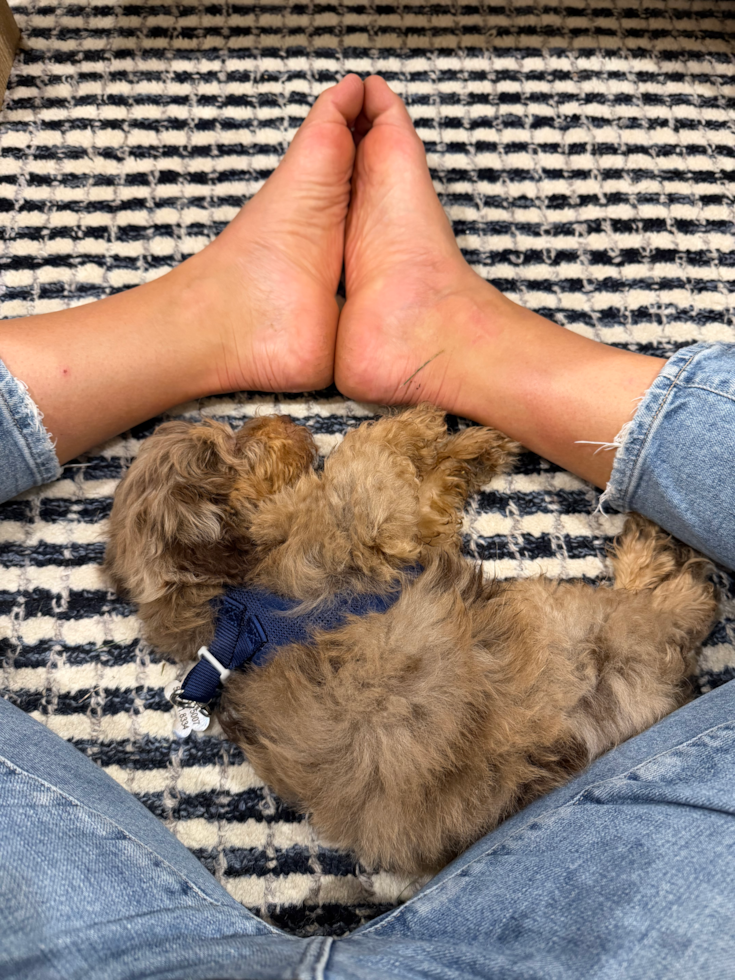
The Havapoo has an engaging personality that combines affection with an interest in what happens around it. Many enjoy spending time with their families, but they may also show curiosity about toys, activities, and the small changes that take place during the day. A Havapoo might investigate a new object, respond eagerly to a familiar training cue, or show interest when someone prepares a favorite game. That curiosity can make life with the breed entertaining, particularly for owners who enjoy interactive companionship.
One of the Havapoo's appealing qualities is its willingness to participate in little activities that fit naturally into a household routine. A short game of hide-and-seek with a favorite toy can provide entertainment, while a few minutes of basic training may give the dog an enjoyable challenge. Some Havapoos are especially interested in games that allow them to work out where a reward is located or what action earns praise. These activities do not need to be complicated to be satisfying, which is helpful for families with busy schedules.
The Havapoo's interest in learning can also influence its behavior around the home. A curious puppy may investigate cabinets left open, follow the movement of a toy across the floor, or pay close attention when a familiar activity begins. These habits are not signs of a difficult dog, but they do create opportunities to teach useful boundaries. Simple lessons about waiting, settling on a mat, and leaving tempting objects alone can help a Havapoo understand how to participate politely in family life.
Affection is a major part of the breed's character, and many Havapoos enjoy close physical contact with their families. They may choose a comfortable spot beside someone on the couch or settle nearby while the household relaxes. Their playful curiosity can coexist comfortably with a love of quiet attention, so the breed should not be viewed as a dog that needs entertainment every minute. The balance depends on the individual, with some Havapoos eager for frequent activities and others perfectly content with a gentler daily pace.
Reward-based training is especially useful for Havapoos because it provides clear opportunities for success. Short sessions with familiar cues, small rewards, and occasional new challenges can help maintain their interest. Owners may notice that an enthusiastic puppy needs as much practice with patience as it does with exciting tricks. A Havapoo that learns how to wait calmly before a game or settle after play has gained skills that will be useful throughout adulthood.
The Havapoo can be a lovely companion for families who enjoy a mixture of affection, play, and interaction. Many adapt well to apartment life or smaller homes, provided their days include appropriate activity and time with people. They can also develop positive relationships with children and other pets when introductions and interactions are respectful. Their affectionate personality is a wonderful foundation, but individual social experiences and consistent training help shape the adult dog.
Havanese vs Havapoo Temperament Comparison
The Havanese and Havapoo may express their enjoyment of family life in slightly different ways. A Havanese can be especially delightful during social interaction, whether that means greeting someone familiar or showing off a trick for an appreciative audience. A Havapoo may be drawn to the opportunity to participate in a game or discover what a new activity involves. Both breeds can enjoy all these experiences, but the distinction offers a useful way to think about their personalities.
Consider a quiet afternoon at home when the family has some free time. A Havanese might enjoy a playful exchange, a little attention, and the chance to settle beside everyone afterward. A Havapoo could be equally happy with affection but may show particular enthusiasm for a short toy game or a familiar training exercise. Neither response is guaranteed, and there are plenty of energetic Havanese and relaxed Havapoos. The important question is which style of companionship feels most natural to you.
Both breeds are well suited to positive reinforcement, although their motivations can differ. A Havanese may find social praise especially rewarding and enjoy the shared experience of learning with its owner. A Havapoo may be enthusiastic about the challenge of working through a short lesson, particularly when the activity includes something new. Their individual preferences will become clearer through training, and adapting the reward to the dog is more useful than assuming every member of a breed learns in exactly the same way.
Exercise needs are fairly modest for both breeds, but the Havapoo may appreciate somewhat more structured activity. A Havanese may be comfortable with around 20 to 40 minutes of walks and play each day, while a Havapoo may enjoy approximately 30 to 45 minutes. Those times can be divided into shorter outings, games, and opportunities to explore the environment. Some Havanese will happily take longer walks, and a relaxed Havapoo may prefer a less demanding routine.
Barking is another consideration for families who live close to neighbors or spend time at home. Both breeds can notice unfamiliar sounds and alert their owners when something catches their attention. A Havanese may express excitement during social moments, while a Havapoo may respond to a new sound or activity with curiosity and vocal interest. Neither breed is guaranteed to be quiet, so rewarding calm behavior and teaching an appropriate response to visitors is valuable from an early age.
Living with other pets can work well for either breed, but successful introductions deserve care. A playful Havanese may try to invite another dog into a game, while an inquisitive Havapoo may need to learn when another animal wants some space. Cats and older dogs can have very different preferences about interaction, and small puppies may not recognize those boundaries immediately. Gradual introductions, supervision, and access to separate resting areas help establish comfortable relationships.
For first-time owners, both breeds offer qualities that make them attractive companions. The Havanese may particularly appeal to someone who enjoys a sociable little dog with a lively personality and a strong interest in people. The Havapoo may appeal to a person who likes affectionate companionship alongside simple games and opportunities for training. Neither requires an expert trainer, but both need patient routines, attention, grooming, and opportunities to practice good manners.
Their need for companionship is also worth taking seriously. A Havanese or Havapoo that spends much of its day with people still benefits from learning to relax independently. Short, comfortable periods in a familiar resting area can help teach that being alone for a little while is part of normal household life. This is useful whether the family works from home, has a variable schedule, or occasionally needs to leave the house. Teaching independence gradually is a sensible investment in either breed's everyday behavior.
Ultimately, the biggest difference is not that one breed loves people more or that one is automatically smarter. The Havanese has a distinctive social expressiveness that many people find irresistible, while the Havapoo can bring an especially engaging curiosity to shared activities. Each has plenty of room for individual personality, and some dogs will display qualities that are more commonly associated with the other breed. The best comparison considers those tendencies without allowing them to overshadow the dog in front of you.
Havanese vs Havapoo Conclusion
The Havanese and Havapoo both offer the kind of companionship that makes a house feel more welcoming. They are affectionate, manageable in size, and capable of bringing plenty of personality into ordinary family life. Yet choosing between them should involve more than deciding whether you prefer a silky coat or a curly one. The real question is what kind of relationship you hope to enjoy with your dog.
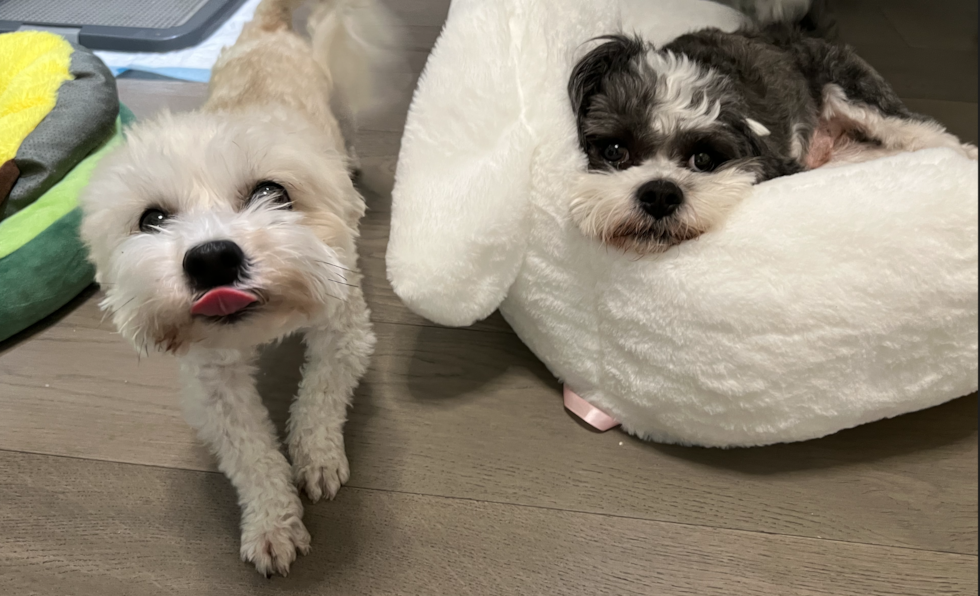
The Havanese has a special appeal for someone who appreciates an expressive, sociable companion with a wonderful sense of personality. Its cheerful manner, graceful movement, and long history as a household dog give it a character that feels both lively and familiar. Owners who enjoy affectionate interaction, simple tricks, and a dog that takes pleasure in family routines may find the Havanese especially rewarding. Its beautiful coat also offers an opportunity for those who appreciate the look of a traditionally groomed toy breed.
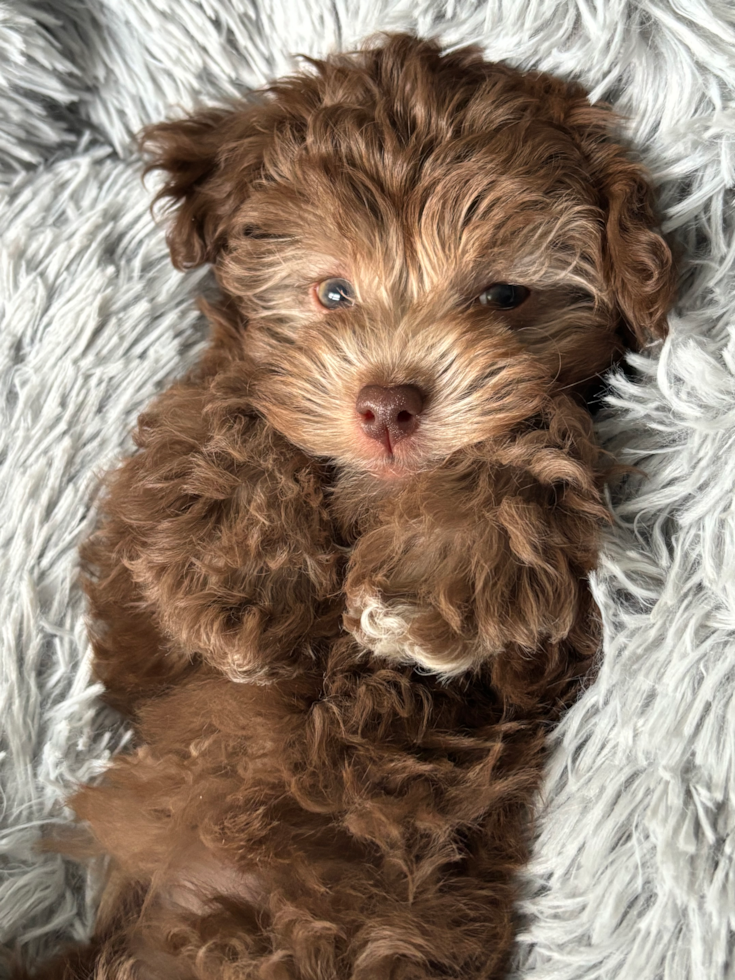
The Havapoo deserves attention from families who enjoy a small companion with an interest in interactive activities and a playful approach to everyday life. Its affectionate nature offers plenty of opportunities for close companionship, while its curiosity can make games and training particularly enjoyable. The variety in its appearance allows families to appreciate different coat textures and sizes within the breed. For someone who likes an involved little dog and enjoys finding small ways to keep daily life interesting, a Havapoo can be a delightful match.
Neither choice should rest on the idea that every Havanese or Havapoo will behave exactly as described. Look for a personality that fits your family's habits, consider your commitment to grooming, and think honestly about how much time you enjoy spending on walks and interaction. A quieter Havanese or a particularly playful Havapoo may turn out to be exactly the companion you want. The most satisfying choice is the dog whose individual character feels right for the life you plan to share.
Frequently Asked Questions
Are the Havanese and Havapoo the same breed? No, the Havanese is an established purebred dog, while the Havapoo is a cross between a Havanese and a Toy or Miniature Poodle. They share a close connection, which explains many of their similarities in appearance and temperament. However, the Havapoo has its own range of physical features and personality traits. The two names refer to different types of companion dogs and should not be used interchangeably.
Can a Havapoo grow larger than a Havanese? Yes, a Havapoo can grow noticeably larger than a Havanese, although many fall within a similar size range. Havanese commonly weigh between 7 and 13 pounds, while Havapoos may weigh approximately 8 to 20 pounds. Height can also differ, with some Havapoos reaching around 15 inches at the shoulder. These figures are useful guides, but they do not guarantee the final size of an individual puppy.
Which breed has the softer coat, Havanese or Havapoo? Both breeds can have wonderfully soft coats, but the texture may feel different to the touch. The Havanese is known for lightweight, silky hair that can fall naturally around the body. The Havapoo may have loose waves or a denser, curly texture that creates a fuller appearance. Personal preference matters here, especially because different Havapoos can have very different coats.
Do Havanese and Havapoos enjoy learning tricks? Yes, both breeds can enjoy tricks and interactive training when the experience is positive. The Havanese has a long history of entertaining people and can be enthusiastic about routines that earn praise. Havapoos may also enjoy the challenge of learning a new behavior or finding a reward during a game. Short lessons with clear cues and consistent rewards tend to work well for both.
Are Havapoos more active than Havanese? A Havapoo may have a slightly higher activity preference, but individual differences are important. Many Havanese enjoy lively games, walks, and opportunities to explore, despite their small size. Havapoos may appreciate a little more structured play or an additional activity during the day. The best exercise routine should reflect the dog's age, energy, and interests rather than a strict comparison between the breed names.
Can a Havanese or Havapoo live comfortably in an apartment? Both breeds can live comfortably in an apartment when their daily needs are met. Their small size makes them practical for limited living space, but they still need walks, play, and interaction. Barking at hallway noises or unfamiliar visitors is a behavior worth addressing early in either breed. A reliable routine and opportunities for activity matter more than the size of the home alone.
Does a Havanese need professional grooming if its coat is kept short? A short haircut can make the Havanese coat easier to maintain, but it does not eliminate grooming responsibilities. Regular brushing is still useful around the ears, legs, and other areas where hair can tangle. Many owners schedule professional appointments to keep the coat evenly trimmed and maintain a comfortable length. Families who prefer the traditional long coat should expect more frequent and detailed home grooming.
Do Havapoo puppies always have curly coats? No, Havapoo puppies can have wavy, curly, or relatively loose coats. Some show clear curls early in life, while others develop more noticeable texture as they mature. The adult coat may look different from the soft puppy hair seen in photographs. This is one reason appearance should be considered with some flexibility when choosing a Havapoo puppy.
Are Havanese and Havapoos good companions for children? Both breeds can enjoy family life with children who understand how to interact respectfully with small dogs. A Havanese may enjoy gentle games and social attention, while a Havapoo may appreciate short activities that involve toys or simple commands. Young children should always have supervision around puppies, particularly during energetic play. The strongest relationships develop when both the child and the dog learn to respect each other's boundaries.
Which breed is better for someone who spends a lot of time at home? Either breed can be a wonderful companion for someone who spends much of the day at home. A Havanese may enjoy frequent social interaction and the familiar rhythm of shared household activities. A Havapoo may appreciate the opportunity for occasional games and short training sessions alongside quiet companionship. The best choice depends on whether the owner feels more drawn to the Havanese's expressive social nature or the Havapoo's interactive personality.