





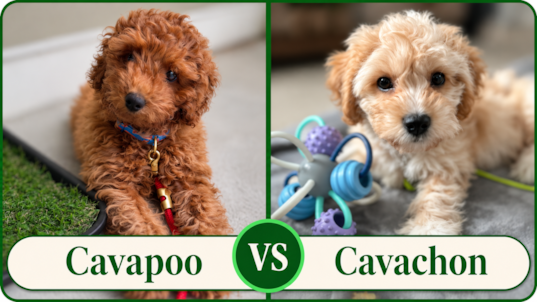
Published Wednesday, November 18, 2026 by Fairfield Furbabies
At first glance, the Cavapoo and Cavachon seem to have everything in common. They are small, affectionate companion dogs with soft coats, expressive faces, and personalities that make people fall in love with them almost immediately. Both enjoy a close relationship with their families, and neither needs an enormous house or backyard to feel at home. Yet anyone who spends time getting to know these breeds will discover that their similarities only tell part of the story.
The Cavapoo vs Cavachon comparison is especially interesting because the differences are subtle enough to escape notice when you first meet them. A Cavapoo may show a little more curiosity about a new activity, while a Cavachon may place greater value on the company that comes with it. Their coats can appear nearly identical in photographs, but the texture, shape, and daily care may be quite different. Even their approach to training and household routines can reveal two distinct personalities beneath those adorable teddy bear faces.
This comparison explores what makes each breed special, from its background and appearance to the small details of life at home. We'll look at their grooming needs, exercise preferences, social habits, and the ways they interact with the people around them. Just as importantly, we'll consider where their characteristics overlap and why individual personality matters more than a perfect breed description. By the end, you'll have a much clearer picture of what life with a Cavapoo or Cavachon could look like.
Table of Contents
Cavapoo vs Cavachon Comparison Table
A side-by-side look at the Cavapoo and Cavachon reveals just how much these breeds share. Their adult sizes overlap, both have coats that need regular attention, and their affectionate personalities suit a wide range of households. The differences become more meaningful when you consider the texture of their coats, their interest in activities, and the way each dog responds to training. The table below provides a useful starting point before we explore those characteristics in greater detail.
| Characteristic | Cavapoo | Cavachon |
| Parent Breeds | Cavalier King Charles Spaniel and Toy or Miniature Poodle | Cavalier King Charles Spaniel and Bichon Frise |
| Other Names | Cavoodle, Cavadoodle, Cavalier Poodle Mix | Cavashon, Cavalier Bichon Mix |
| Adult Weight | 8–20 pounds | 10–20 pounds |
| Adult Height | 9–14 inches | 12–13 inches |
| Coat Type | Soft, wavy, curly, or occasionally straighter | Soft, plush, wavy, or loosely curled |
| Hypoallergenic Qualities | Low-shedding potential; no hypoallergenic guarantee | Low-shedding potential; no hypoallergenic guarantee |
| Grooming Needs | Frequent brushing; professional grooming about every 6–8 weeks | Regular brushing; professional grooming about every 6–8 weeks |
| Exercise Needs | Approximately 30–60 minutes daily | Approximately 30–45 minutes daily |
| Training | Responsive, curious, and quick to engage with reward-based lessons | Responsive, sociable, and receptive to patient, consistent lessons |
| Colors | Cream, apricot, red, gold, brown, black, white, and various combinations | White, cream, apricot, tan, peach, sable, and combinations with colored patches |
| Temperament | Affectionate, lively, attentive, playful, and people-oriented | Sweet, sociable, cheerful, gentle, and playful |
| Best Fit | Families who enjoy an involved companion and interactive activities | Families who appreciate a sociable companion with a comfortable daily rhythm |
These figures describe common adult ranges rather than guaranteed measurements for every dog. A Cavapoo can be smaller than a Cavachon, but an individual Cavapoo may also reach a similar weight and height. Coat texture and personality can vary within each breed, even among puppies from the same litter. For that reason, the most useful comparison goes beyond the numbers and considers how each dog may fit into everyday life.
Cavapoo vs Cavachon Overview
The Cavapoo and Cavachon developed during a period when small companion crosses began to attract considerable attention. Both were bred with the idea of creating affectionate household dogs, but they established their own identities as families became familiar with them. Today, the names represent more than their ancestry, with each breed associated with a recognizable appearance and a particular style of companionship. Their histories help explain their popularity, although their personalities are what continue to attract devoted owners.
Cavapoo History and Popularity
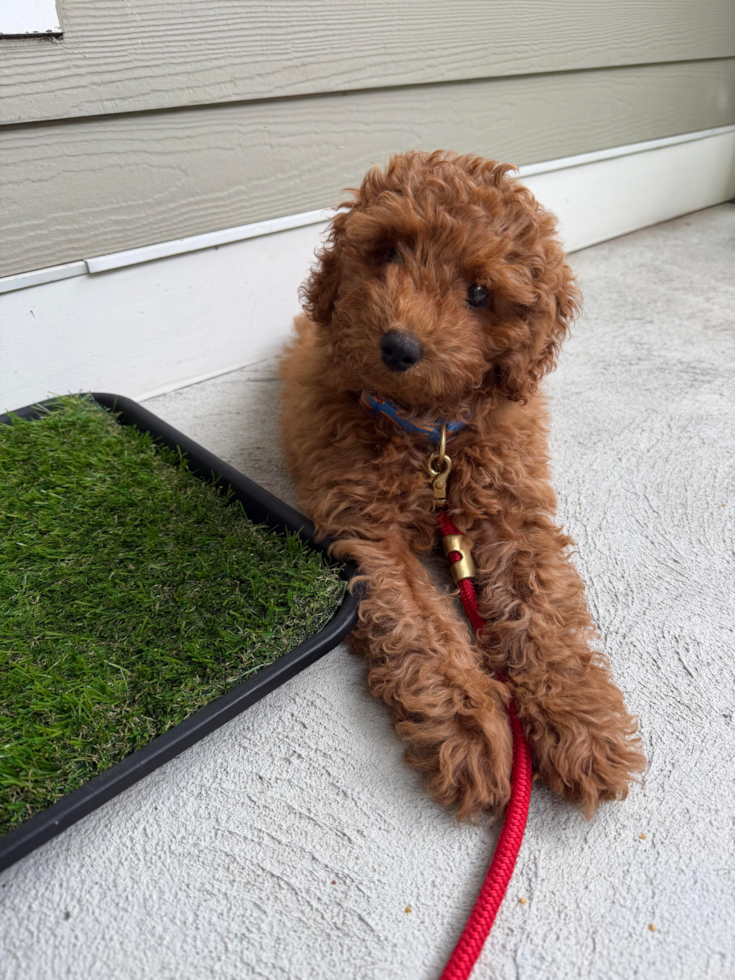
The Cavapoo's story is closely associated with the rise of intentionally bred companion crosses in the late twentieth century. The breed is widely linked with Australia, where the name Cavoodle became especially familiar during the 1990s. Rather than emerging from a formal breed-development program with a fixed standard, Cavapoos gained recognition through their appeal as affectionate, manageable household companions. Their popularity expanded through the experiences of families who enjoyed their size, expressive faces, and lively relationships with people.
One of the Cavapoo's greatest advantages has been its ability to appeal to people with different ideas about life with a dog. Some families admire its cheerful willingness to participate in activities, while others fall for its affectionate nature and love of close contact. The breed also became recognizable through its range of soft coat textures and colors, which allow individual Cavapoos to look surprisingly different from one another. Over time, the Cavapoo developed a reputation as a small dog with plenty of personality rather than simply a fashionable mixed breed.
That popularity has remained strong as more people discover Cavapoos through breed communities, family recommendations, and photographs of adult dogs. The Cavoodle name is particularly familiar in Australia, while Cavapoo is widely used in the United States. Despite this international recognition, there is no single appearance or personality that every Cavapoo must match. The breed's appeal comes partly from that individuality, although prospective owners should appreciate the practical differences that accompany it.
Cavachon History and Popularity
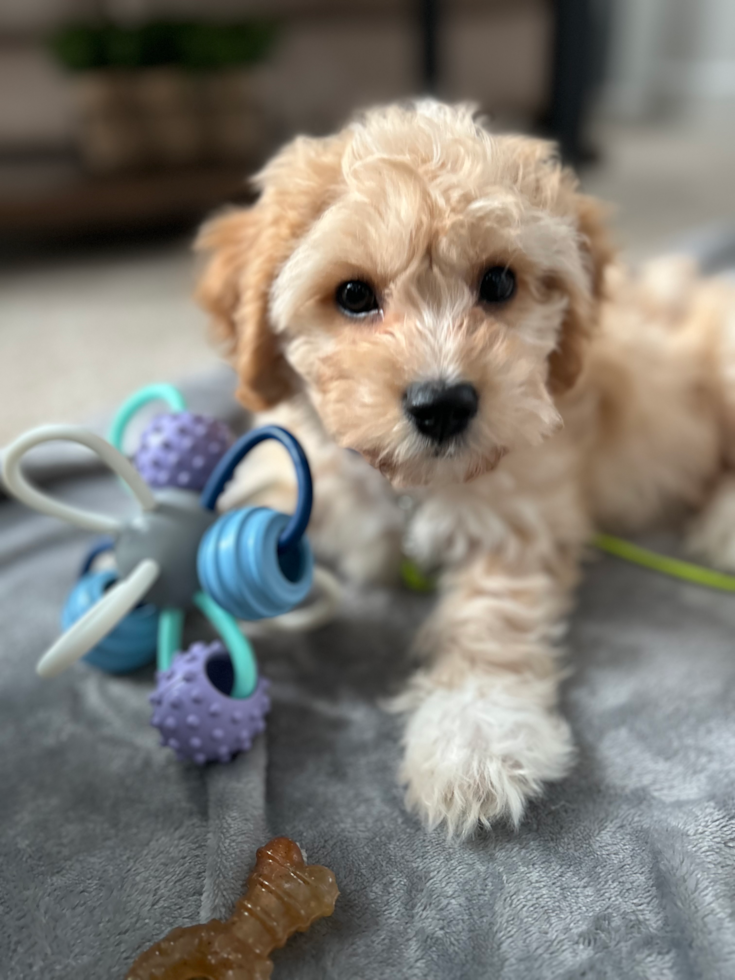
The Cavachon has a more clearly documented beginning, with intentional breeding efforts commonly traced to the United States in the mid-1990s. Its early popularity centered on the idea of a small, friendly companion that could share daily life with families of different ages. The name Cavachon eventually became the most familiar label, although Cavashon and Cavalier Bichon Mix are also used. As the breed gained admirers, its cheerful expression and soft, rounded appearance helped establish an identity of its own.
Unlike some companion crosses that attracted attention mainly through dramatic coat colors or unusual sizes, the Cavachon earned much of its reputation through its approachable character. People were drawn to a dog that seemed comfortable with the ordinary pleasures of family life, from greeting familiar visitors to settling beside someone on the couch. Its playful personality added to that appeal without creating an expectation that every day would need to revolve around elaborate activities. For many owners, the Cavachon's charm lies in its ability to enjoy simple moments with genuine enthusiasm.
The Cavachon may not have the same instant name recognition as the Cavapoo in every area, but it has developed a devoted following. Owners frequently celebrate its affectionate disposition, sociable nature, and delightful teddy bear appearance. It also appeals to people who want a dog that feels like an active member of the household without necessarily taking charge of every activity. As with the Cavapoo, its mixed-breed background means individual dogs can vary, and the breed name alone cannot promise a particular personality.
Cavapoo vs Cavachon Appearance
Appearance is one of the reasons the Cavapoo vs Cavachon comparison can be surprisingly difficult. Both breeds have dark, expressive eyes, floppy ears, compact bodies, and the kind of soft coat that seems to invite an affectionate pat. However, there are differences in their outlines, facial expressions, and the way their coats fall around the body. A closer look reveals two appealing styles, each with its own grooming considerations.
Cavapoo Appearance
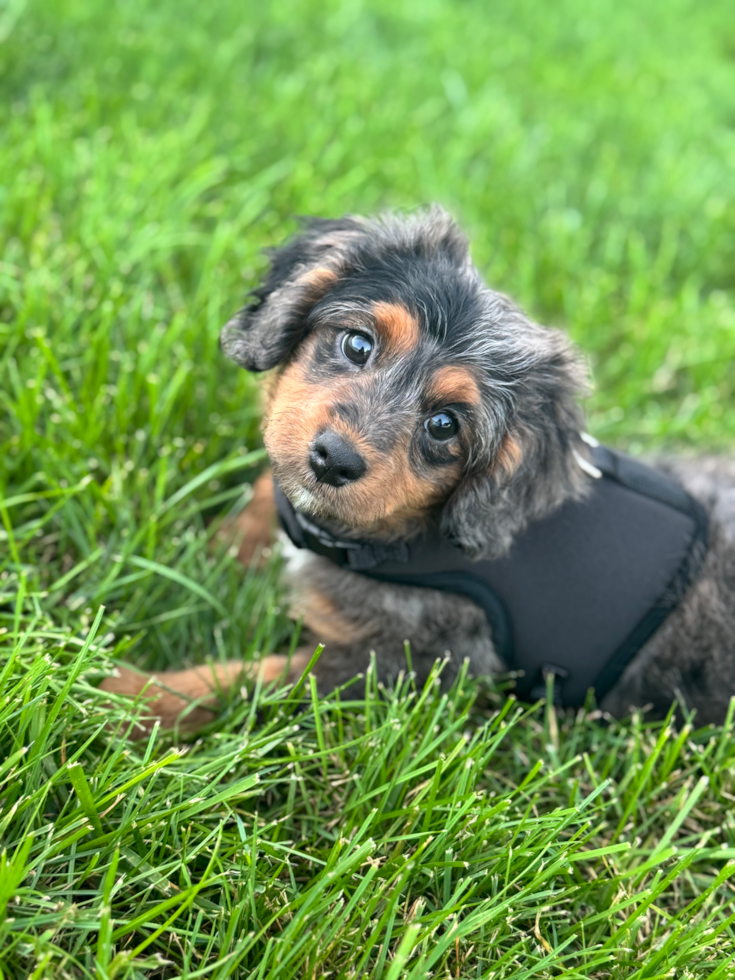
The Cavapoo has a charmingly variable appearance that can range from a neat, lightly waved little dog to a fluffy companion with a full coat of curls. Most adults weigh approximately 8 to 20 pounds and stand around 9 to 14 inches tall at the shoulder, although individual dogs may fall outside these ranges. Some Cavapoos have a compact frame and relatively short legs, while others appear a little taller and more delicate. Their faces are expressive, with dark eyes, soft ears, and muzzles that may appear narrow or rounded depending on the individual dog.
Coat texture contributes enormously to the Cavapoo's appearance. Loose waves create a soft, flowing outline, while tighter curls give the face and body a fuller, rounded look. A Cavapoo with a straighter coat may have more visible feathering along the ears, chest, and legs. Even two dogs of similar size and color can look quite different because their coats frame their features in different ways.
Color is another part of the breed's appeal, and Cavapoos appear in cream, apricot, red, gold, chocolate, black, white, and numerous combinations. Some have a relatively even color from head to tail, while others display contrasting patches on the chest, face, or paws. A puppy's coat may change in shade or texture as it matures, so the final adult appearance is not always obvious in early photographs. The variety is attractive, but it also means that choosing a Cavapoo based on one familiar image may create unrealistic expectations.
Daily grooming depends on the individual coat rather than the Cavapoo name alone. A dense, curly coat can collect tangles close to the skin, especially where a collar rests or where the legs meet the body. A looser coat may be easier to brush through, but it still needs regular care to keep the ears, legs, and underside tidy. Many families choose a shorter, practical haircut and schedule professional grooming approximately every six to eight weeks, with adjustments for coat length and growth.
Cavachon Appearance
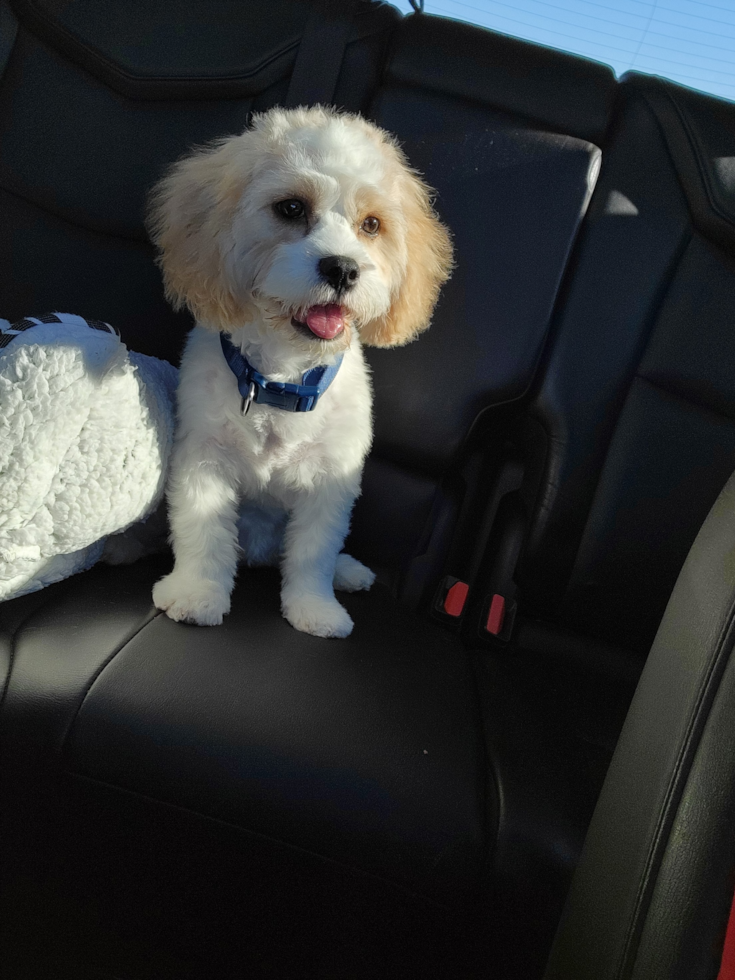
The Cavachon has a wonderfully soft appearance that many people describe as plush or teddy bear-like. Its adult weight commonly falls between 10 and 20 pounds, with a typical height of about 12 to 13 inches. Although those measurements overlap with the Cavapoo's, the Cavachon can appear broader through the body, particularly beneath a full coat. Its rounded expression, dark eyes, and softly framed face give it a warm, approachable look that many families find irresistible.
A distinctive feature of the Cavachon is the way its coat can create an almost cloudlike outline. The hair is commonly soft and wavy, although some dogs have looser curls or areas of relatively straight hair. A fuller coat can make the head appear round and the body seem more substantial than its actual weight suggests. Once the coat is trimmed shorter, the dog's natural proportions are much easier to see.
Cavachon colors tend to have a different visual character from those of many Cavapoos. White and cream are familiar shades, frequently paired with apricot, tan, peach, or darker markings around the ears and face. Some Cavachons have broad patches of color, while others have only a delicate contrast near the eyes or ears. These markings can give each dog a particularly expressive face, almost as though its coat has created a little portrait.
The Cavachon's plush coat deserves consistent attention, particularly if the family prefers a longer teddy bear haircut. Hair around the face may need careful maintenance so the eyes stay clear and the muzzle looks tidy. The ears, chest, and areas beneath the legs can also develop tangles if brushing becomes an occasional chore. Regular home grooming and professional appointments around every six to eight weeks help preserve the soft, comfortable coat that gives this breed so much of its appeal.
Cavapoo vs Cavachon Appearance Comparison
The biggest visual difference between these breeds is not necessarily size but the overall shape created by the coat and body. A Cavapoo with loose waves may have a slightly more flowing, lightly built appearance, while a Cavachon with a full coat can look broader and more rounded. Those are tendencies rather than strict rules, and a curly Cavapoo may look remarkably similar to a freshly groomed Cavachon. Photographs can exaggerate these similarities, particularly when both dogs have short teddy bear haircuts.
The color palette may offer a more noticeable clue. Cavapoos are familiar in rich shades of apricot, red, and brown, along with cream and various patterned coats. Cavachons are especially recognizable in white or cream with touches of apricot or tan, although their colors are not limited to those combinations. Someone who loves a deep reddish coat might find more examples among Cavapoos, while a preference for a pale coat with contrasting ears may draw attention toward Cavachons.
From a grooming perspective, neither breed should be chosen on the assumption that its soft coat will take care of itself. A Cavapoo with tight curls may need more frequent brushing than a Cavachon with loose waves, but the opposite can be true when the Cavachon has a long, dense coat. Hair length, texture, and the family's preferred haircut have a greater influence on daily maintenance than the breed label. The practical question is whether you enjoy the fluffy look enough to commit to the brushing and grooming that preserve it.
There is also a difference between the way these breeds look as puppies and the appearance they may develop as adults. A tiny Cavapoo with a smooth puppy coat can develop noticeable waves or curls, while a Cavachon's fluffy puppy outline may settle into a different shape after several haircuts. Neither breed has a single guaranteed adult appearance. Families who appreciate that natural variety are more likely to enjoy the changes that come with maturity.
Cavapoo vs Cavachon Temperament
Temperament is where the Cavapoo and Cavachon start to feel less interchangeable. Both breeds value affection, enjoy the company of their families, and can develop into delightful household companions. Their differences are more apparent in how they approach activities, respond to new experiences, and participate in the daily rhythm of the home. These are tendencies, not promises, but they offer a useful starting point for understanding each breed's personality.
Cavapoo Temperament
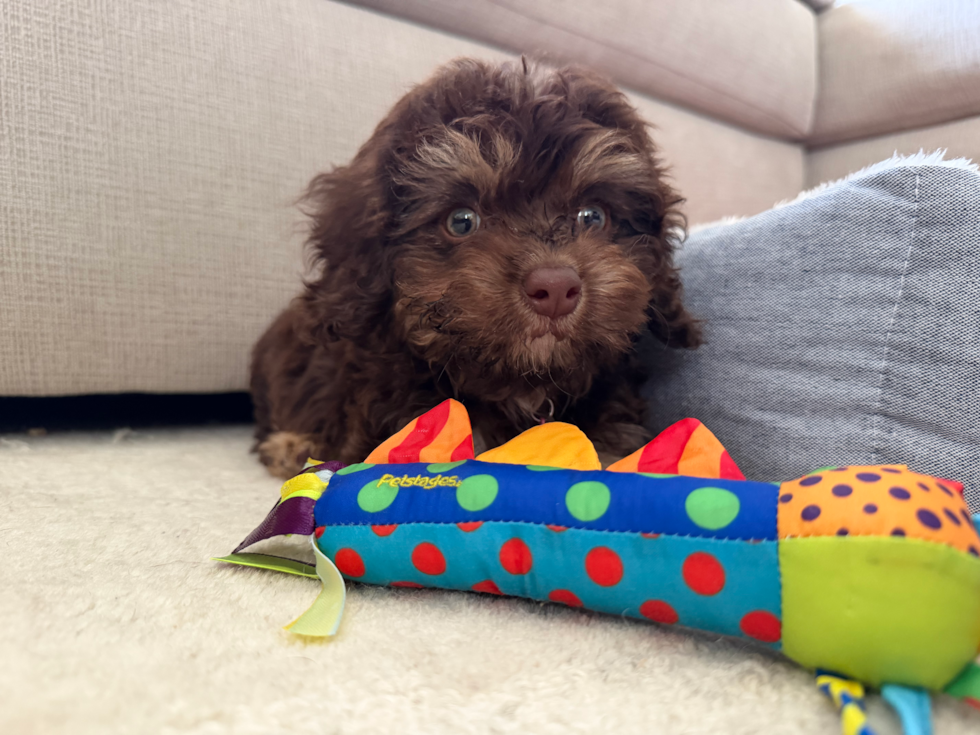
The Cavapoo has an engaging personality that can make ordinary activities feel more interesting. Many are curious about what their family is doing and eager to participate when something new appears. A fresh toy, a different walking route, or a short training game may attract their attention quickly. They enjoy affection, but their social side can also include a genuine interest in interaction and shared activity.
That combination creates a companion with a particular enthusiasm for being involved. A Cavapoo may follow someone into another room out of curiosity, investigate a shopping bag placed on the floor, or arrive promptly when the family starts a familiar game. These small habits help explain why owners describe the breed as lively and entertaining even when the dog is not especially energetic.
The Cavapoo can take pleasure in the activity itself, not solely in the attention received afterward.
Training is a natural place to make use of that interest. Many Cavapoos respond well to brief lessons that introduce a new challenge and reward a successful attempt. Teaching a dog to touch a target with its nose, locate a favorite toy, or wait politely before a door opens can provide useful mental engagement. Variety can help maintain attention, although consistency still matters when the lesson involves household manners.
A Cavapoo's eagerness to interact does not mean it will arrive with perfect manners. Puppies may greet people too enthusiastically, grab at tempting objects, or struggle to focus when the room becomes exciting. Calm greetings, patient repetition, and clear routines help channel that curiosity into behavior the family enjoys. The goal is to encourage the dog's lively personality while teaching it when a quieter response is appropriate.
The Cavapoo also has a deeply affectionate side that deserves equal attention. Many enjoy physical closeness and seek out familiar people when the household settles for the evening. Some are content beside a person on the couch, while others prefer to alternate between a favorite resting spot and brief visits for affection. The balance between playfulness and closeness varies, but the breed tends to place considerable value on its relationship with people.
Cavachon Temperament
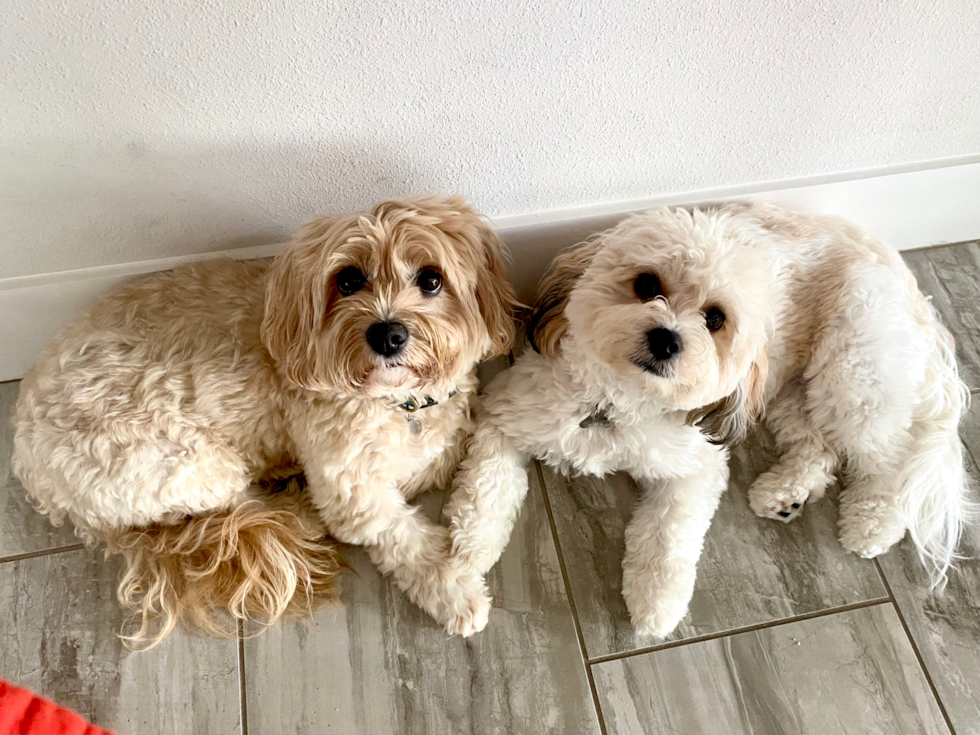
The Cavachon has a cheerful, affectionate character that makes everyday companionship especially rewarding. Its social nature is one of the first qualities many people notice, particularly when the dog greets familiar family members or settles comfortably among them. A Cavachon may show its excitement through a wagging tail, a playful invitation, or a determined effort to sit close to someone. It does not need an elaborate activity to enjoy the moment when the people it loves are nearby.
There is something appealing about the Cavachon's ability to find entertainment in simple household routines. A visit from a familiar friend may be the highlight of the afternoon, while a few minutes with a favorite toy can provide plenty of amusement. Many Cavachons enjoy playful interaction and little bursts of excitement before they are ready for a quieter activity. This gives the breed an agreeable mix of enthusiasm and companionship, although individual energy levels still differ.
The Cavachon's friendly nature can help create a comfortable household atmosphere, but good manners need to be taught. A puppy may try to greet every visitor at once, jump toward an unfamiliar person, or interrupt a conversation in search of attention. Short lessons that reward four paws on the floor, a calm sit, or patience before receiving affection can be especially useful. These ordinary skills allow the Cavachon's sociability to shine without placing too much excitement into every greeting.
Training a Cavachon can feel particularly rewarding when lessons are gentle, predictable, and easy to understand. Many respond well to praise, small rewards, and a familiar sequence of cues rather than long practice sessions. An owner who teaches the same cue consistently during everyday activities can make steady progress without turning every moment into a formal lesson. The breed's pleasant disposition is an advantage, but even a sweet puppy benefits from boundaries and patient instruction.
Cavachons can also develop strong preferences for familiar routines and the people who share them. A dog may learn the household's usual walk time, recognize the sound of someone preparing a favorite toy, or choose the same comfortable place each evening. These habits can make life with a Cavachon feel wonderfully familiar and personal. They also show why the breed deserves thoughtful social experiences and opportunities to practice time apart, even when the family loves having the dog close.
Cavapoo vs Cavachon Temperament Comparison
One of the most useful ways to compare these breeds is to consider what draws their attention during an ordinary day. The Cavapoo may be especially interested in the activity a person has started, from a training session to a new game. The Cavachon may be equally delighted simply because the activity creates an opportunity to enjoy someone's company. Both motives can exist in either breed, but the distinction helps explain why their companionship may feel slightly different.
Their response to a busy household also deserves consideration. A lively Cavapoo may want to investigate each new event, particularly during puppyhood, and benefit from practice with quiet moments. A Cavachon may greet the same events with warm enthusiasm and need encouragement to keep social excitement under control. Neither breed should be expected to stay calm simply because it is small. Household manners develop through routine, repetition, and the opportunities owners create for their dogs to succeed.
The difference can also appear during training, although it is easy to exaggerate. A Cavapoo may enjoy the puzzle of learning a new task and offer several behaviors in search of the right answer. A Cavachon may respond especially well when the lesson feels familiar and the reward includes praise or attention from a favorite person. Both can learn household commands, tricks, and polite leash habits through positive reinforcement. The owner's patience and consistency will have a greater effect on results than a claim that one breed is automatically smarter.
Exercise provides another practical distinction. A Cavapoo may appreciate 30 to 60 minutes of daily activity that includes walks, games, and opportunities to investigate its surroundings. A Cavachon may be content with approximately 30 to 45 minutes, particularly when the day also offers social interaction and relaxed play at home. These are flexible guides rather than strict requirements, and some Cavachons will happily enjoy longer outings while some Cavapoos prefer a quieter pace.
Weather, age, individual energy, and the kind of activity all influence what a satisfying day looks like.
For families with children, both breeds offer appealing possibilities. A Cavapoo may enjoy a child who wants to teach tricks or play a gentle game with clear rules. A Cavachon may appreciate family activities that involve plenty of attention, short play sessions, and relaxed companionship. Young children need guidance about respectful handling, and every dog should have a peaceful place to rest without interruption. A successful family relationship depends on the individual dog's comfort and the way children learn to interact with it.
The same thoughtful approach applies to homes with other pets. Either breed may develop a pleasant relationship with another dog or a cat when introductions are gradual and the animals have space to adjust. An enthusiastic Cavapoo may need help learning when another pet has finished a game, while a sociable Cavachon may need practice respecting a more reserved companion. These are useful possibilities to prepare for, not fixed breed behaviors. Individual temperament and early experiences have a powerful influence on how those relationships develop.
Apartment living is realistic for either breed, but small size should not be confused with an absence of daily needs. Cavapoos benefit from regular activities that give their curiosity somewhere to go, even when their home has limited floor space. Cavachons need opportunities for walks, play, and companionship rather than spending the entire day indoors simply because they enjoy affection. Both can alert their families to unfamiliar sounds or visitors, so polite response to hallway noise and doorbells is worth teaching from an early age.
Perhaps the most meaningful distinction lies in the kind of relationship a family hopes to develop with its dog. Someone who enjoys introducing small challenges, rotating games, and practicing new skills may particularly appreciate a Cavapoo's interactive side. Someone who values a cheerful presence during familiar routines may find the Cavachon's style of companionship especially appealing. Neither preference makes one breed superior, and there are individuals in both groups who will surprise their owners. The best match comes from recognizing which personality feels natural alongside the family's lifestyle.
Cavapoo vs Cavachon Conclusion
Choosing between a Cavapoo and a Cavachon is less about finding a dramatic difference and more about recognizing the details that matter to you. Their sizes are similar, their coats require a real grooming commitment, and both can offer the affectionate companionship that makes small dogs such beloved family members. The deciding factor may be how you prefer to spend an ordinary afternoon with your dog. That is where the personality of each breed starts to matter more than its appearance.
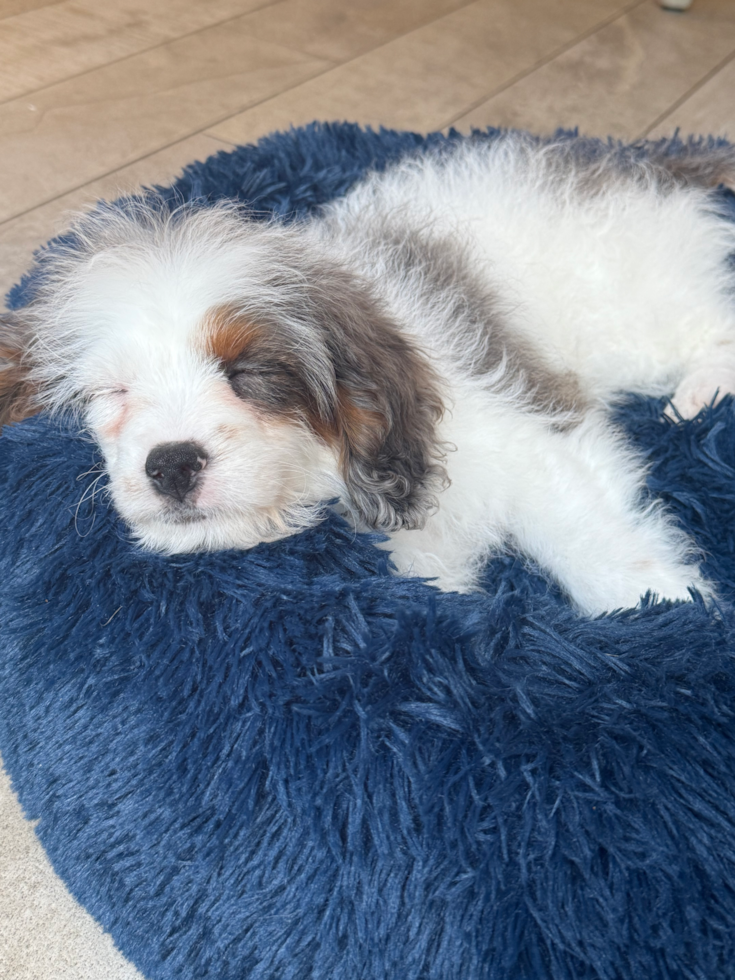
The Cavapoo is an appealing choice for someone who enjoys a dog with an interested, involved approach to daily life. Its curiosity and responsiveness can make training, simple games, and shared activities especially enjoyable. A family that likes to introduce new experiences and has time for regular interaction may appreciate this side of the breed. The Cavapoo still enjoys quiet companionship, but its playful interest in the world can give the household an extra spark of activity.
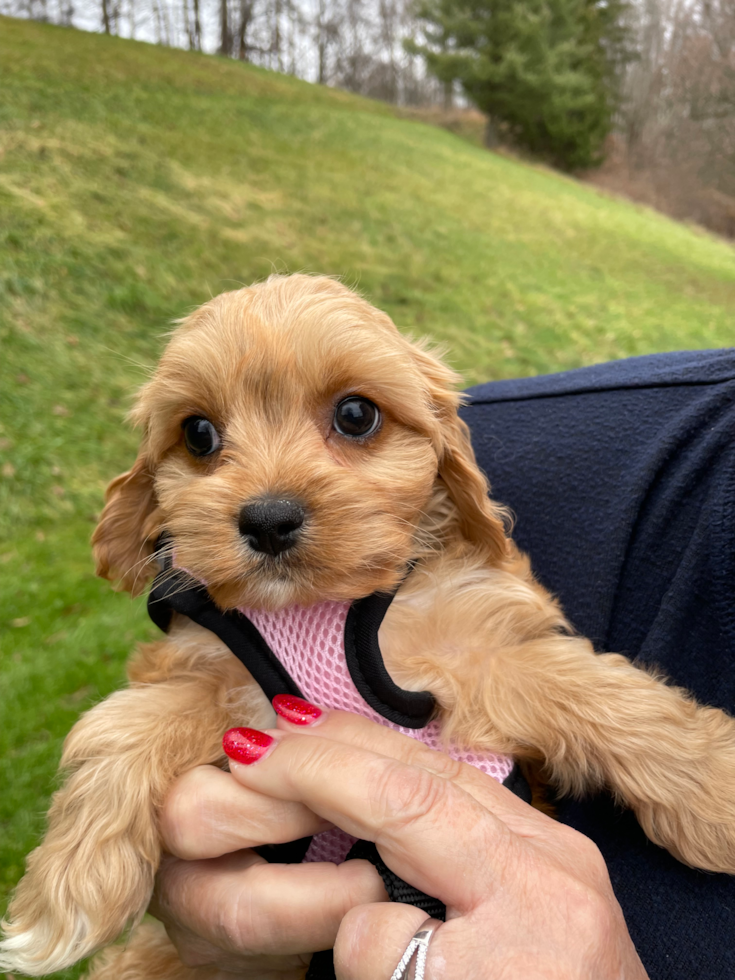
The Cavachon may be the more natural fit for someone who places the greatest value on warm, sociable companionship and a comfortable household rhythm. Its cheerful personality can make simple routines feel special, from greeting a family member after work to enjoying a familiar evening ritual. It still needs play, exercise, training, and attention, but the relationship itself is a major part of the appeal. For a family that wants an affectionate dog whose presence adds warmth to daily life, the Cavachon deserves serious consideration.
There is no need to force a choice based on a single characteristic such as coat color or an exercise estimate. Consider your family's activity level, the time you can devote to grooming, and the personality you would most enjoy living with every day. A curious, energetic Cavachon or a relaxed Cavapoo may challenge the usual descriptions, and that individuality is part of the pleasure of getting to know a dog. The right companion is the one whose real personality fits the home you are ready to share.
Frequently Asked Questions
Is a Cavapoo or Cavachon better for a first-time dog owner? Both breeds can be suitable for first-time owners who are ready to establish routines and learn alongside their dogs. A Cavapoo may appeal to someone excited about teaching tricks and trying different activities, while a Cavachon may suit someone who enjoys consistent routines and affectionate interaction. Neither arrives with an automatic understanding of household rules, and both need patient instruction from puppyhood onward. The better choice depends on which personality and daily responsibilities feel more comfortable to the owner.
Do Cavapoos and Cavachons look similar as adults? They can look remarkably similar, particularly when both have cream-colored coats and rounded haircuts. A Cavapoo may have a more noticeably curly or flowing coat, while a Cavachon may have a plush outline and contrasting markings around its face. These differences are not guaranteed, and professional grooming can change the overall appearance of either dog considerably. An adult photograph can be useful for understanding coat possibilities, but it should not be treated as a promise of how a puppy will eventually look.
Can a Cavachon enjoy the same walks as a Cavapoo? Yes, a Cavachon can enjoy many of the same daily walks and outdoor activities as a Cavapoo. The Cavapoo may have a somewhat higher exercise preference, but the difference is not large enough to divide the breeds into active and inactive categories. A Cavachon that enjoys neighborhood walks may happily accompany its family on longer outings with suitable breaks. The length and pace of an outing should match the individual dog rather than a rigid breed expectation.
Which breed is easier to teach new tricks? Cavapoos may show particular enthusiasm for tasks that require them to work out what earns a reward. Cavachons can also learn an impressive range of tricks, especially when lessons are short, clear, and enjoyable. A Cavapoo's excitement can occasionally make patience an important part of training, while a Cavachon may need encouragement to stay focused when something more social catches its attention. Both breeds benefit from positive reinforcement and regular opportunities to practice what they learn.
Do Cavapoos and Cavachons need the same type of haircut? Both can wear short, practical haircuts or fuller teddy bear styles, although the final result depends on coat texture. A curly Cavapoo may need a cut that prevents dense hair from collecting tangles, while a plush Cavachon may benefit from careful shaping around the face and ears. A shorter coat can reduce the time spent on home maintenance, but it does not eliminate the need for brushing. Choosing a style that suits the dog's coat and the family's schedule is more useful than requesting an identical haircut for both breeds.
Are Cavachons always white or cream-colored? White and cream are familiar Cavachon colors, but they are far from the only possibilities. Some Cavachons have apricot, tan, peach, or sable tones, while others display clear patches around the ears, face, or body. The amount and placement of color can vary considerably between individuals. That variety is one reason two Cavachons may have noticeably different expressions despite sharing similar facial features.
Can a Cavapoo or Cavachon learn to spend time alone? Both breeds tend to enjoy human company, so learning to spend time alone is an important household skill. Short, pleasant periods of independence can help a puppy understand that people may leave a room and return without any need for excitement. A comfortable resting space, familiar routines, and gradual practice can support that lesson. Neither breed should be assumed to enjoy long stretches of isolation simply because it has reached adulthood.
Which breed is more likely to bark when someone visits? Either breed may announce a visitor, particularly if a doorbell or unfamiliar voice has become an exciting event. A Cavapoo may respond with curiosity about the new arrival, while a Cavachon may be eager for the social attention that follows. Individual habits and the household's response to barking matter more than a broad breed label. Teaching a calm greeting routine can help both dogs understand what is expected when someone comes to the door.
Could a Cavapoo or Cavachon live happily with a cat? Both breeds can share a home with a cat when their personalities are compatible and introductions are handled carefully. A playful puppy may try to invite a cat into a game, even when the cat has no interest in participating. Separate resting areas and supervised introductions help each animal feel comfortable at its own pace. The most important factor is whether the individual dog learns to respect the cat's boundaries.
What should families pay the most attention to when comparing Cavapoo and Cavachon puppies? Personality deserves at least as much attention as size, color, or coat texture. Notice how an individual puppy approaches new experiences, responds to gentle interaction, and settles after a moment of excitement. Some puppies are eager to investigate everything nearby, while others prefer to observe before they join an activity. Those small differences offer useful clues about the relationship a family may develop with its new companion, even though personality continues to develop with age.